I came to cycling quite late, and it must be about the 30th anniversary of me learning to ride. Therefore, in approximately the right order, here are all the bikes I’ve ever owned:
Horrid red mail-order folding bike — bought for my sister and myself. Effectively no brakes, but I did learn to ride on this on the gently sloping pavement of Beech Avenue. Used to drive my mum nuts by riding it round the outside of the house and dinging the bell every time I passed the back door.
Black Craig McMartin 10-speed — gas-pipe clunker disguised as a 10-speed. I went everywhere on this, and did my paper run around Broomburn Drive on it. From what I hear, McMartin’s is still in business.
Saracen Blizzard MTB — could anything scream 1989 more than a Biopace chainset, chain-stay mounted u-brake, and a white paint job on a mud bike? The first bike that I bought with my own money. Any pictures of it would be ill-advised.
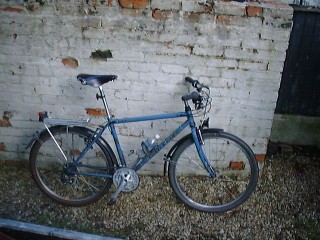
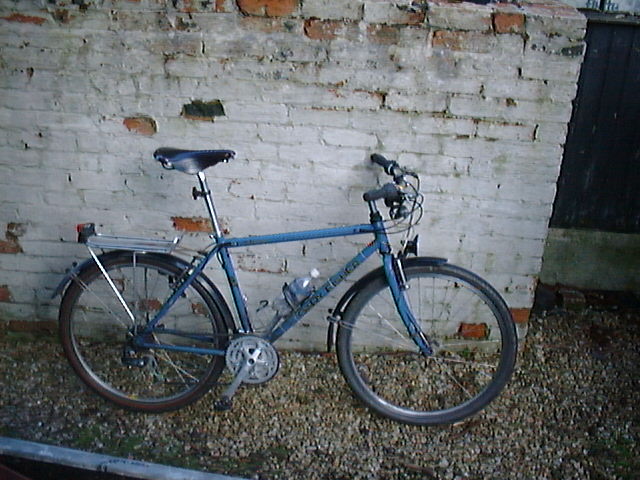
Gary Fisher Nirvana — 1997 model. Petrol blue. Light TruTemper steel frame and high gearing. This bike made me an urban cyclist. Still going strong in Glasgow, I hear.
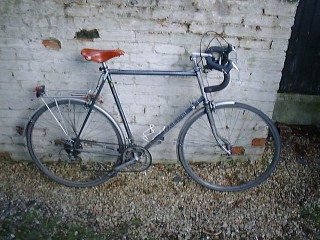
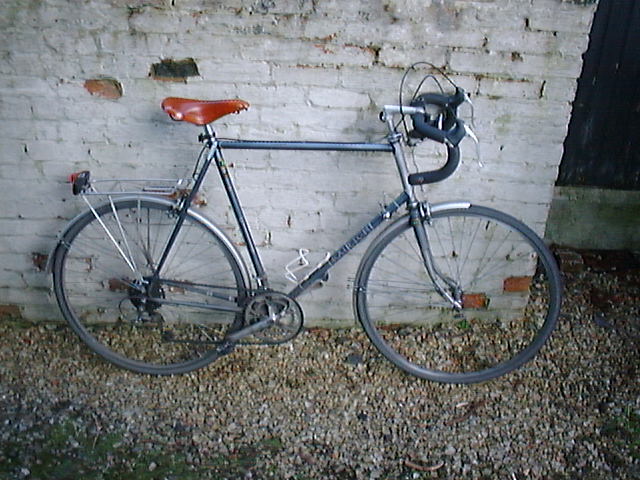
Raleigh Royal tourer — bought for a trivial sum of money from a fellow member of urbancyclist-uk. Once fixed up, ran a treat. Its 531 frame was a little big, causing a few owowowOW stops at lights. Had the truly wonderful Sanyo BB dynamo, which would never slip, even in the worst sog.
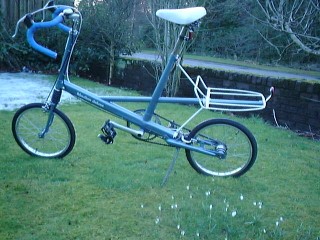
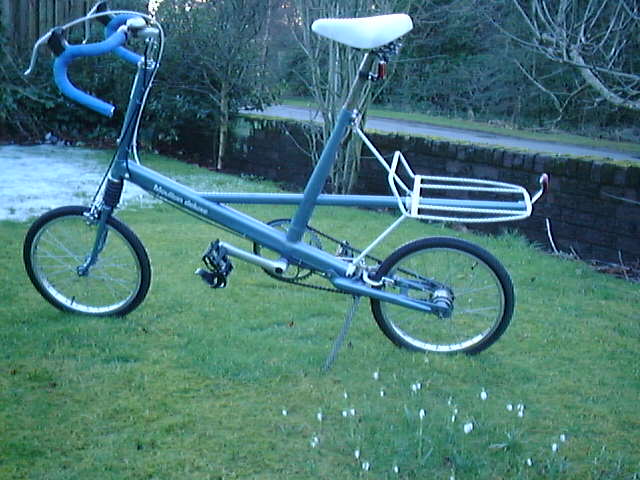
 Moulton Deluxe 4-speed — a powder-blue Series II transitional (which means it had huge girders for rear forks) that I fixed up with drop bars. Insanely fast. I used to smoke roadies on it, which they didn’t like when they saw the basket on the back passing them. Purportedly living in Florida now. I would get another of these in a heartbeat, though I’m a bit much of a clydesdale for the Series I.
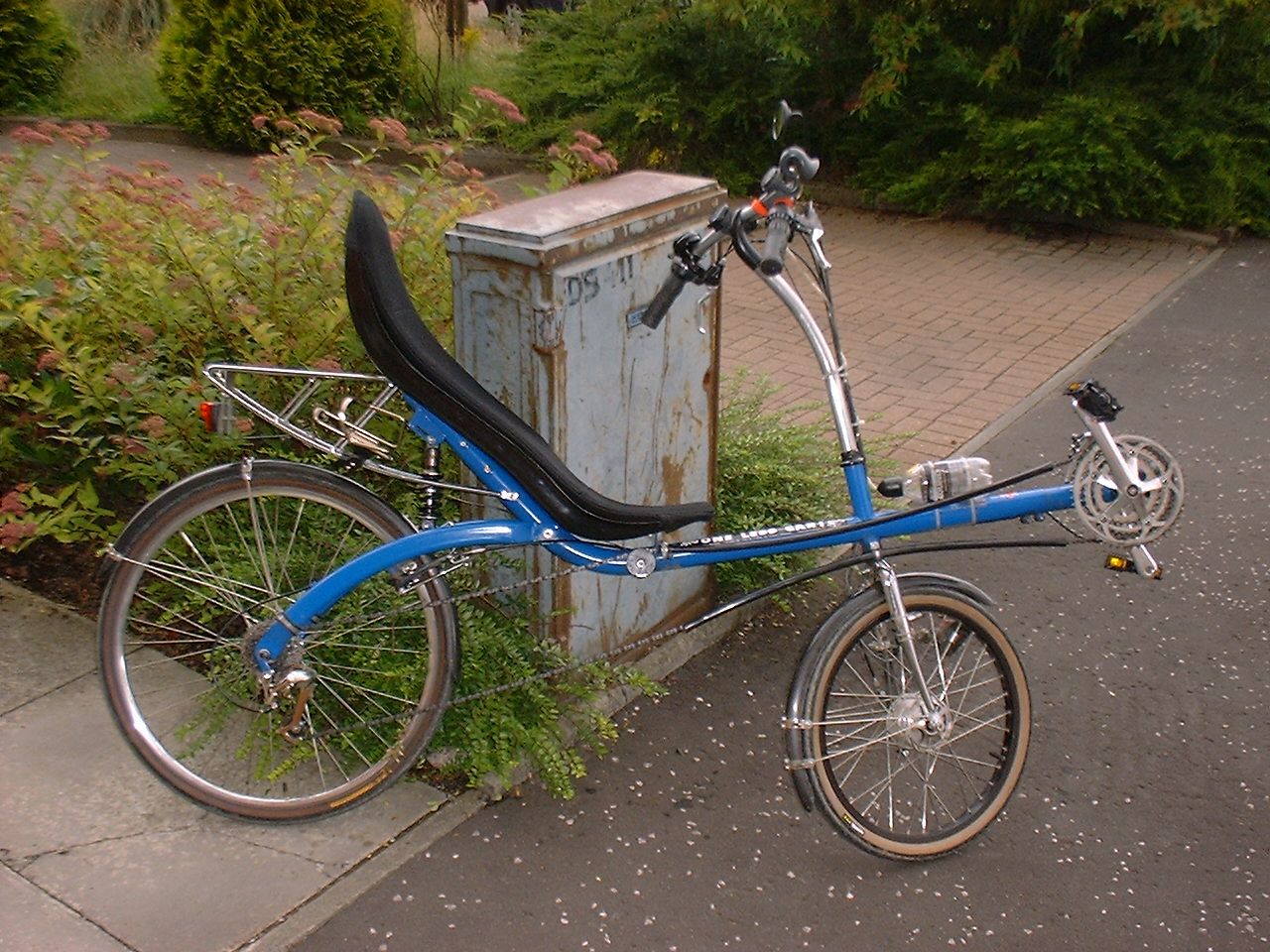
Speedliner BlueGlide recumbent — perhaps not my best purchase, but certainly the fastest. Mostly held together with TyRaps and the ingenuity of Ben Cooper. A bit like riding a rocket on the flat or downhill. The people of Kirkintilloch were not ready for it. Took me two weeks to learn to ride. responsible for the worst spill of any bike when the front tyre blew out at speed on the A803. I lost a lot of skin that day.
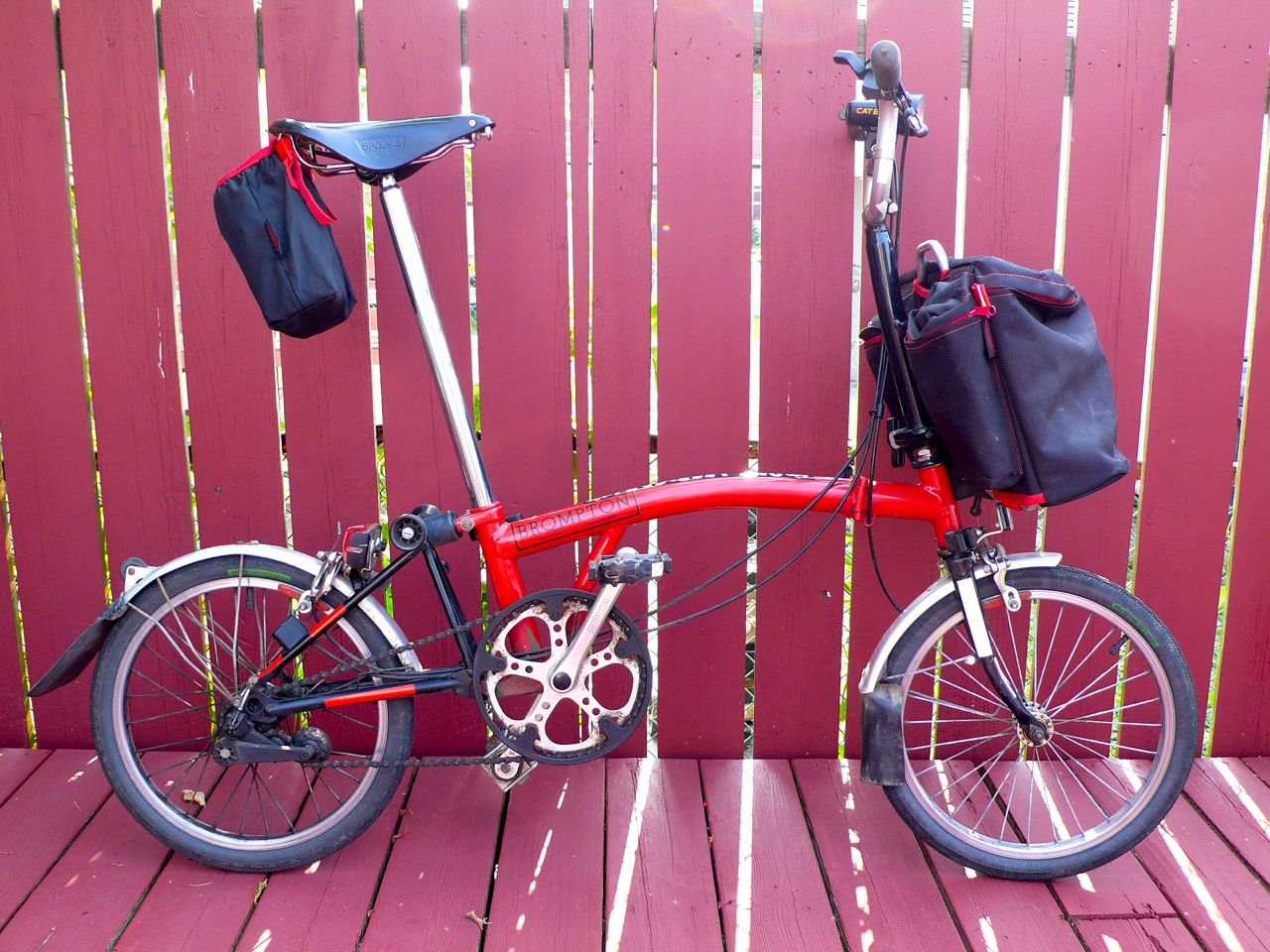
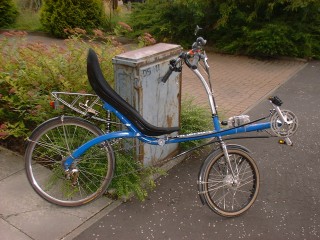 Brompton — bought used for £250. Nifty five speed thing. Brought it to Canada, where it lived in our front room, much to some visitors’ consternation. Wasn’t getting much use, so sold it to someone who is happily tootling about the west end of Toronto on it now.
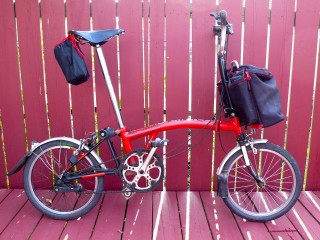 Pashley Post Office bike — bought from a supermarket sales/wants ad. Huge. Heavy. Slow but steady. Giant steel Sturmey-Archer hub brakes could stop in any weather. Was rather disappointed to learn that, sometime in its career, this bike had been stolen, as the Post Office destroyed used delivery bikes.
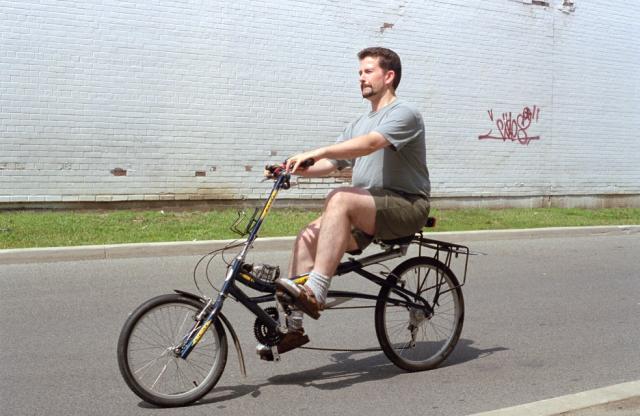
 CCM Evox recumbent — I actually review this for Velo Vision magazine. Had the Evox been a smidge lighter and a bunch higher geared (it ran standard MTB gearing into a 24″ back wheel) it would have been utterly lovely. As was, it was quite pedestrian. Rode it to work many days in the summer of 2002. Got very dehydrated riding from Markham to the Beaches one day; water bottle was actually hot to drink from. I don’t know what has happened to CCM/Procycle; there’s no website, and this product has disappeared. It would go lovely as an about-town bike with roller brakes and a hub gear.
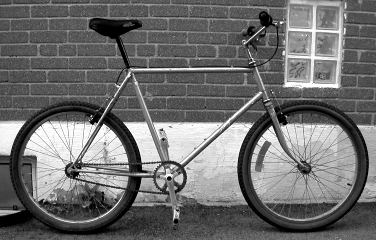
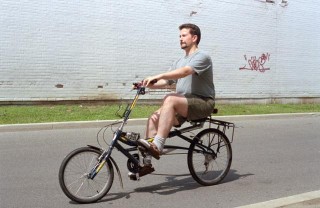 Specialized Stumpjumper Sport — you have no idea how much that I, as a short spotty overweight paperboy, wanted a Stumpjumper in 1983. I read about them in Bicycle magazine, so they had to be good. Shortly after coming to Toronto, I saw a card in Urbane Cyclist advertising an old SJ converted to singlespeed. I had to have it. Though somewhat beaten up (more so after I painted it in grey primer and added stickers) it ran like a dream on its original Maillard hubs. It languished unridden for a few years, then I gave it away. This was the only bike I’ve ever owned that I could ride no hands for almost any distance.
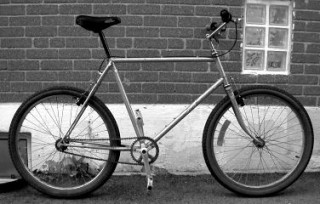 Dawes Super Galaxy tourer — I have a remarkable fondness for 531, and bought this used bike at an east end dealer. Like the Raleigh, it was a bit big, and getting good tyres for the 27″ rims was a problem. Despite its loveliness, eventually craigslisted.
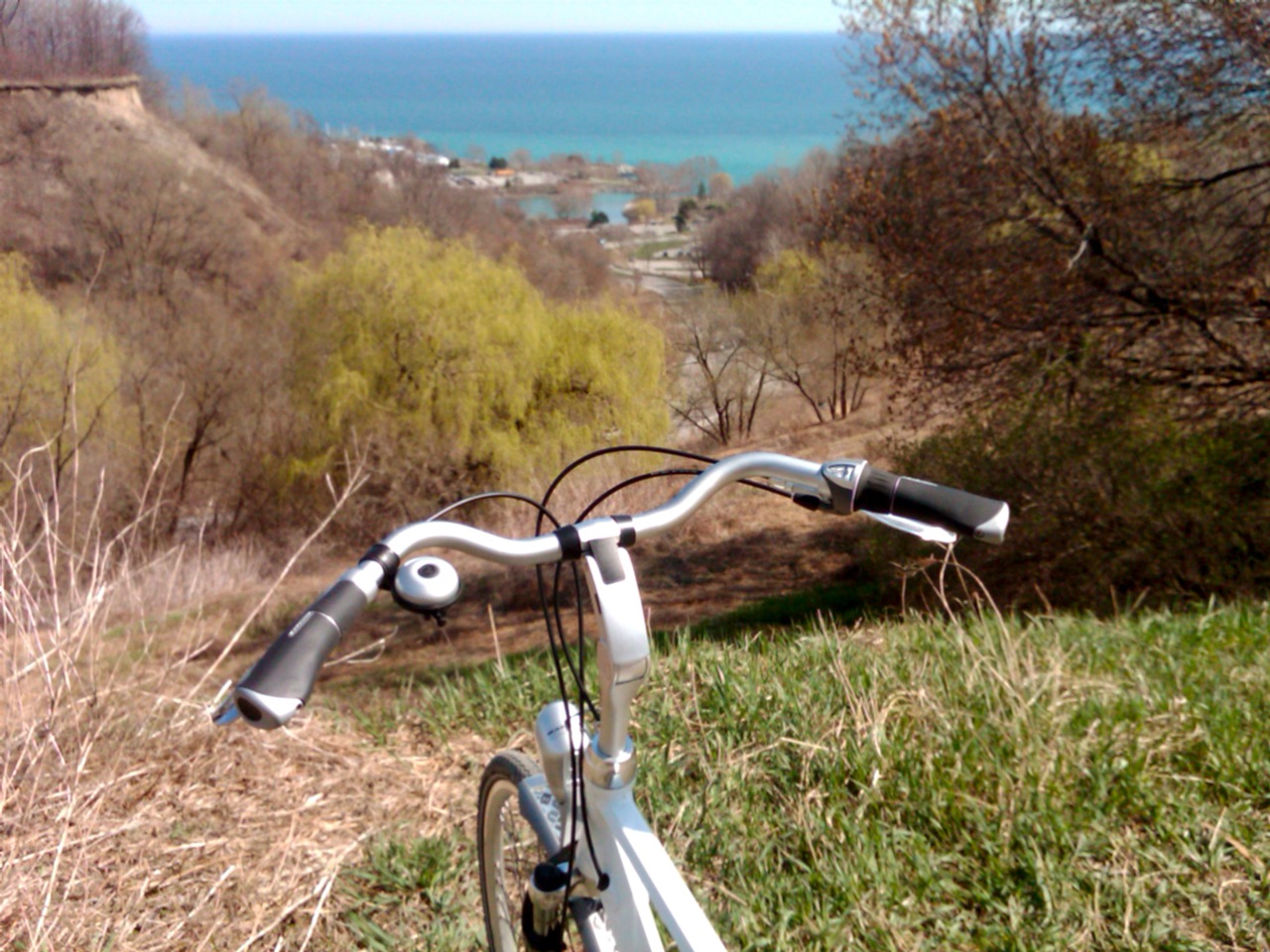
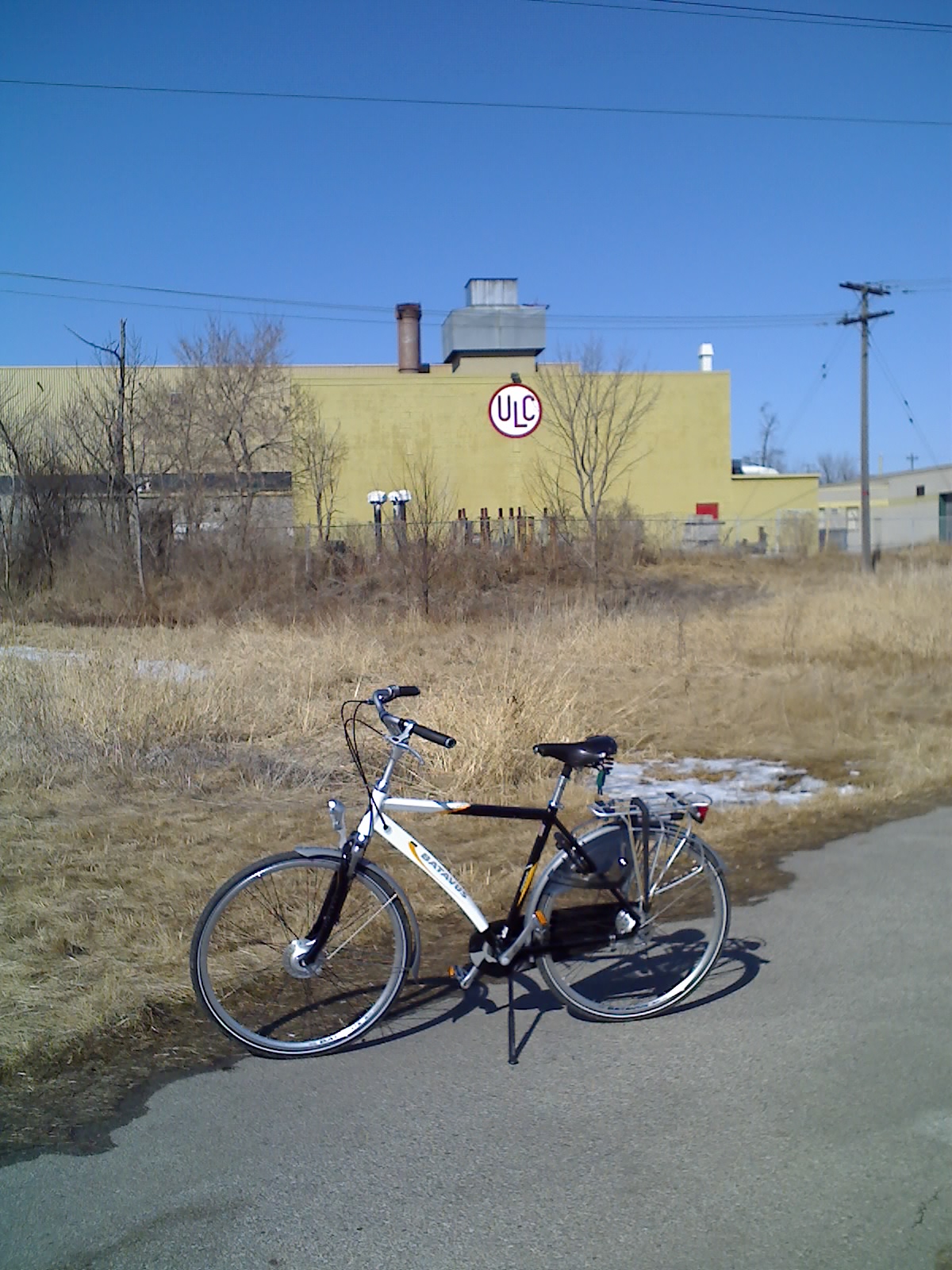
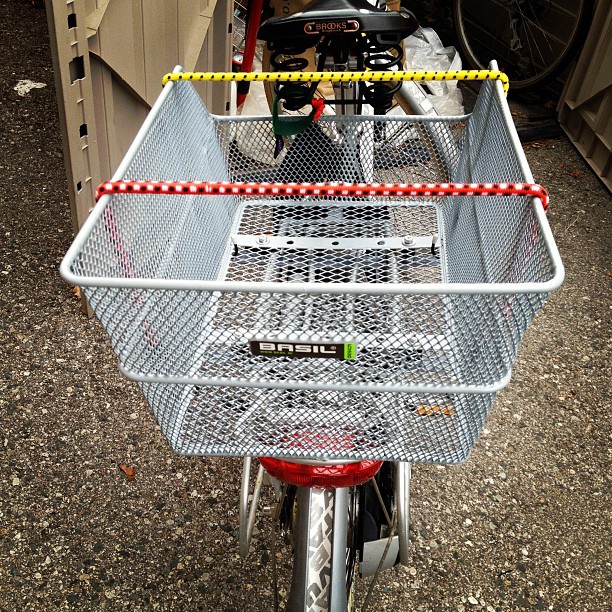
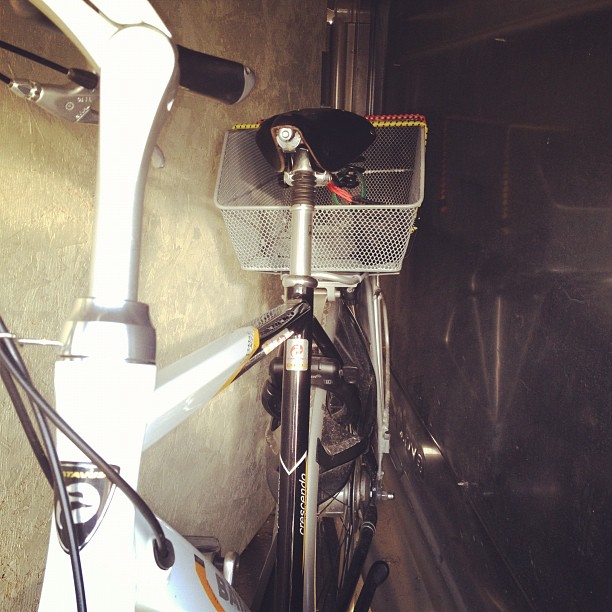
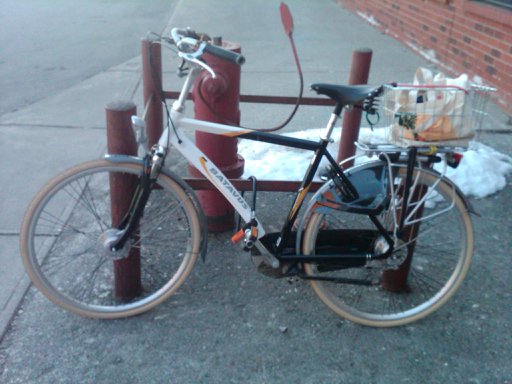
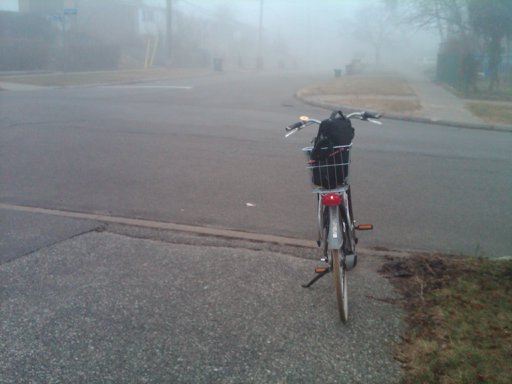
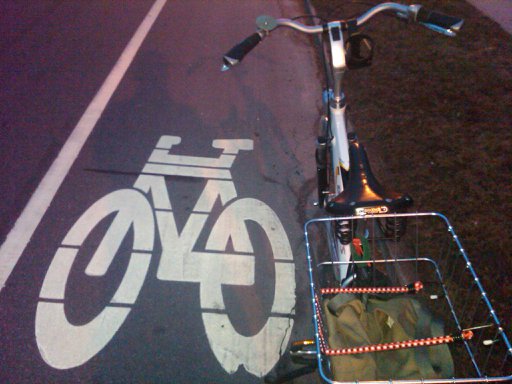
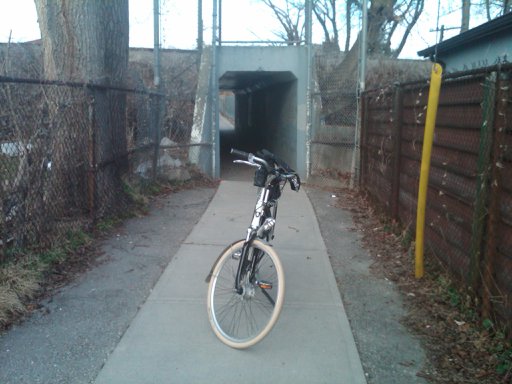
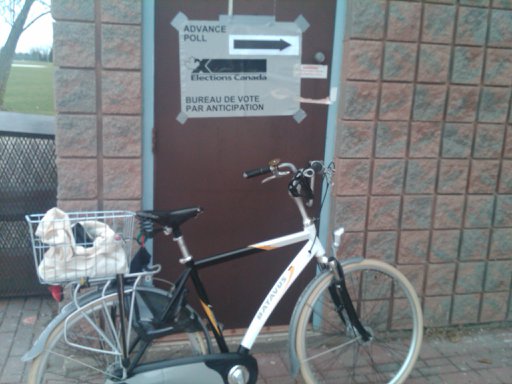
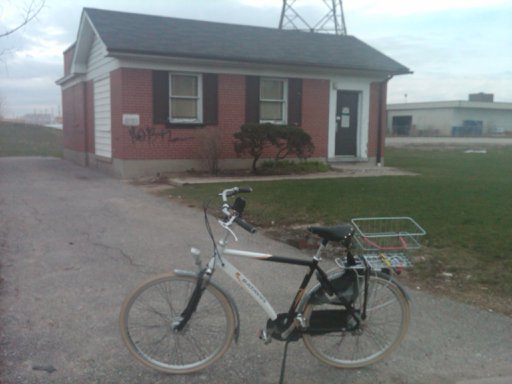
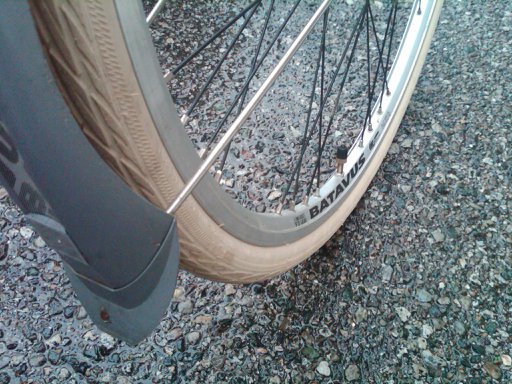
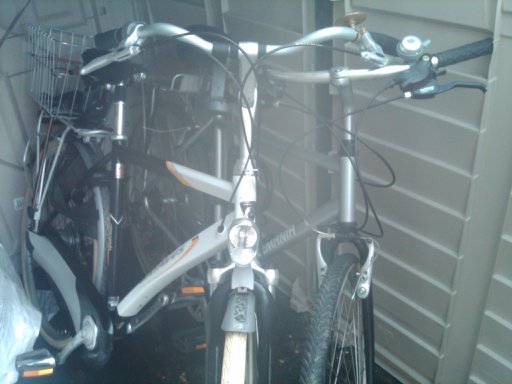
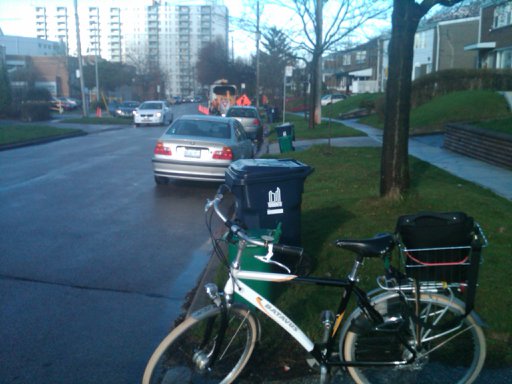
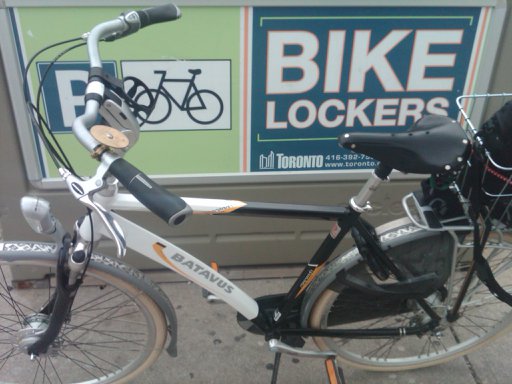
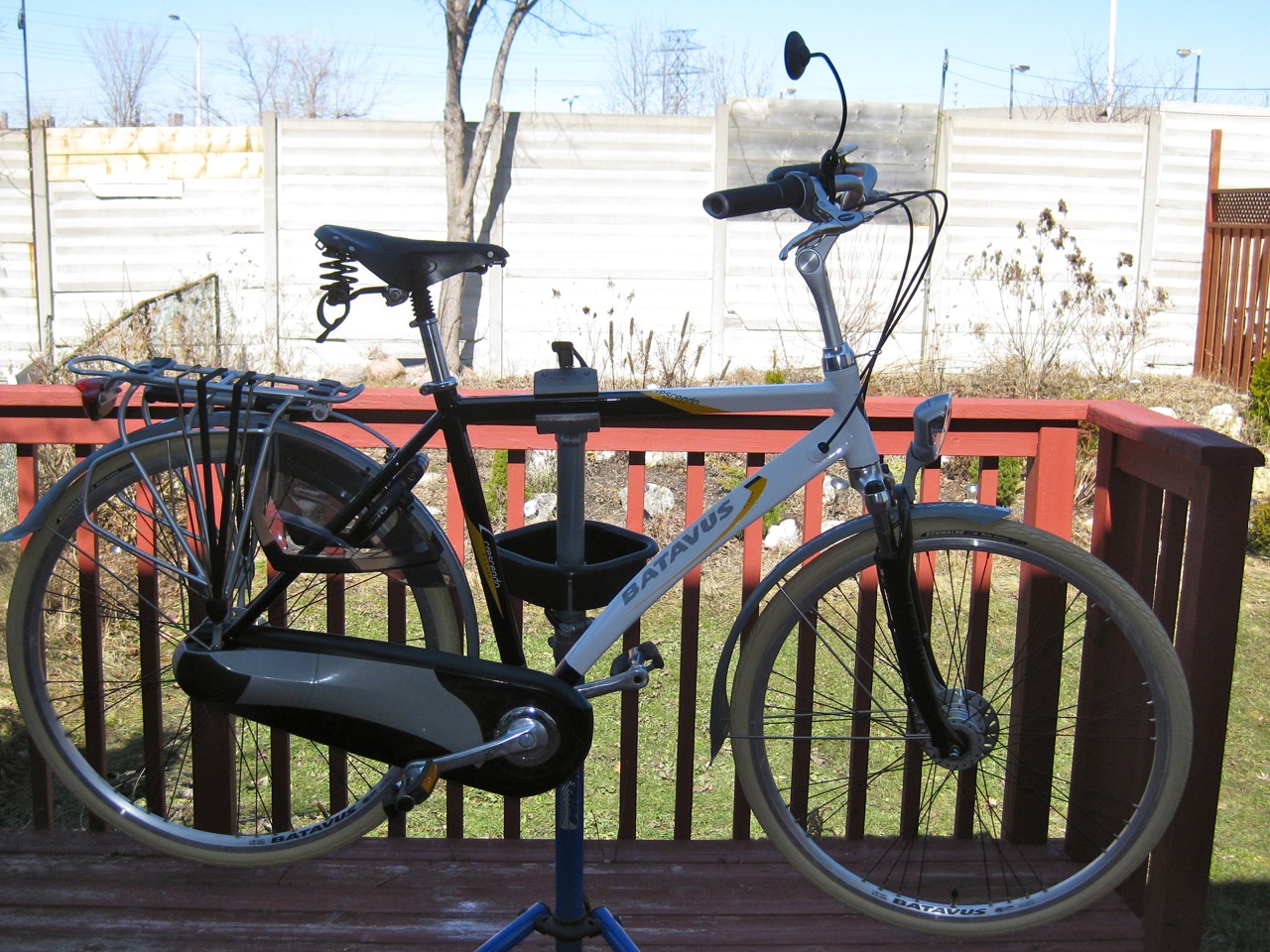
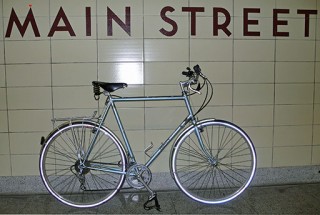 Batavus Crescendo Deluxe —the bike I use every day. Meets all the requirements of my sensible bicycle ideal. A thing of beauty and remarkable speed.
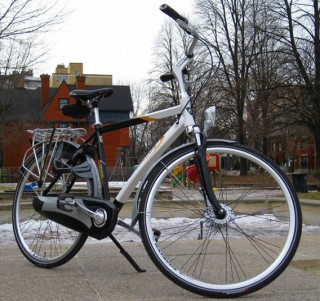 Non-owned, but bikes fondly remembered:
- Peter Cormack’s Gresham Flyer — actually, it was Peter’s sister Dot’s bike, this tiny little kid’s thing. I used to zoom down the embankments on it in Crookfur Park before I could ride a bike.
- Peter Cormack’s dad’s “Safe Way” roadster — a single speed of uncommon stateliness, whose claim to utter radness was that the back brake caliper was so flexible that it would lock itself under the frame and cause the most amazing skiiiiiiiiiiiids on the Crookfur Park cinder track. Best fun ever.
- Ken Campbell’s brown Raleigh roadster — Ken, having long been in London being a synth programmer, had left his old roadster in the basement. When my 10-speed wasn’t up to it (usually broken spokes – sometimes even accidental) I’d borrow this bike and glide around the neighbourhood. It had a dynohub that put out a faint but reassuring light.
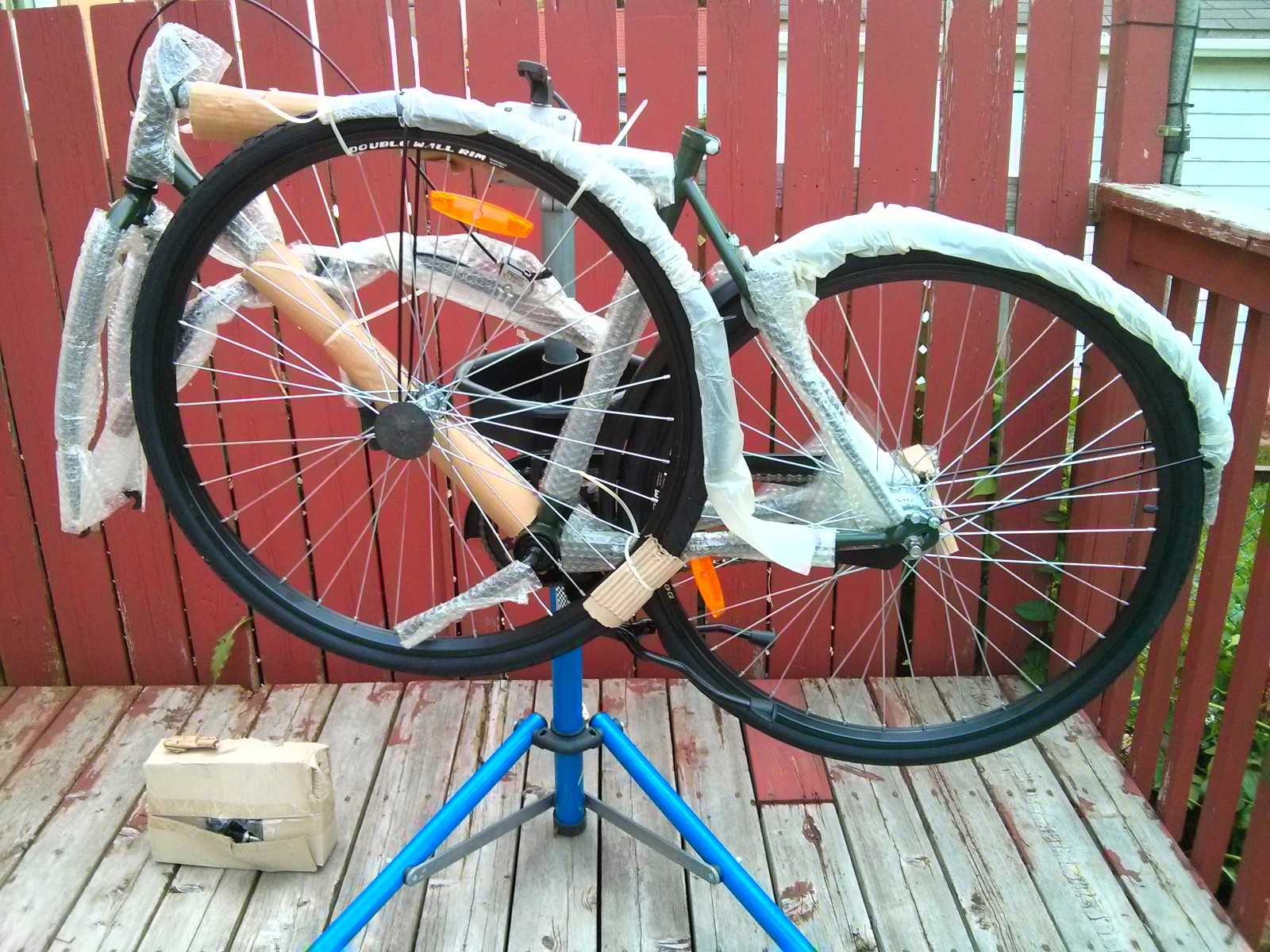
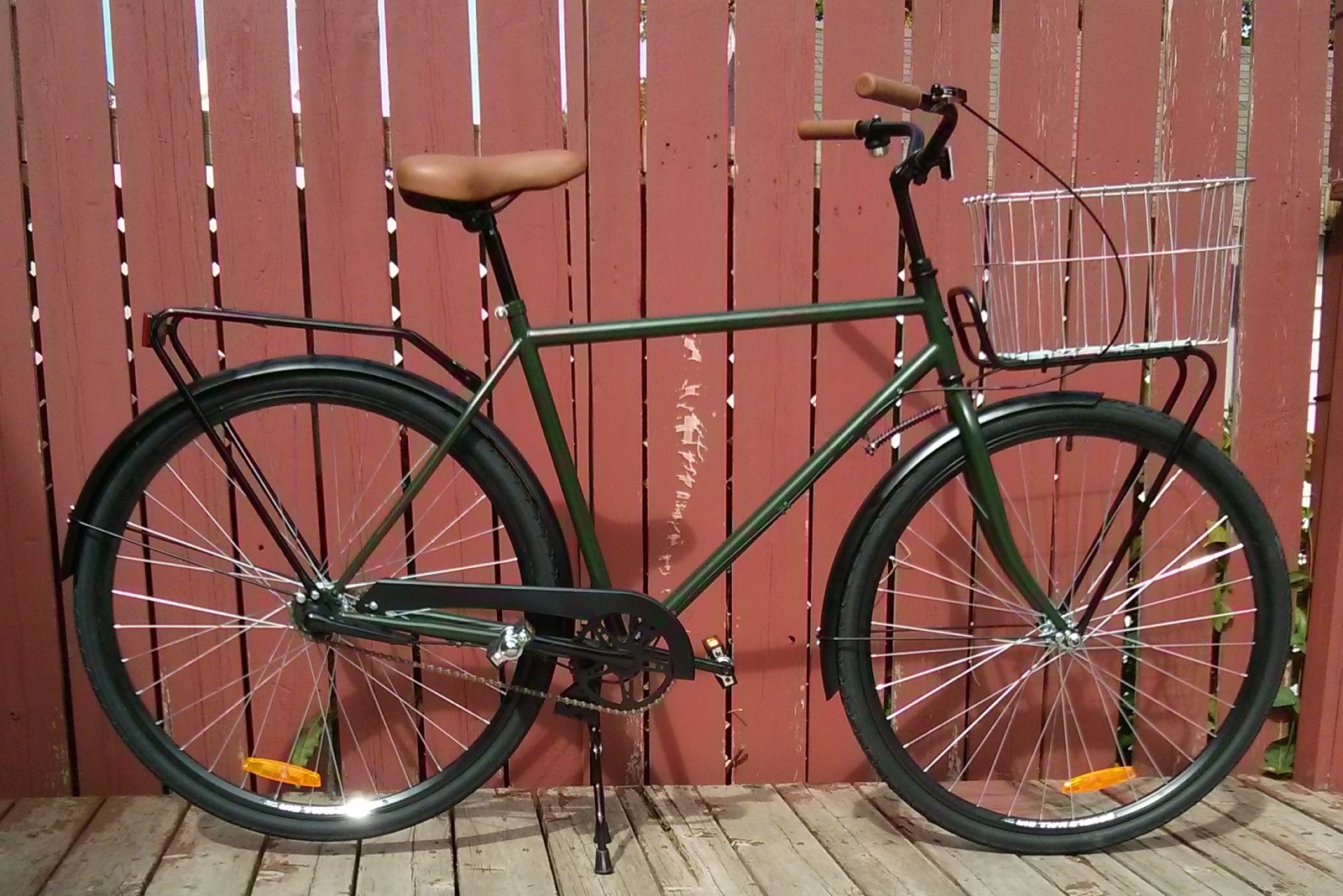
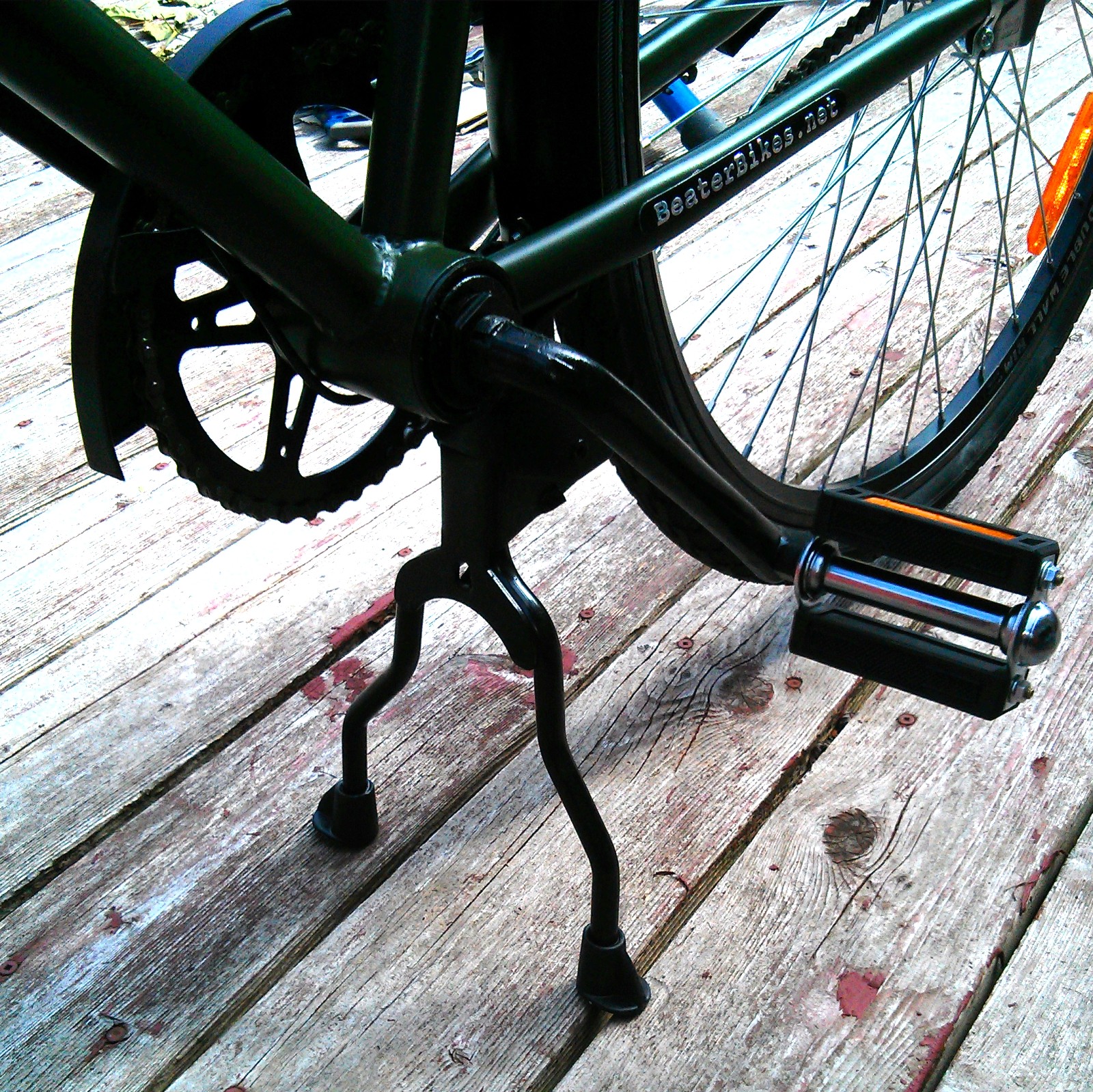
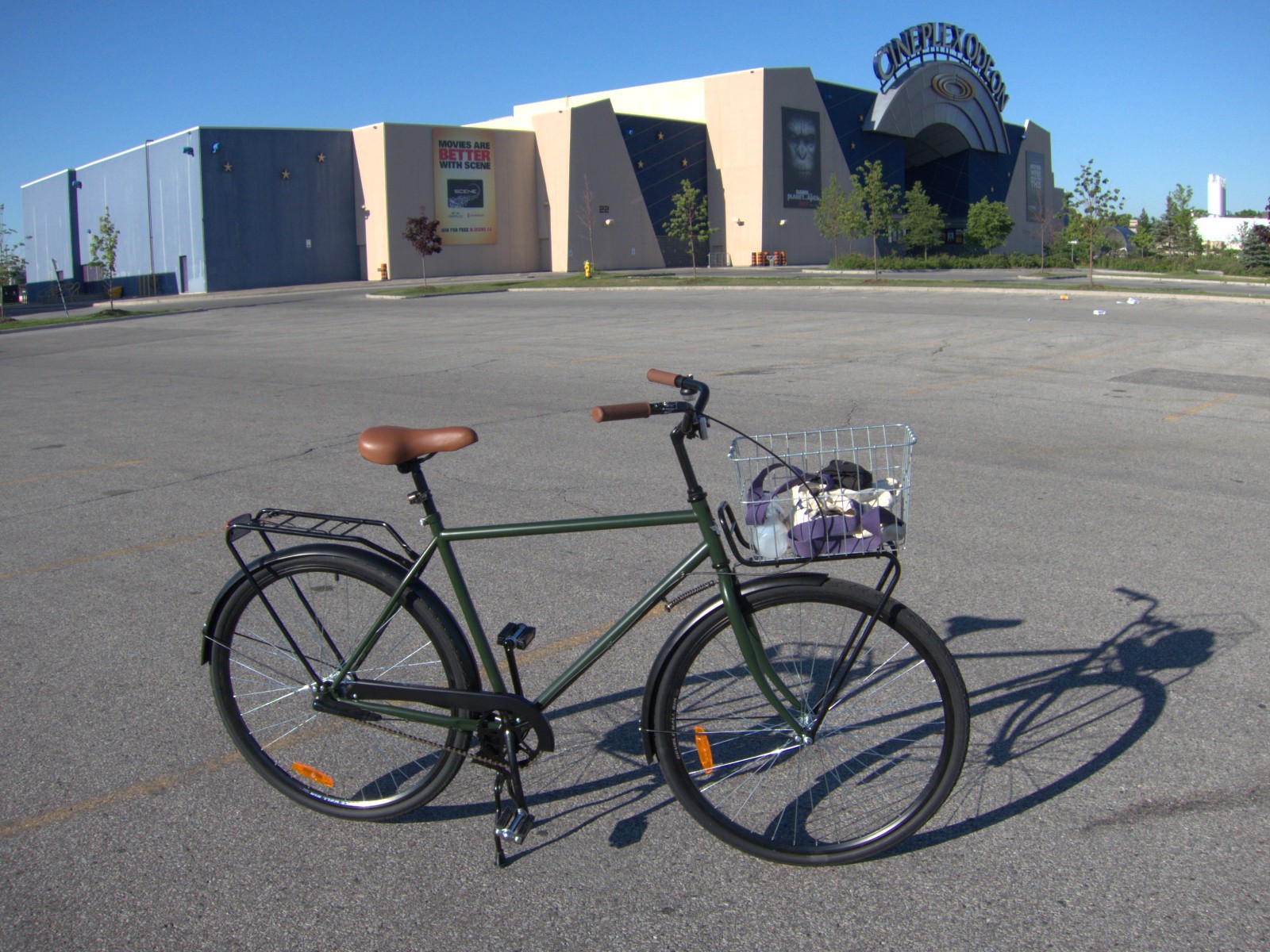



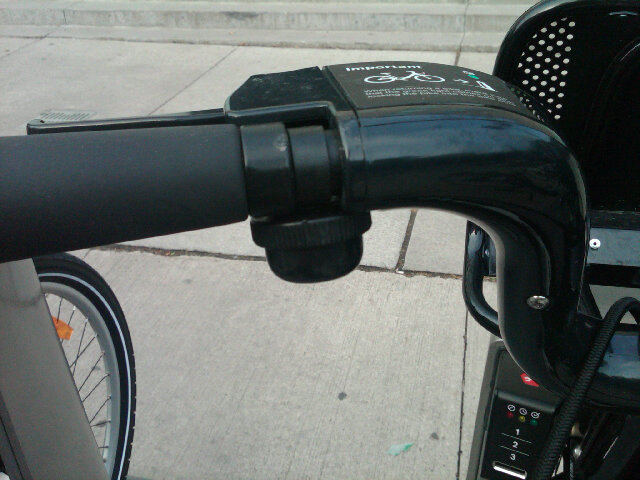
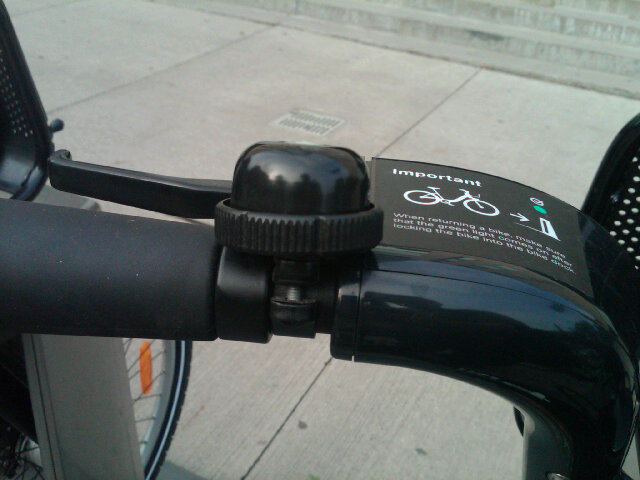
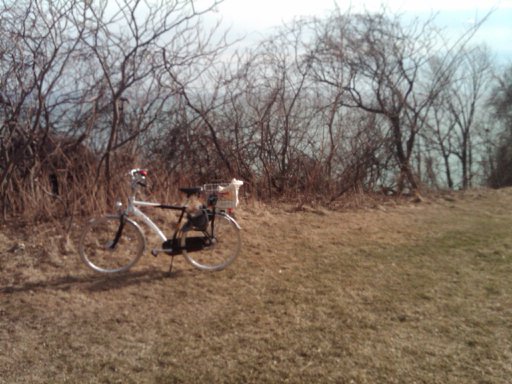
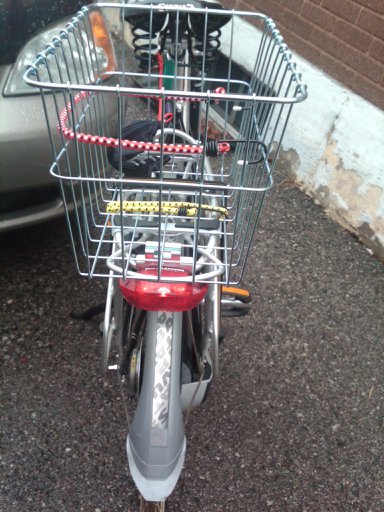
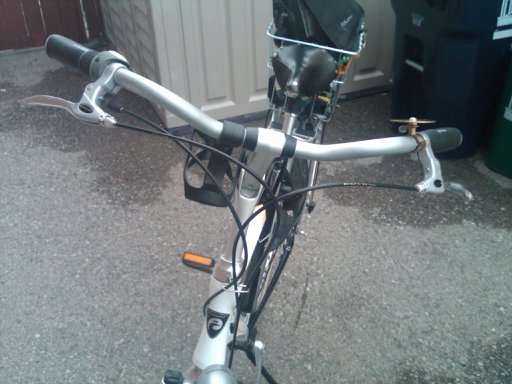
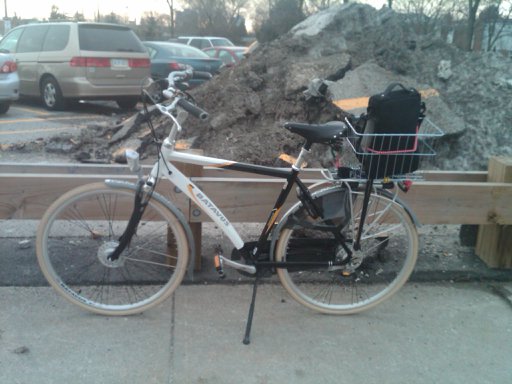


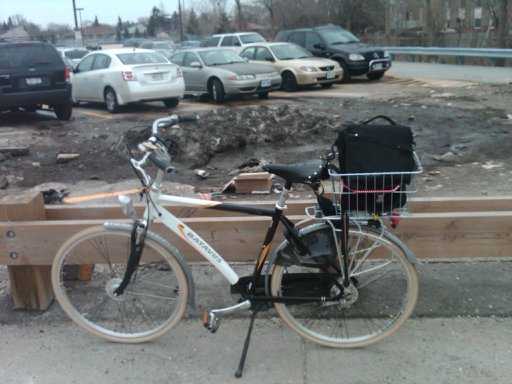
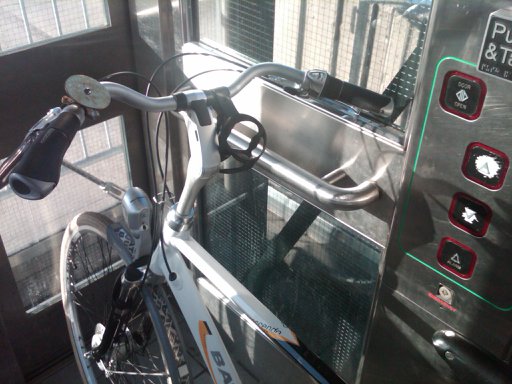

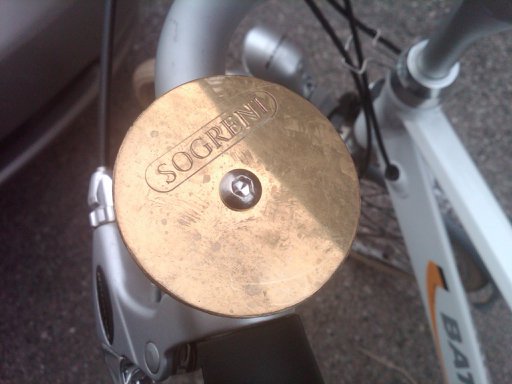

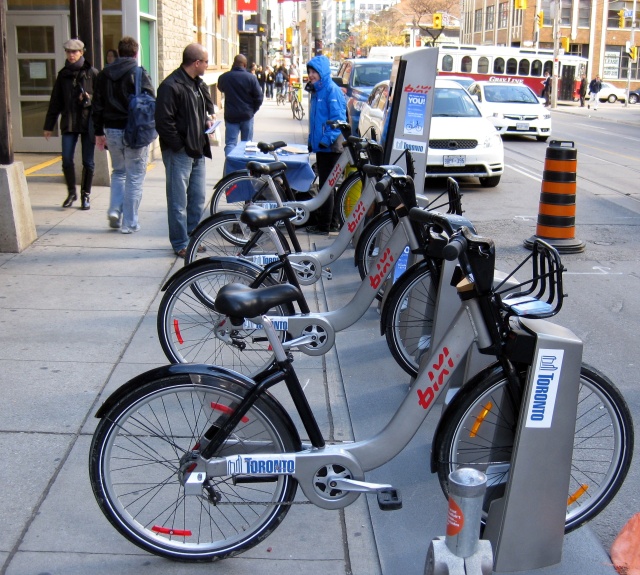 I checked out one the bikes for a ten minute test ride. For such a solid bike, I was impressed with its swiftness. You won’t find yourself hopping curbs, but the big smooth tyres roll fast.
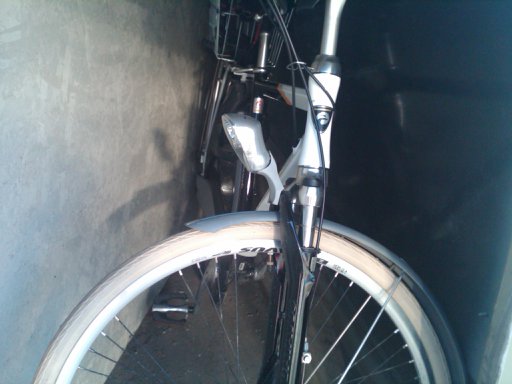
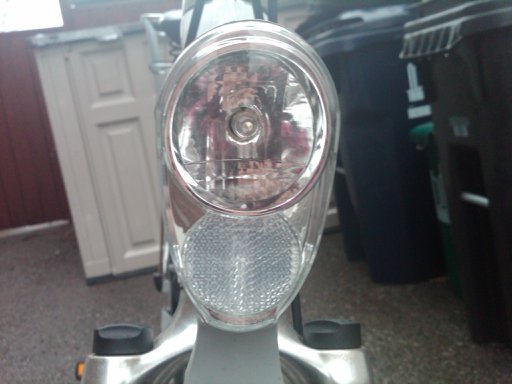
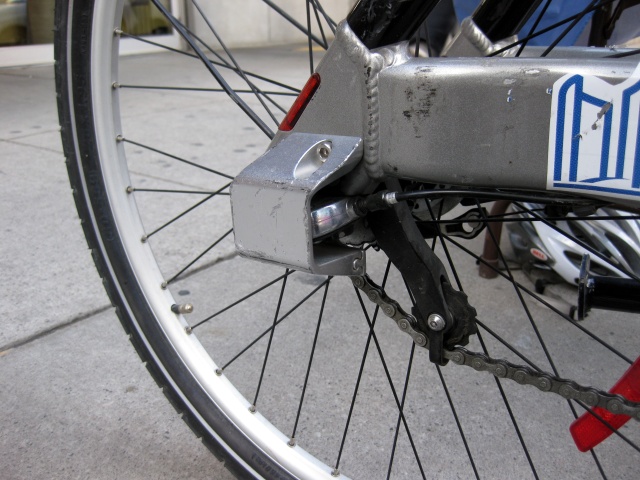
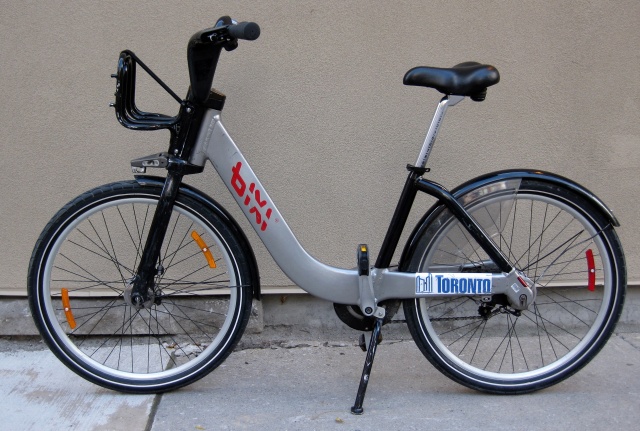 The bike’s pretty sensible, with a fully guarded chain, guards, dynamo lights and a front carrier.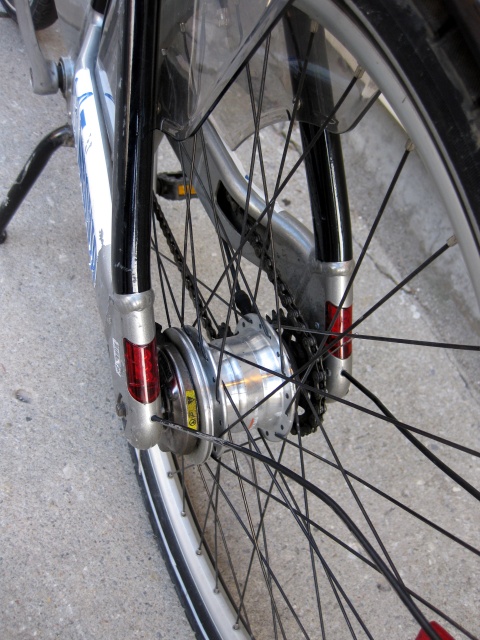
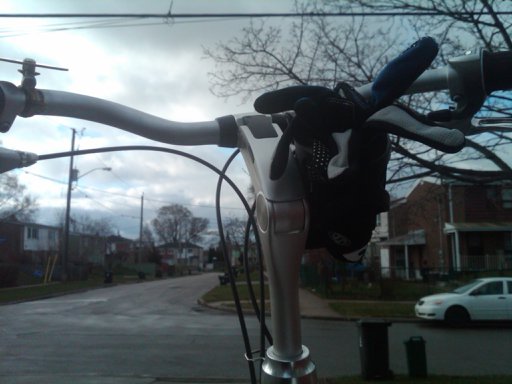
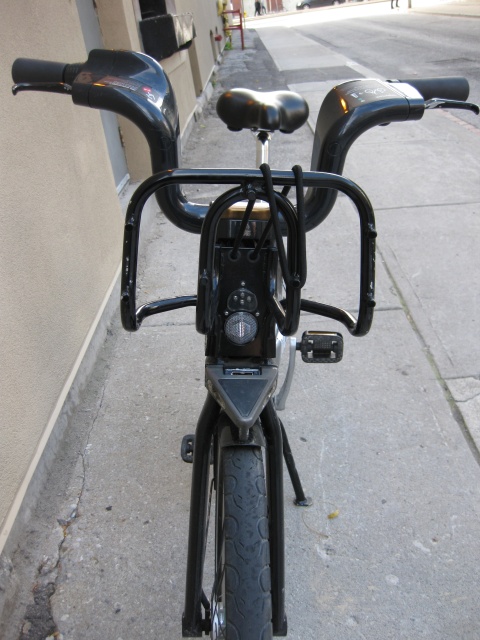 All the controls are where you’d expect them:
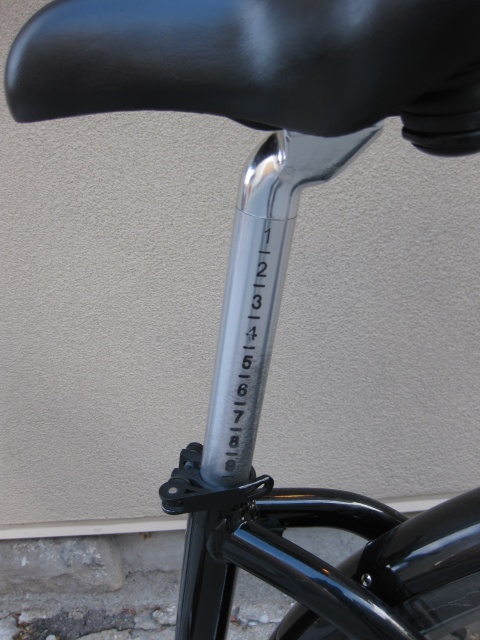
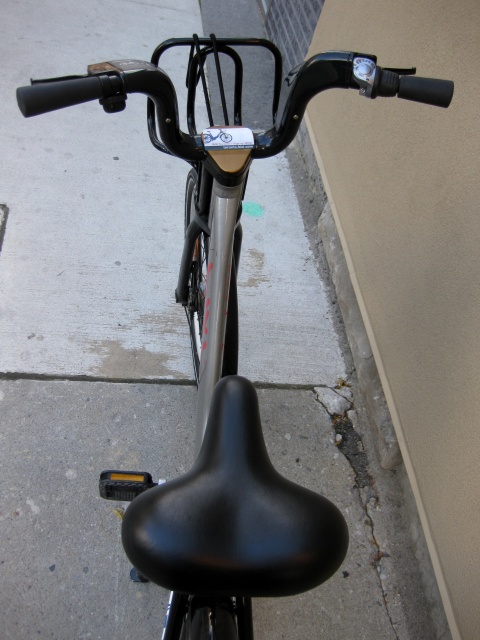 And a graduated seatpost for us tall forgetful types:
 The one thing I was disappointed with was the brakes.