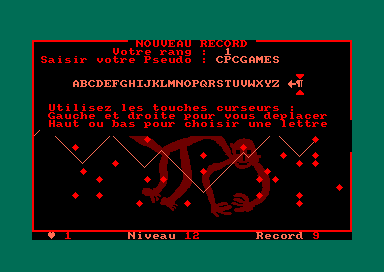
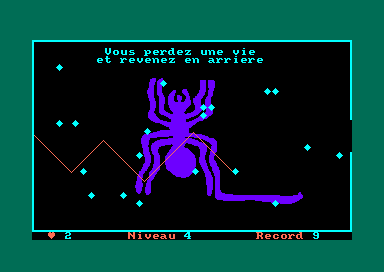
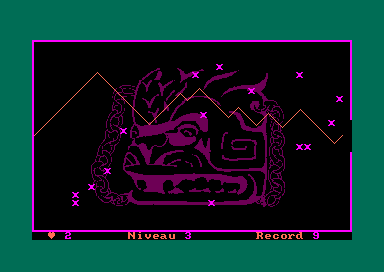
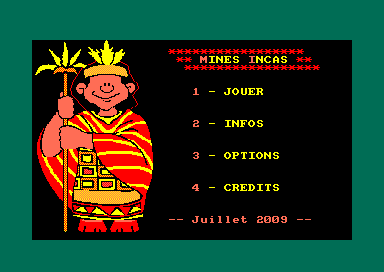
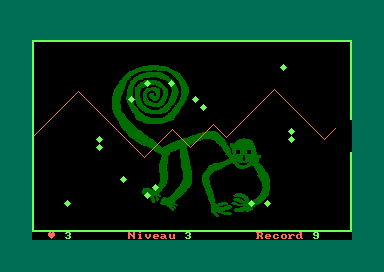

So it turns out that Mines Incas is yet another variant on 2D Star Dodge / Asterisk Tracker theme. And it’s really well done!
Play it in your browser: Mines Incas
Info page at CPC-POWER: Mines Incas
So it turns out that Mines Incas is yet another variant on 2D Star Dodge / Asterisk Tracker theme. And it’s really well done!
Play it in your browser: Mines Incas
Info page at CPC-POWER: Mines Incas
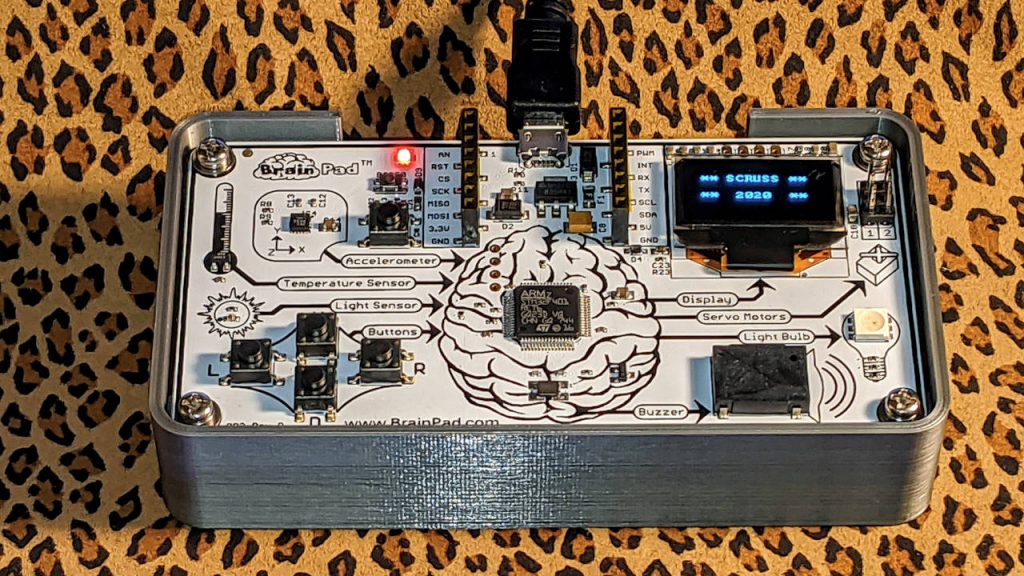
I’ve extended the MicroPython examples for the BrainPad Classic so that all of the devices work: scruss/brainpad-micropython: Micropython examples for the BrainPad Classic (BP2) from GHI Electronics.
The ones that already worked in the original examples repo are:
I’ve added:
Yes, it would be nice to have a slick unified library like the BBC micro:bit does. For later, though.
Other resources:
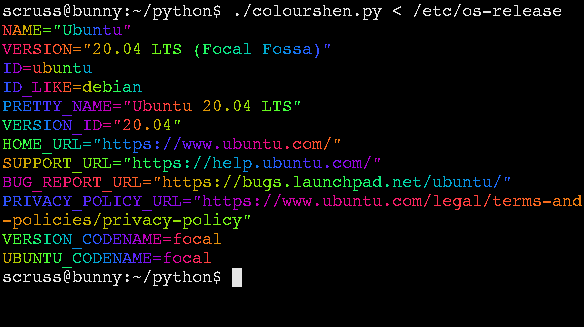
Using ansicolors:
#!/usr/bin/python3
# -*- coding: utf-8 -*-
# colourshen.py - stdin to rainbow stdout
# scruss, 2020-06

from colors import *            # see https://pypi.org/project/ansicolors/
import sys
wheel_pos = 0


def cos_wheel(pos):
    # Input a value 0 to 255 to get a colour value.
    # scruss (Stewart Russell) - 2019-03 - CC-BY-SA
    from math import cos, pi
    if pos < 0:
        return (0, 0, 0)
    pos %= 256
    pos /= 255.0
    return (int(255 * (1 + cos(pos * 2 * pi)) / 2),
            int(255 * (1 + cos((pos - 1 / 3.0) * 2 * pi)) / 2),
            int(255 * (1 + cos((pos - 2 / 3.0) * 2 * pi)) / 2))


def hex_wheel(pos):
    rgb = cos_wheel(pos)
    return('#%02x%02x%02x' % rgb)


def wheel_print(s):
    global wheel_pos
    incr = int(256/(1+len(s)))-1
    if incr < 1:
        incr = 1
    for c in s:
        print(color(c, fg=hex_wheel(wheel_pos)), end='')
        wheel_pos = (wheel_pos+incr) % 256
    print()


for txt in sys.stdin:
    wheel_print(txt.rstrip())
(fixed a very obvious ahem! in the code, hope no-one noticed …)