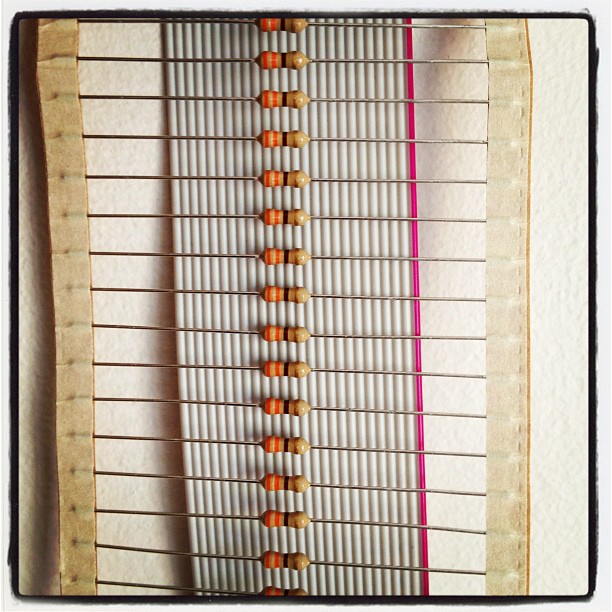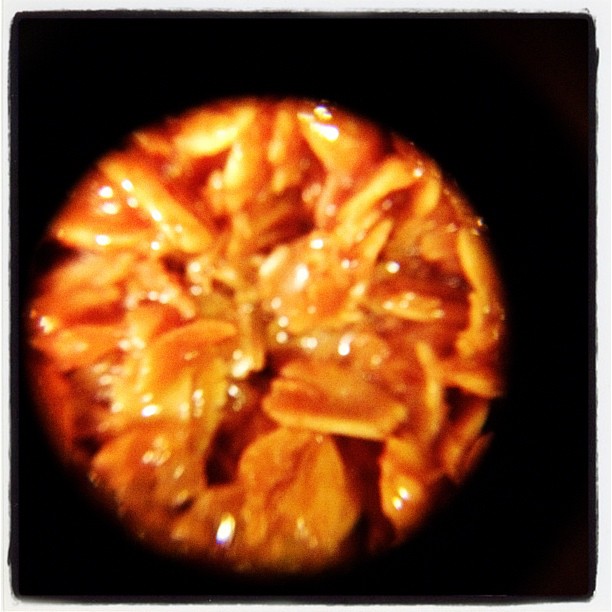
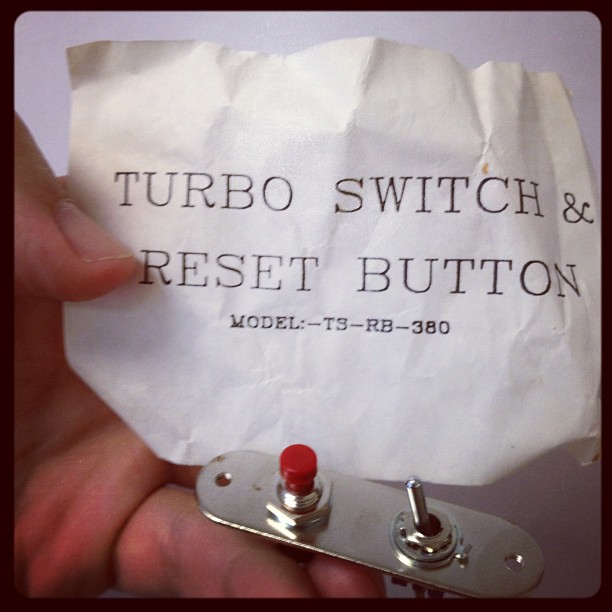
Instagram filter used: Hudson
Chirp is a new annoyance, a way of sending links and stuff via audio. Sounds like it’s doing it via MFSK, and is only sending the ID of the link on Chirp’s server, as there’s not much data sent. Here’s what the spectrum plot looks like:
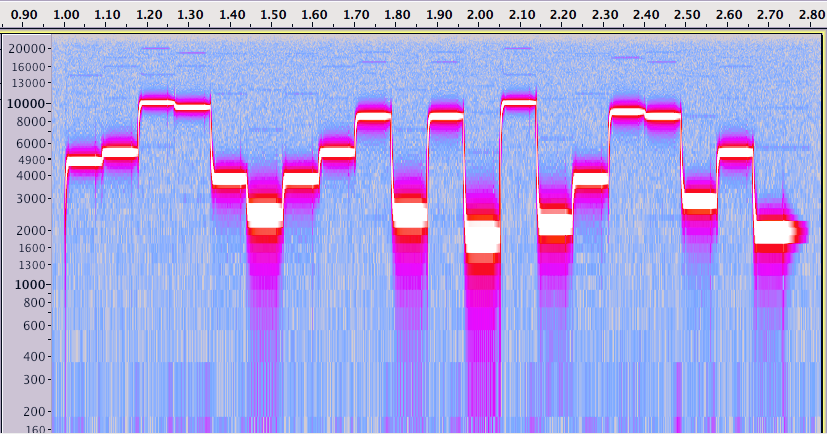 This is what it sounds like: test chirp [mp3].
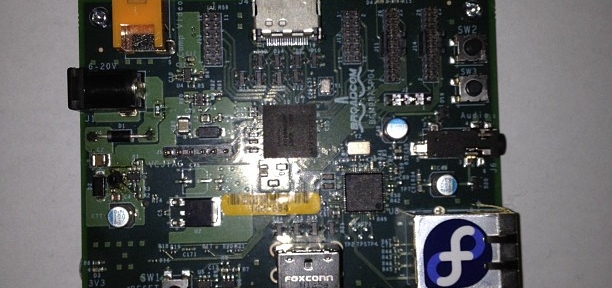
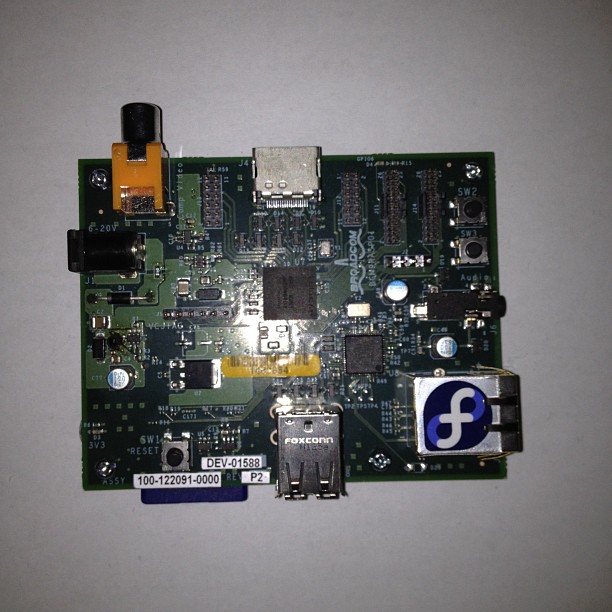
Raspbian is good. If you haven’t upgraded your Raspberry Pi to run it — or any other hard float distro — then you should. It makes the little board seem positively zippy.
The processor on the Pi is an odd beast. It’s an ARMv6, somewhere between the ARMv5 that the original Debian distro supported, and the ARMv7, which has to have hardware floating point support. The Pi’s processor has floating point in hardware, but it wasn’t supported in the first distribution. Raspbian fixes this, and also has a nice hardware setup wizard (which I wish I’d known about before I spent a while preconfiguring the SD card on another Linux box, grr).
My highly unscientific benchmark of how fast a computer is is encoding an audio file with ‘lame -V2′. If it comes out faster than real time, it’s fast enough. My first trial in late June came out at a dismal 27% real time — so that would mean that a 4 minute song would take 14′ 49″ to encode. Very poor. Trying it again with Raspbian today gave me 209% real time — so that same song would be done in 1′ 55″. Much better.
While I was fossicking about with the Pi, I switched its power adapter over to a battery-backed outlet on my UPS. With summer storms, our power has been a bit glitchy, and the tiny USB power supply wasn’t able to ride through any of them. This, I hope, will allow me to have an uptime better than the time between storms …
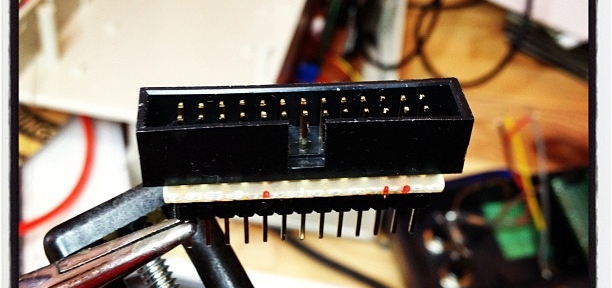
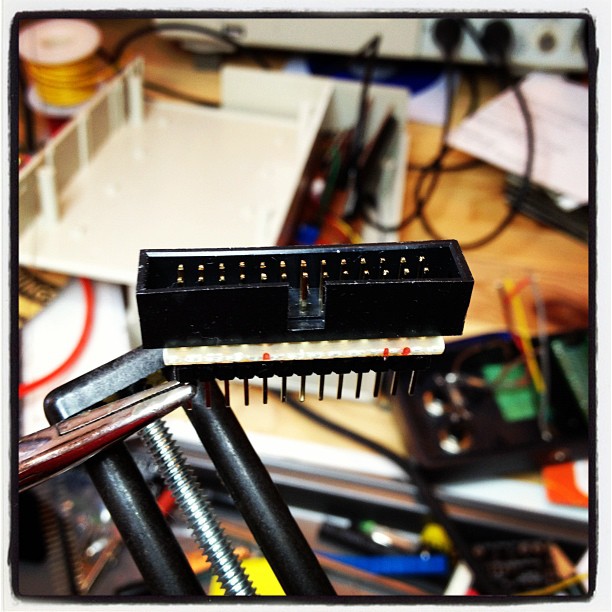
I also made this last week:
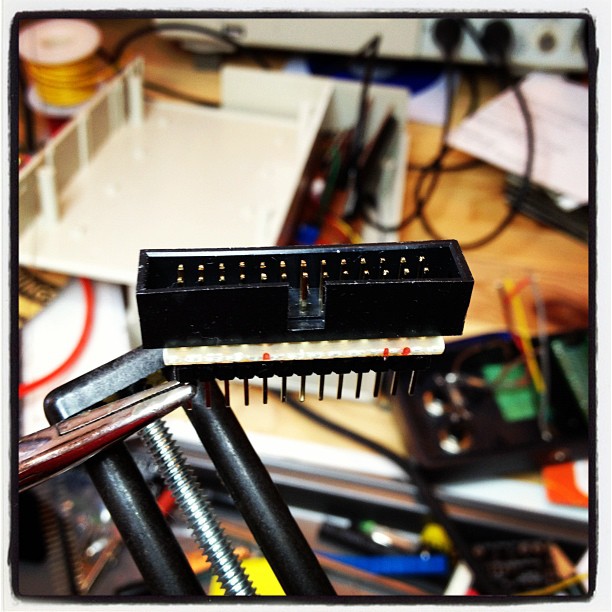
It’s a GPIO breakout, a sort of home made Adafruit Pi Cobbler. It’s on a tiny 13×4 fragment of stripboard. The soldering was fiddly, as stripboard is only single sided, so there was much fine tipped soldering iron action (and swearing). I now have the parts to built Mike Cook’s Breakout board with zener diodes providing protection, but this will do for simple applications if I’m careful.
Glad I went to the Ontario Hamfest yesterday — I won the Superprize! It is quite super; it’s an ICOM V80 2m HT. Built like an absolute tank; it feels heavier than my Kenwood TH-D72. Thanks to Burlington Amateur Radio Club for organizing the event, and to Radioworld for donating the prizes.
(If I want to get a little grinchy on this, the prize ticket said it was going to be a V82, a much pricier dualband HT, but hey! a free radio …)
It was an enjoyable event, if small by comparison to Hamvention, but then, everything is. Was pleased to see an Arduino/µC vendor at the show – Bill, of Aztec MCU Prototyping. Bill had some of his Omega MCU Systems boards for sale, which mostly feature ZIF sockets for rapid prototyping. I bought the Arduino-compatible (in software, if not pinout) Omega-328U board, and the PICAXE-based D-Axe. So that means I have even more types of µCs to learn!
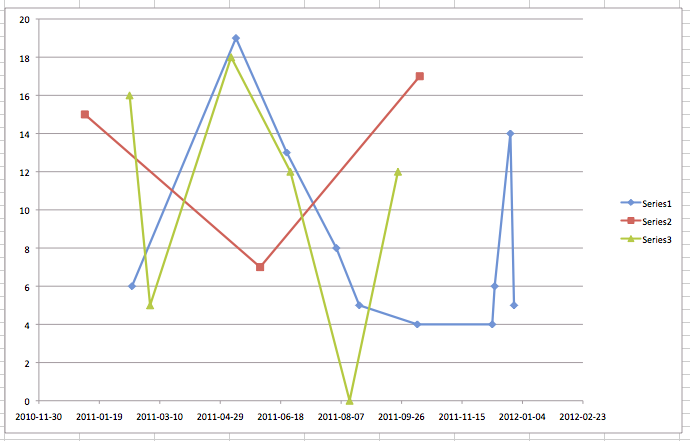
The Ask Metafilter question “Basic line graph” spurred me to make this unpretty graph:
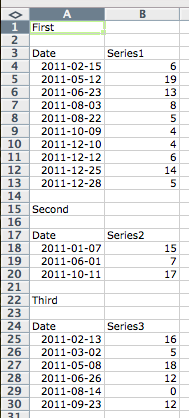
 Here are the input data:
You need to make an X-Y (Scatter) plot. All others don’t have fully independent X-axes. Make your chart by selecting the first two data columns, then Insert Chart. Once the chart is in, right click/Control-click (OS X) to get this context menu:
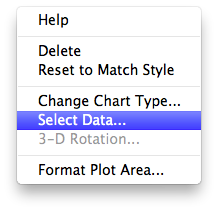
which should show
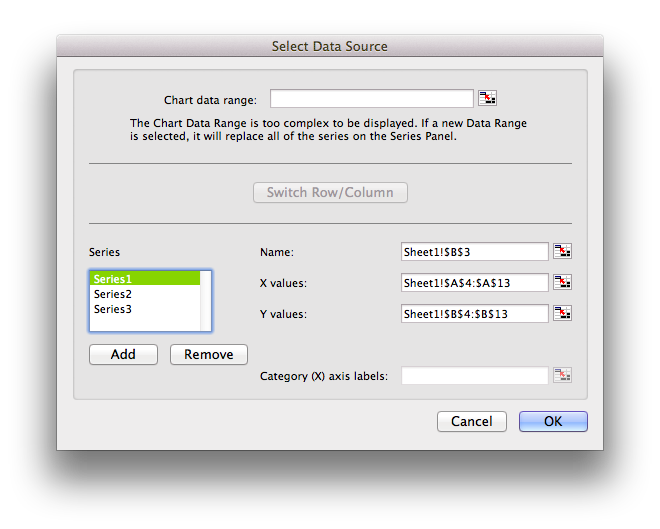
You can add more data series by hitting Add. Here are the specs for the next two series:
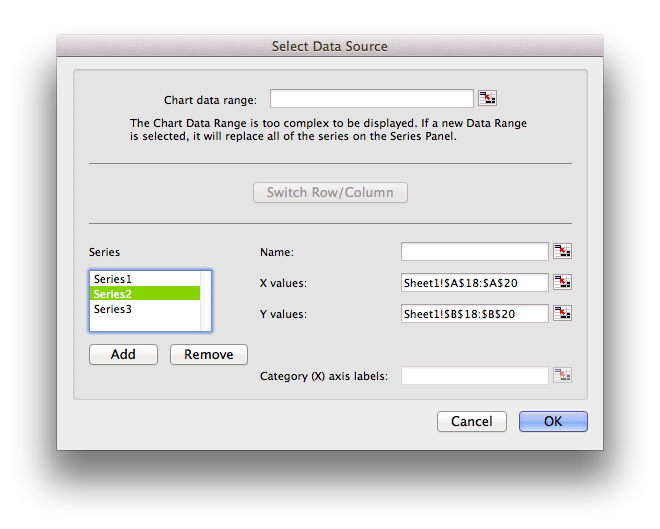
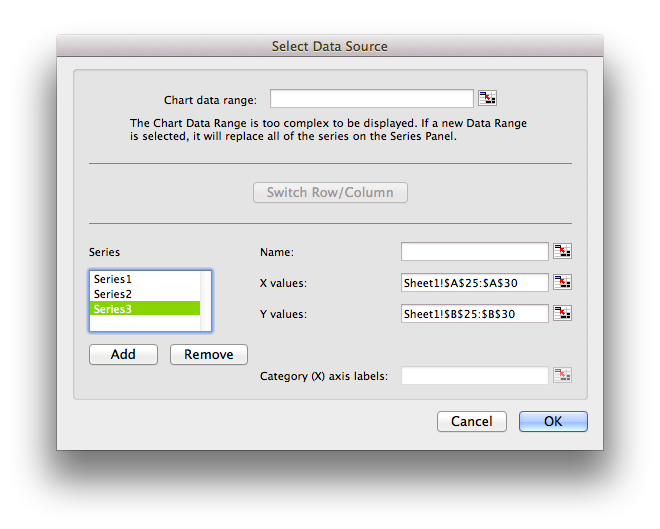
Finally, here’s the example spreadsheet: MultipleDateLinesChart.
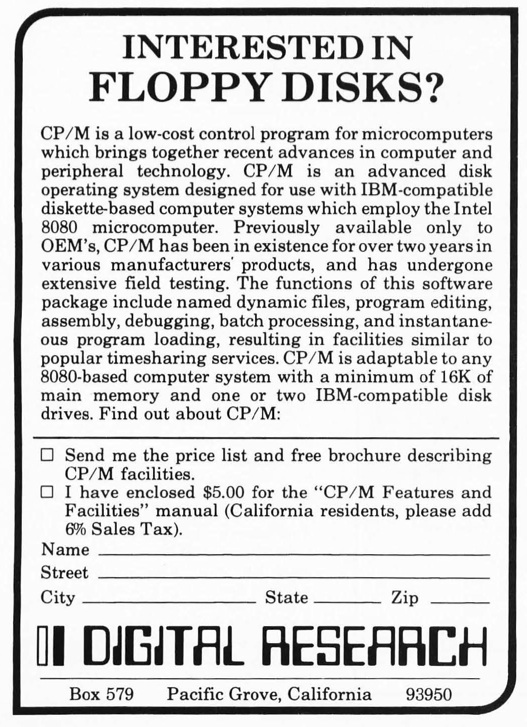
— an ad from the December 1976 edition of Byte, from the BYTE magazine scanning effort.
It‘s old – very old – but it still runs under Wine.

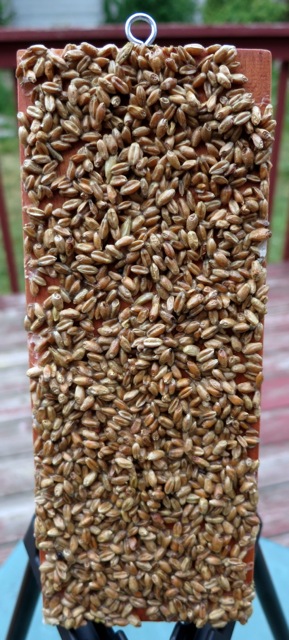
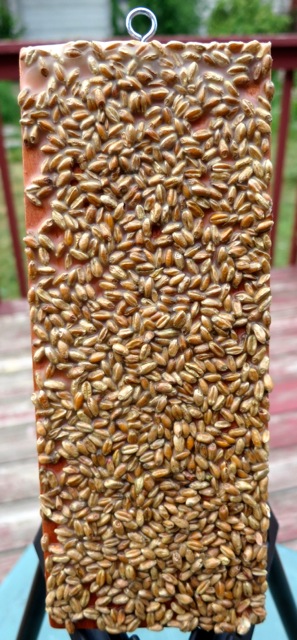
— Organic Canadian wheat on red cedar, beeswax encaustic; 72 × 182 mm.
In the Synthetic History of Canada, there was no symbol more evocative of hearth and home than the wheat board. Reconstructed here by the artist in the traditional materials of cedar [strength], wheat [abundance] and beeswax [cohesion], the wheat board is a forgotten part of Canadian lore. Its rediscovery as a domestic art form brings new hope of a progressive national identity.
Very little urban hum this morning (holiday), and the air conditioners really hadn’t started yet, so please be amused by the sounds of the garden (featuring mostly mockingbird): about quarter to nine. It does a passable seagull and also a red-tailed hawk. The vehicle reversing sound, though, is real.
(at least I don’t have a mockingbird problem.)