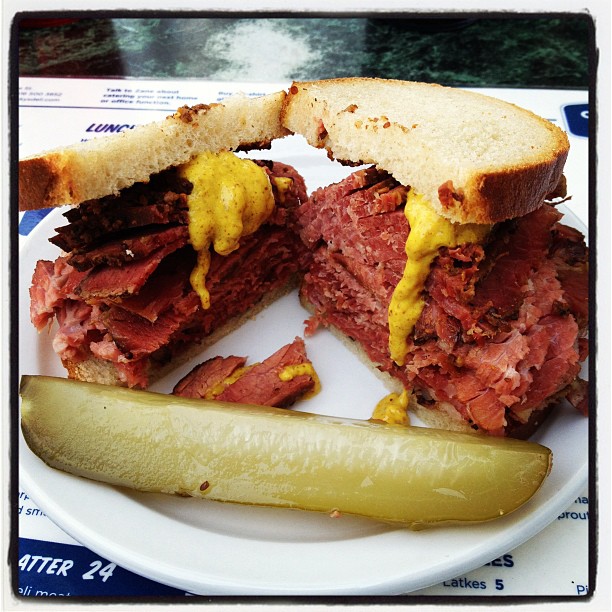
Instagram filter used: Lo-fi
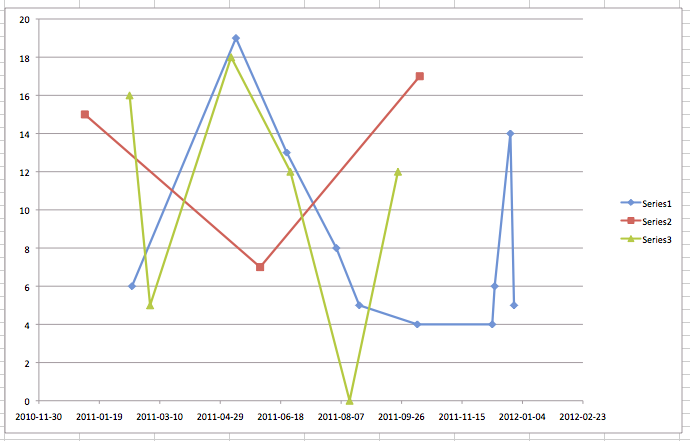
The Ask Metafilter question “Basic line graph” spurred me to make this unpretty graph:
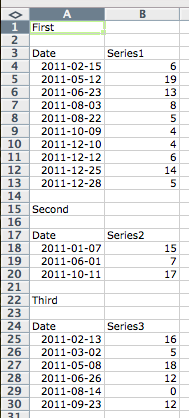
 Here are the input data:
You need to make an X-Y (Scatter) plot. All others don’t have fully independent X-axes. Make your chart by selecting the first two data columns, then Insert Chart. Once the chart is in, right click/Control-click (OS X) to get this context menu:
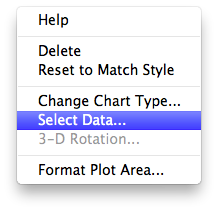
which should show
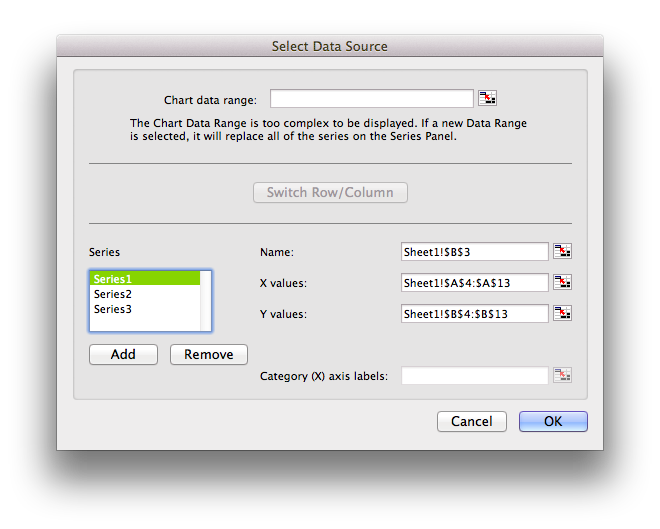
You can add more data series by hitting Add. Here are the specs for the next two series:
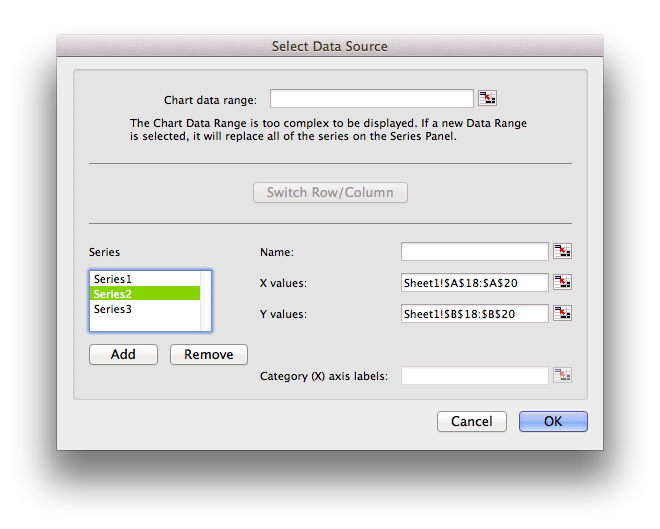
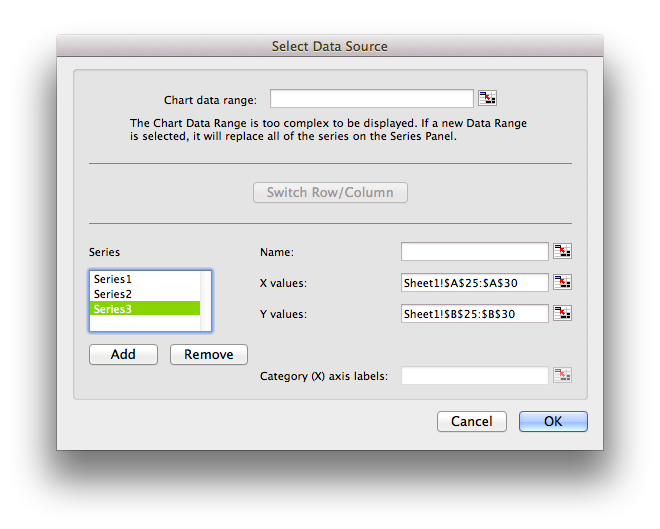
Finally, here’s the example spreadsheet: MultipleDateLinesChart.
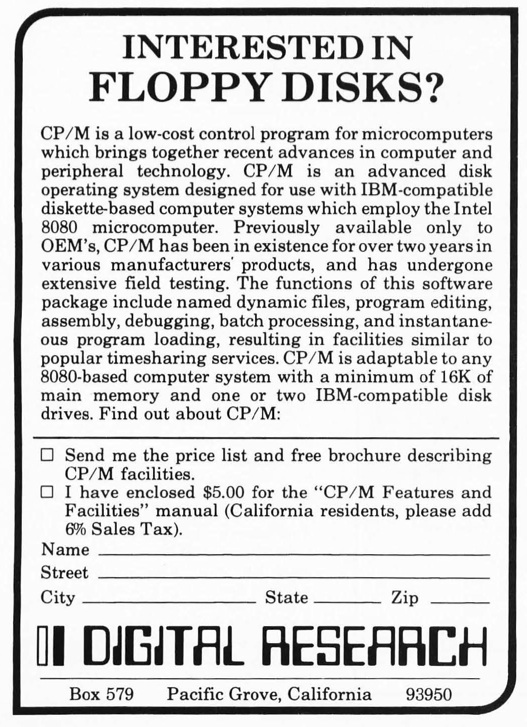
— an ad from the December 1976 edition of Byte, from the BYTE magazine scanning effort.
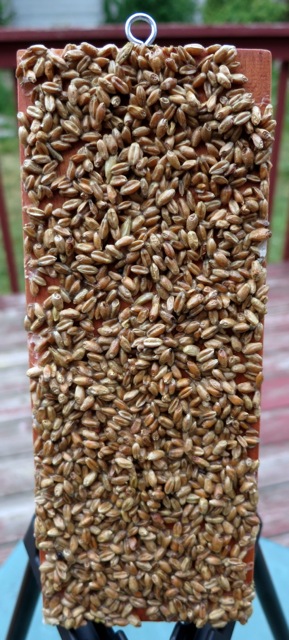
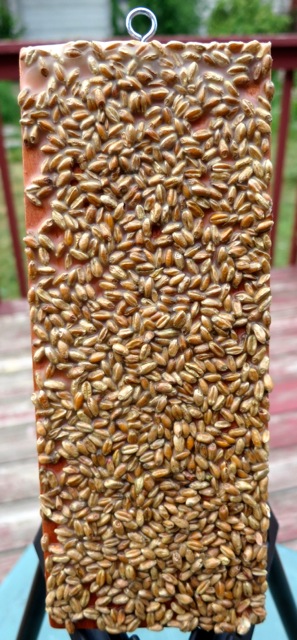
— Organic Canadian wheat on red cedar, beeswax encaustic; 72 × 182 mm.
In the Synthetic History of Canada, there was no symbol more evocative of hearth and home than the wheat board. Reconstructed here by the artist in the traditional materials of cedar [strength], wheat [abundance] and beeswax [cohesion], the wheat board is a forgotten part of Canadian lore. Its rediscovery as a domestic art form brings new hope of a progressive national identity.
Very little urban hum this morning (holiday), and the air conditioners really hadn’t started yet, so please be amused by the sounds of the garden (featuring mostly mockingbird): about quarter to nine. It does a passable seagull and also a red-tailed hawk. The vehicle reversing sound, though, is real.
(at least I don’t have a mockingbird problem.)
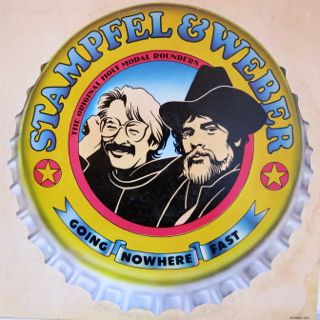
Damn, this is a fine album. Credited as “Stampfel & Weber — The Original Holy Modal Rounders”, it’s a 1981 Rounder release that’ll probably never see the light as a digital release. And that’s a crying shame.
It packs a lot of tracks into one album. All of them fun, with the off-kilterness that happens so magically when these two play together.
Side 1:
Side 2:
It must be about time for a fifth duo album from S&W; there was 15 years between this and HMR2, and Too Much Fun came 19 years after. I guess since there’s only been 14 years since that last album, I’m being a bit premature …
I’m either getting old or conventional, ‘cos I bought something I said I would never have enough time or space for: a turntable. I won’t forsake my beloved MP3s, but there are somethings you just can’t get electronically. One of them being the 1981 Stampfel & Weber album “Going Nowhere Fast”, which I snagged from Etsy from a west coast seller.
I bought an elderly Technics from Ring Audio, and set it up with a USB phono preamp from Phonopreamps.com. It sounds good, I guess. It certainly sounds different from MP3s, but better …? Dunno. My two cynical theories hypotheses of vinyl snobbery are:
I have not got a lot of records:
Albums
Single-ish Things
Speaking of which, I understand that the latter EP is not exactly widely known, is totes OOP, and completists might dig Of Montreal‘s â€Epistle to a Pathological Creep (demo)â€, so here it is ripped for your listening pleasure:
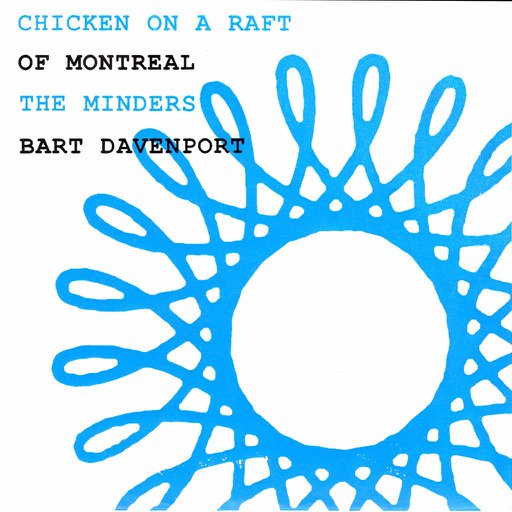 I recorded it with arecord, and edited it with Audacity. The arecord command line (more for my reference than your interest) was:
arecord -D 'hw:CARD=CODEC,DEV=0' -V stereo -c 2 -f dat -d 900 ghettokittyisland.wav
which records 900 seconds of audio at DAT quality to the file ghettokittyisland.wav, while showing a simple text meter on the screen.