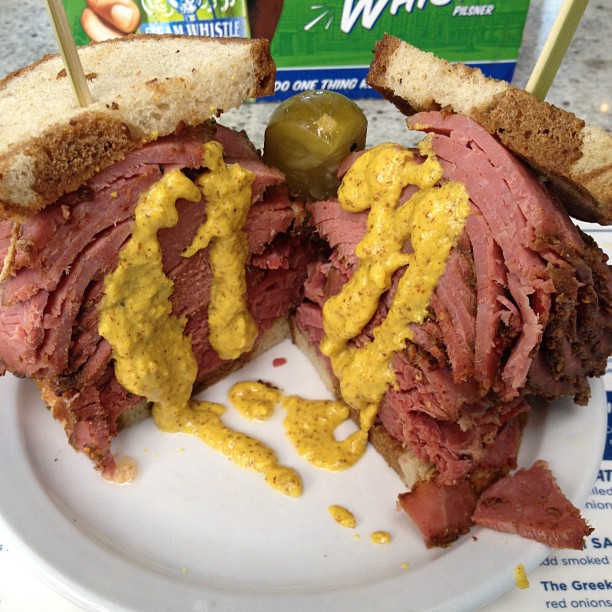
Instagram filter used: Normal
Photo taken at: Caplansky’s Deli
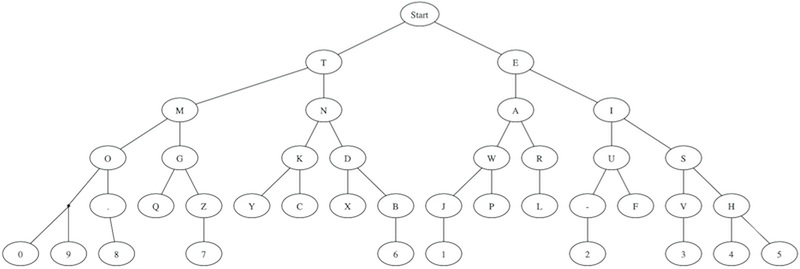
It’s not quite right yet, but I’ve never worked with Graphviz before this evening. Strongly influenced by the graphic on learnmorsecode.com. The wikipedia one is the wrong way round.
Source: morse.gv
So I’ve just got my digital mode setup working again. It seems that somewhere, somehow, a driver for the SignaLink USB decided to stop working, and at best I got no signal on transmit and a very very quiet one on receive. Now my mind’s back in radio mode, I realise there’s a ton of stuff I’ve bought and found to be of variable utility. This is the good stuff:
My one annoyance about having a Linux-based shack is that ham radio is still very stuck in using serial ports. None of my computers have hard-wired RS232 ports, so I rely on USB serial adapters. These mostly work well, but Linux has a habit of shuffling the allocations around, so what was /dev/ttyUSB0 controlling your rig today might be ttyUSB1 tomorrow. You can get around this (if the software supports it) buy using long serial device names from /dev/serial/by-id/, which don’t change. They don’t change, that is, unless you have two Prolific serial interfaces that don’t have serial numbers set, so I can only have one attached at a time. Annoying.
Toronto Hydro’s just announced peaksaver PLUS, where you get a free Blueline Power Cost Monitor. Dammit! If only I hadn’t already bought one …
(and no, I haven’t yet got the Arduino wireless monitor running, which was actually the whole reason I got into ham radio.)
 (source photo by Jeff Friesen for Canadian Geographic article Blacksmith’s back.)
Fldigi used to work fine, but recent updates may have caused me to drop off the face of the (radio) earth. What it seems to be doing — and I don’t find this at all plausible — is causing interference with its own audio stream when its window has focus, but receiving perfectly when the program window is hidden. As Fldigi is a highly interactive program, this is not much use.
Here’s an audio sample showing what I mean: fldigi-psk14070-VA3PID-201206092107z. It’s about 45 seconds long, a sample of the 20m PSK31 band this afternoon, and comprises:
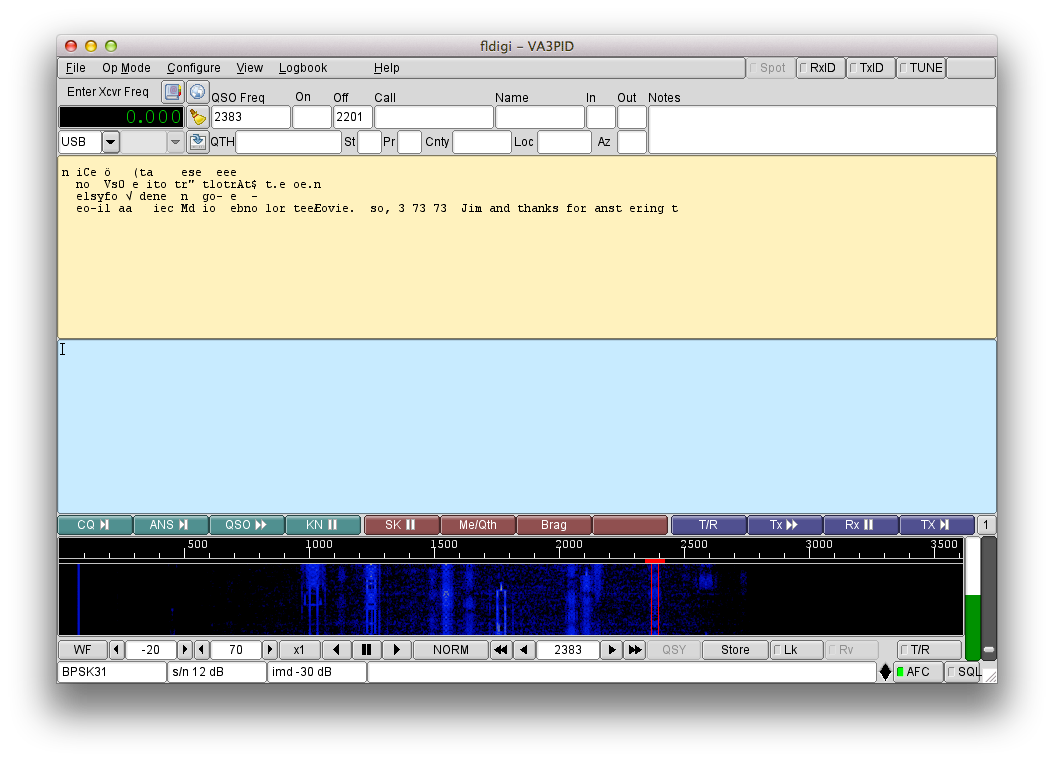 I’m running fldigi 3.21.43-1~kamal~precise from the Ubuntu Amateur Radio Software Updates repo. Hardware is a Thinkpad R51 (a bit old), latest Ubuntu 12.04 LTS, a FT-857D into a Signalink USB, and the audio’s being handled by PortAudio. I’m stumped!
Update: It was a volume thing. Linux had decided that I didn’t need my main system volume above 10%, so fldigi was picking up noise only.
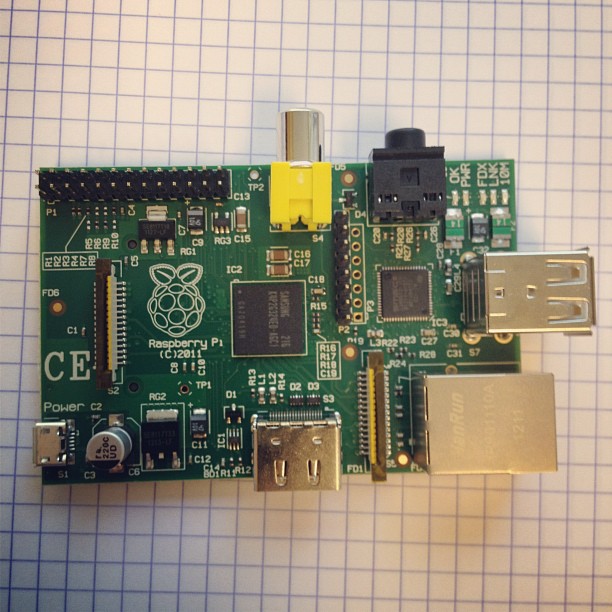
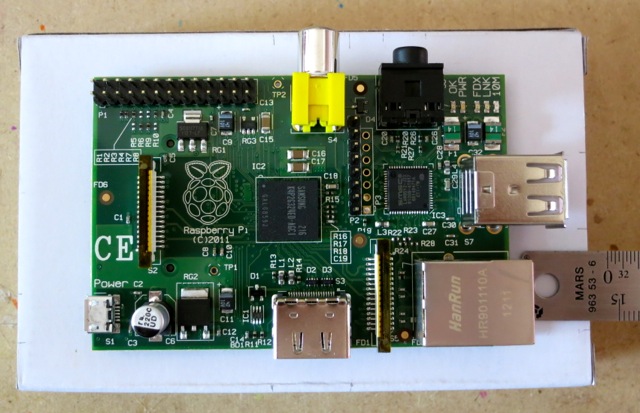
 I was half way through marking out the Raspberry Pi‘s shipping box to cut out as an enclosure …
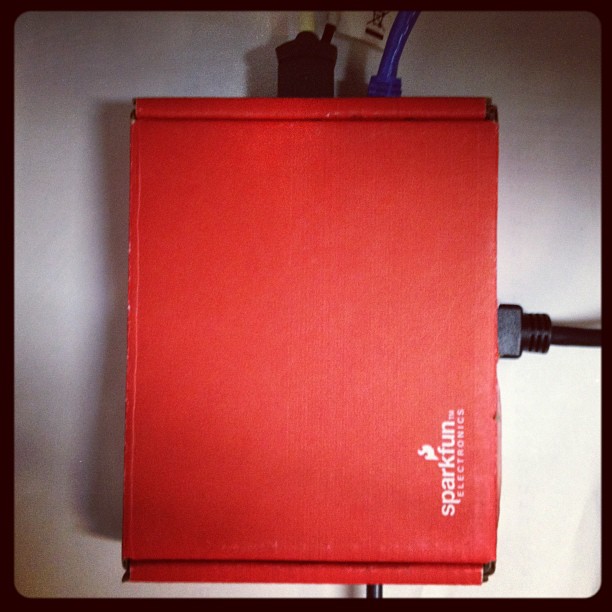
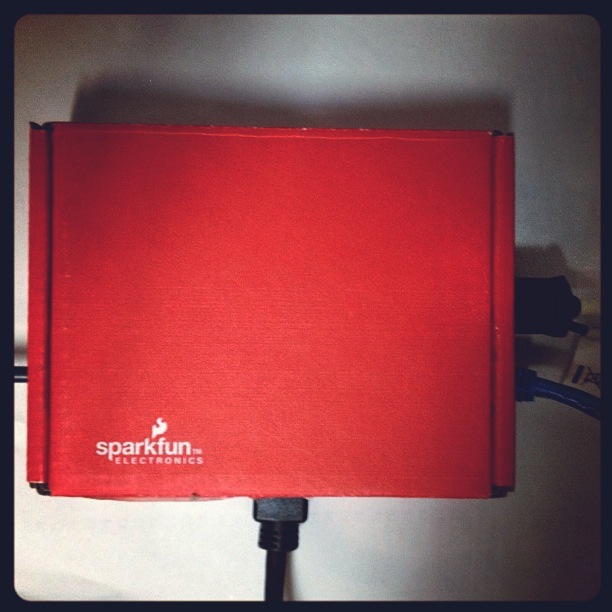
… when I spotted a SparkFun box from an Arduino shield. Aha! Nice thick corrugated card that was reasonably easy to cut with a very sharp knife.
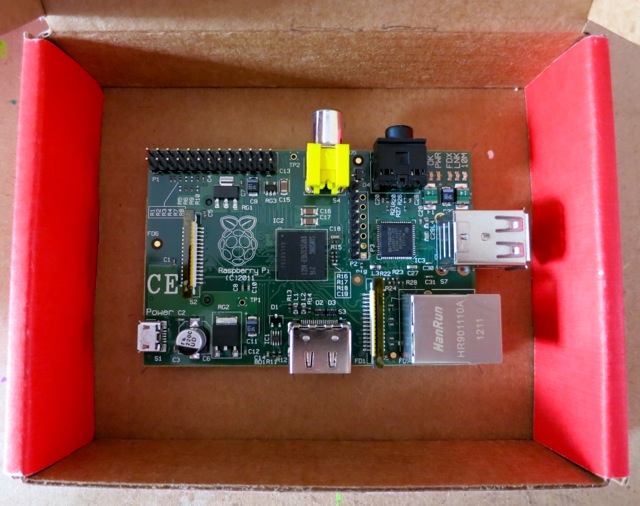
<voice_of_experience>NB: At this point it would have been much wiser to have inserted a memory card before laying this out.</voice_of_experience>
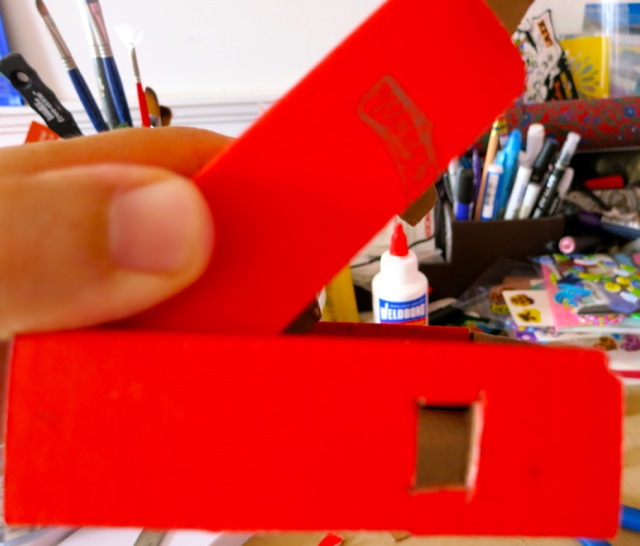
You’re going to have to cut out slots for connectors on the side of the lid. I marked out the path of the lid by closing the box and shading the path that went by the hole I’d cut. Basically, any cardboard you see passing by the hole has to be cut out.
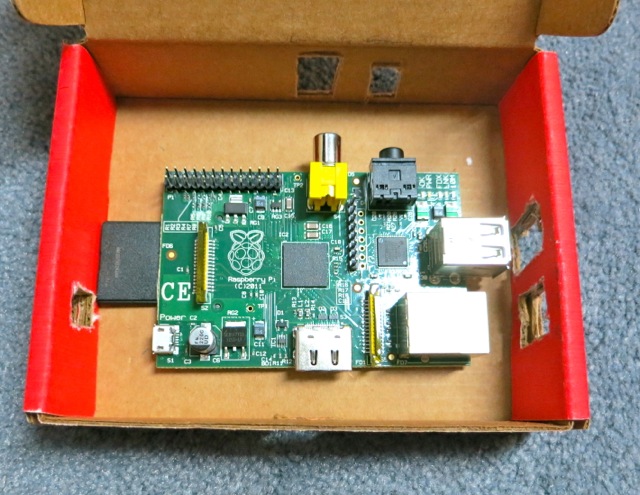
Now with memory card — and you can see I was a bit off.
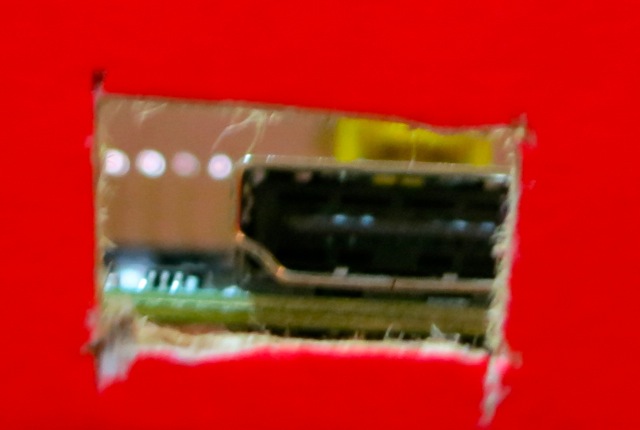
The pain of misalignment, as seen by the HDMI plug. Knives out!
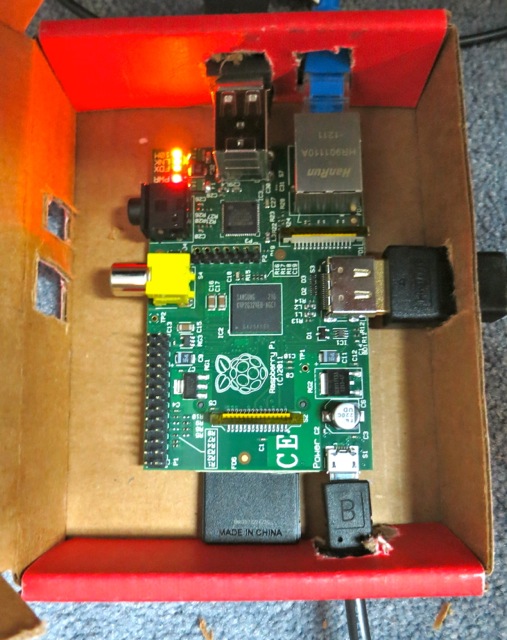
It’s finally all snugged into the box. It’s not going to move about with all the connectors holding it in place.
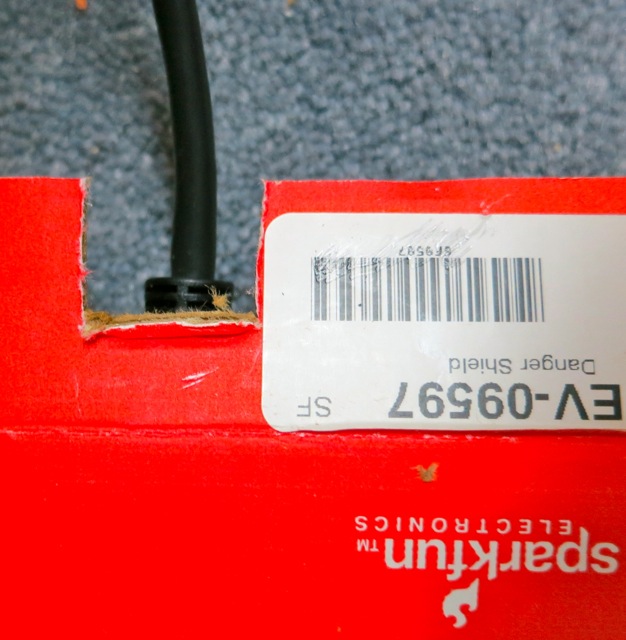
Don’t forget the cutout for the video cable in the box flap. I only caught this at the very last moment.
The Raspberry Pi does run faintly warm in the box. I suspect with the warmth, and all the little cutouts, this will shortly become an A-1 Special spider habitat.