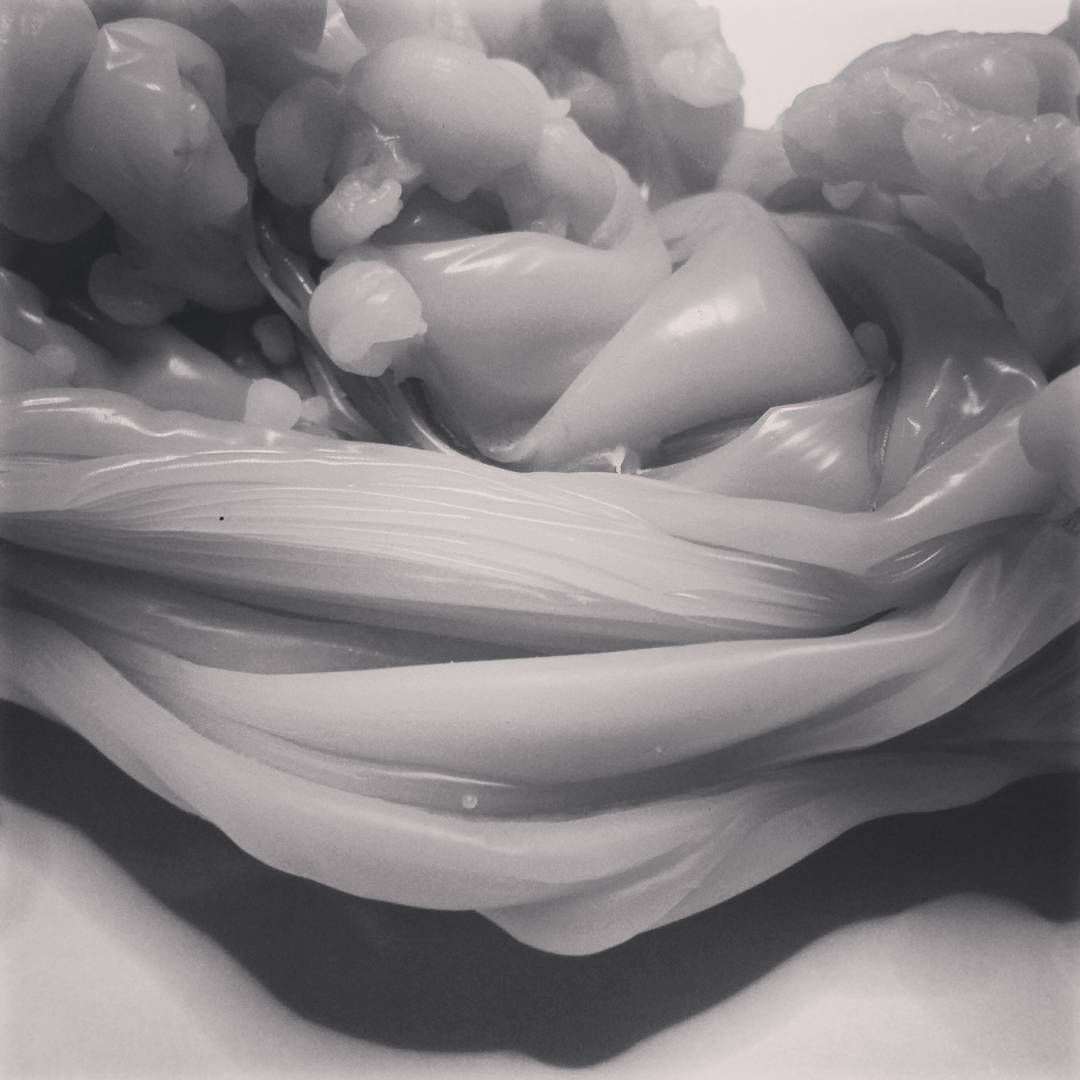
Well, I didn’t expect that to happen. I was plotting this simple girih frame when something went wrong, and the plotter slammed the (new-old stock, almost unused … sniff) HP drafting pen into the side of the thick watercolour paper, breaking off the tip.
I didn’t notice the damage, so I restarted the plot, and the above smeary and uncertain lines came out. It’s certainly more organic than a mechanical plot would tend to be …
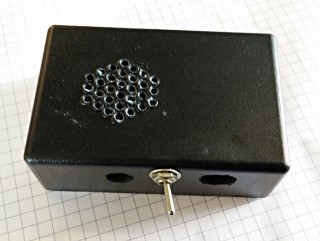
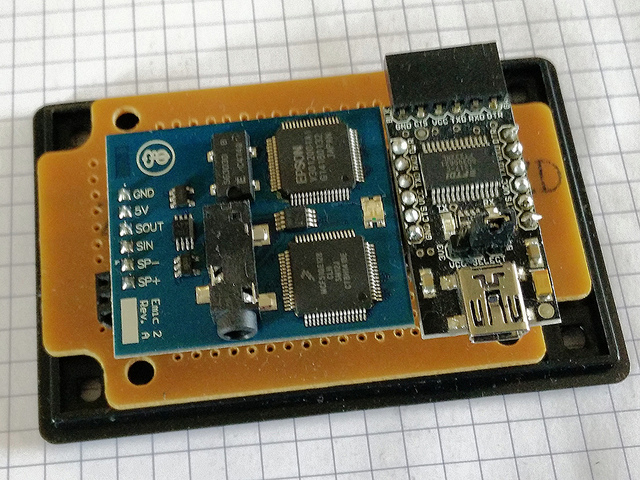
[tɒk bɒks]: case[tɒk bɒks]: inside. The observant amongst you will notice that the speech board is 1/10″ further in than it should be for ideal alignment with the USB serial adapter.
Note (2025): Parallax Inc have stopped selling the board this project is based on. I’ve added local copies of the reference documents at the end of this post. If you want basic embedded English speech, there are other options available.
Back in the 1980s, the now-defunct Digital Equipment Corporation (“DEC”) sold a hardware speech synthesizer based on Dennis Klatt’s research at MIT. These DECTalk boxes were compact and robust, and — despite not having the greatest speech quality — gave valuable speech, telephone and reading accessibility to many people. Stephen Hawking’s distinctive voice is from a pre-DEC version of the MIT hardware.
DEC is long gone, and the licensing of DECTalk has wandered off into mostly software (ahem …). Much to the annoyance of those in earshot, I’ve always enjoyed dabbling in speech synthesis. DECTalk hardware remains expensive, partly because of demand from electronic music producers (its vocoder-like burr is on countless tracks), but also because there are still many people who rely on it for daily life. I couldn’t justify buying a real DECTalk, but I found this: the Parallax Emic 2 Text-to-Speech Module. For about $80, this stamp-sized board brings a hardware DECTalk implementation to embedded projects.
The Emic 2 is really marketed to microcontroller hobbyists: Make Your Arduino Speak! sorta thing. But I wanted to make a DECTalk-ish hardware box, with serial input, a speaker, and switchable headphone/line jack. [tɒk bɒks] (a fair IPA approximation of how I pronounce “Talk Box”) is the result.
OSEPP FTDI USB-Serial Breakout — there are many USB-Serial boards that would do this, but two points in this one’s favour are: i) it has header pins for breadboard use, and ii) I had a spare one.
Small 8Ω speaker element — the one I used is most likely a headphone element, bought from Active Surplus (RIP). This should be as small as you can get away with (and still hear) as the USB-Serial connection isn’t designed to supply audio power.
You’ll need some kind of serial terminal connection. In a pinch, you can use the serial monitor that is in the Arduino development environment. Either way, identify your serial port (/dev/ttyUSBN, COMN:, or /dev/tty-usbserialNNNN) and find a way to send 9600 baud, 8N1 characters to it. Hit Return, and you should be greeted by the Emic 2’s : prompt (or a ?, followed by :). Whether you get the prompt or not depends on whether local echo is set or not. Either way, try sending this line:
SAll watched over by machines of loving grace.
You should hear a voice say the title of Richard Brautigan’s lovely poem All Watched Over by Machines of Loving Grace (caution: video link contains nekkid hippies). You should get the : prompt back once the the speech has stopped. And that’s all there is to it: send an S, followed by up to 1023 bytes of (basically ASCII) text, followed by a newline, and it will be spoken. There’s more detail, of course, in the Emic 2 documentation and the Emic 2 Epson/Fonix DECTalk 501 User’s Guide for changing voices, etc. Yes, you can make it sing. No, you probably shouldn’t, though.
Notes
The Emic 2 has no serial flow control, so you have to wait until the module stops speaking (or you send it the stop command) before you can send more. The easiest way is to poll the serial port and see if there’s the : prompt waiting. Until you see the prompt, any text you send it may be lost.
The Emic 2 is an embedded device: Unicode is a bit of a stretch. It’s supposed to accept ISO Latin-1 8-bit characters (handy for Spanish mode), though.
Starting every speech line with S may make this board incompatible with assistive technology software such as the JAWS screen reader. I don’t think that this was the goal for Emic 2’s designers (Grand Idea Studio), however.
The output from the audio jack has a fair bit of noise on it, and you need to set the volume quite low to avoid hiss and hum. Your experience may be different, as I may have accidentally made a ground loop. There is an audible click at the start and end of the text, too.
The Emic 2 uses DECTalk v5 commands and phonemes. Many DECTalk resources on the web (like these songs) use v4 or older, which are subtly incompatible. I haven’t found a reliable conversion protocol yet.
The board also starts in Epson-style command mode, which uses slightly different commands from standard DECTalk.
To end, here’s the Emic 2’s “Dennis” voice reading all of Brautigan’s All Watched Over By Machines of Loving Grace:
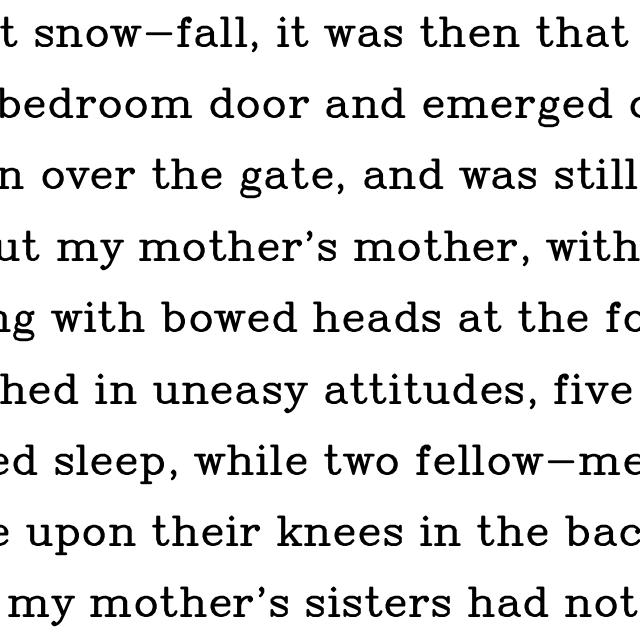
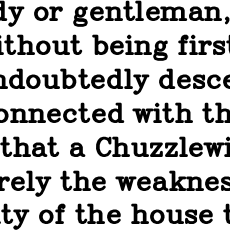
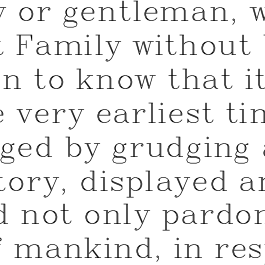
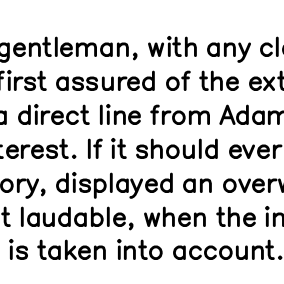
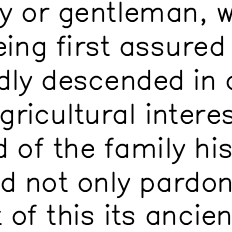
I’m pretty happy with this still-early version of AVHershey Complex Medium. There’s a PDF type sample embedded underneath the image. It’s from Augustus Carp, Esq., a book (and epub) that is now really and truly in the public domain in Canada.
There’s still a lot to do. Even the regular Complex font (which has the best glyph coverage of all of the styles in the Hershey font collection) is needing more work:
No pair kerning
Weak currency character support; only $, when it really should have ¢, €, £ and ¥ too
Not-very-complete Western European accents and regional characters
Some frankly ropey decisions were made in filling in missing characters from composites/modifications of other glyphs.
And now I’ve got to do the same for two other weights of Complex Roman — and then think about all the other variants! I’m not going to touch the Japanese glyphs, by the way; given how limited my knowledge of even Western typography, I doubt I’d be able to advance the representation of Kanji in any useful way.
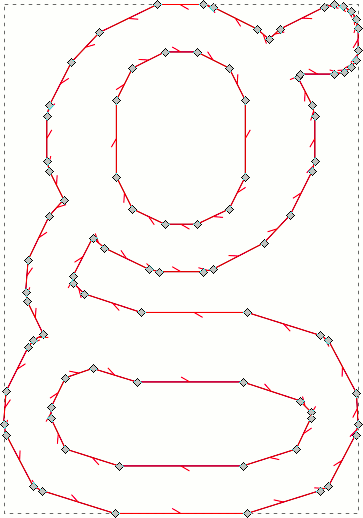
Considering that the glyphs are made up only of straight line segments, they look not bad in print. Sensitive typographers look away now; here are the control points for ‘g’:
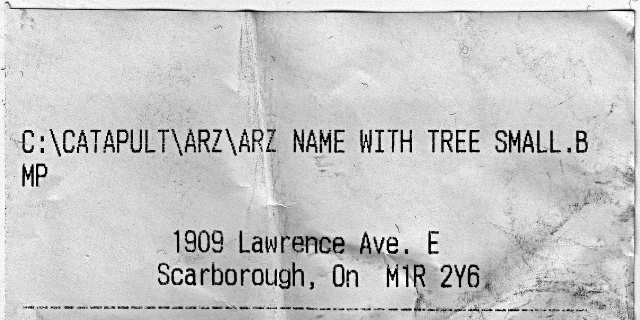
I think that I shall never see / A directory lovely as a tree
This is from Arz Fine Foods. Their logo is a tree. On this receipt, they’ve got a tree alright, but no-one expected an MS-DOS directory tree. I think, as we sort of say in Scotland, that someone made an arz of this …
(I’m not hating on Arz, btw. They have an epic selection of foods, including fresh Sukkari dates.)
Update: very preliminary OTF font files are available here: scruss/AVHershey-OTF. These don’t yet even encode all of ASCII, so aren’t yet generally useful.
Major breakthrough: yesterday (Feb 5th), I got the old Hershey fonts outlined properly, and today I have compiled them (sorta) into vector fonts. They’re not yet ready for release, as they have no metadata and are missing some key characters (even for ASCII).
I based the line thicknesses for the fonts as if I were drawing a 16 pt character, and using a plotter with a 0.3 mm (light), 0.7 mm (medium) and 1.0 mm (heavy) pen. You can see in the individual characters from the Hershey Complex font shown below, that the double hairline strokes merge into thicker single strokes. The same effect occurs on a real plotter, too:
I still have lots of work to do, but at least now I can make buffered outlines of the 1967-vintage Hershey character glyphs into Fontforge-friendly vectors.
My goal is to release these as OTF fonts, rendered as it they’d been drawn by a constant line width pen plotter or film recorder, as was used in Dr Hershey’s day. Frank at Kiosk Fonts has loftier goals, and may actually release pretty fonts one day …
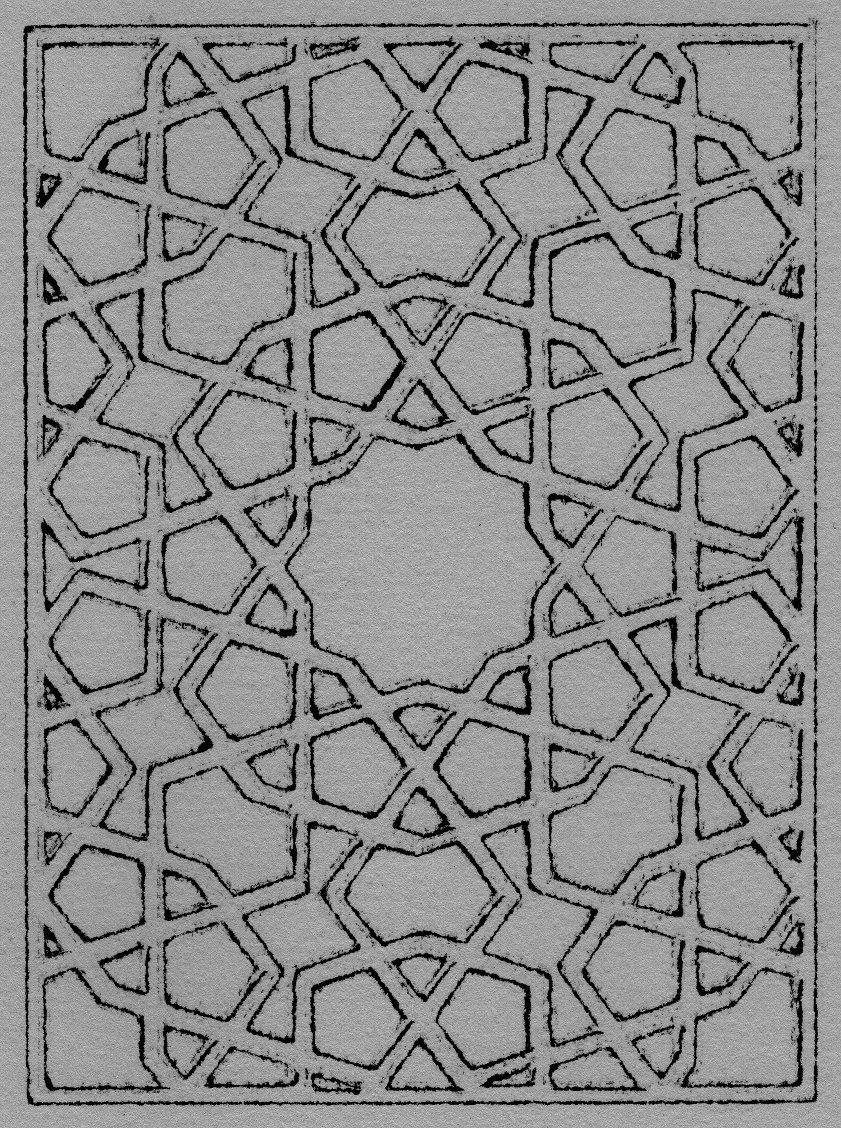 Well, I didn’t expect that to happen. I was plotting this simple girih frame when something went wrong, and the plotter slammed the (new-old stock, almost unused … sniff) HP drafting pen into the side of the thick watercolour paper, breaking off the tip.