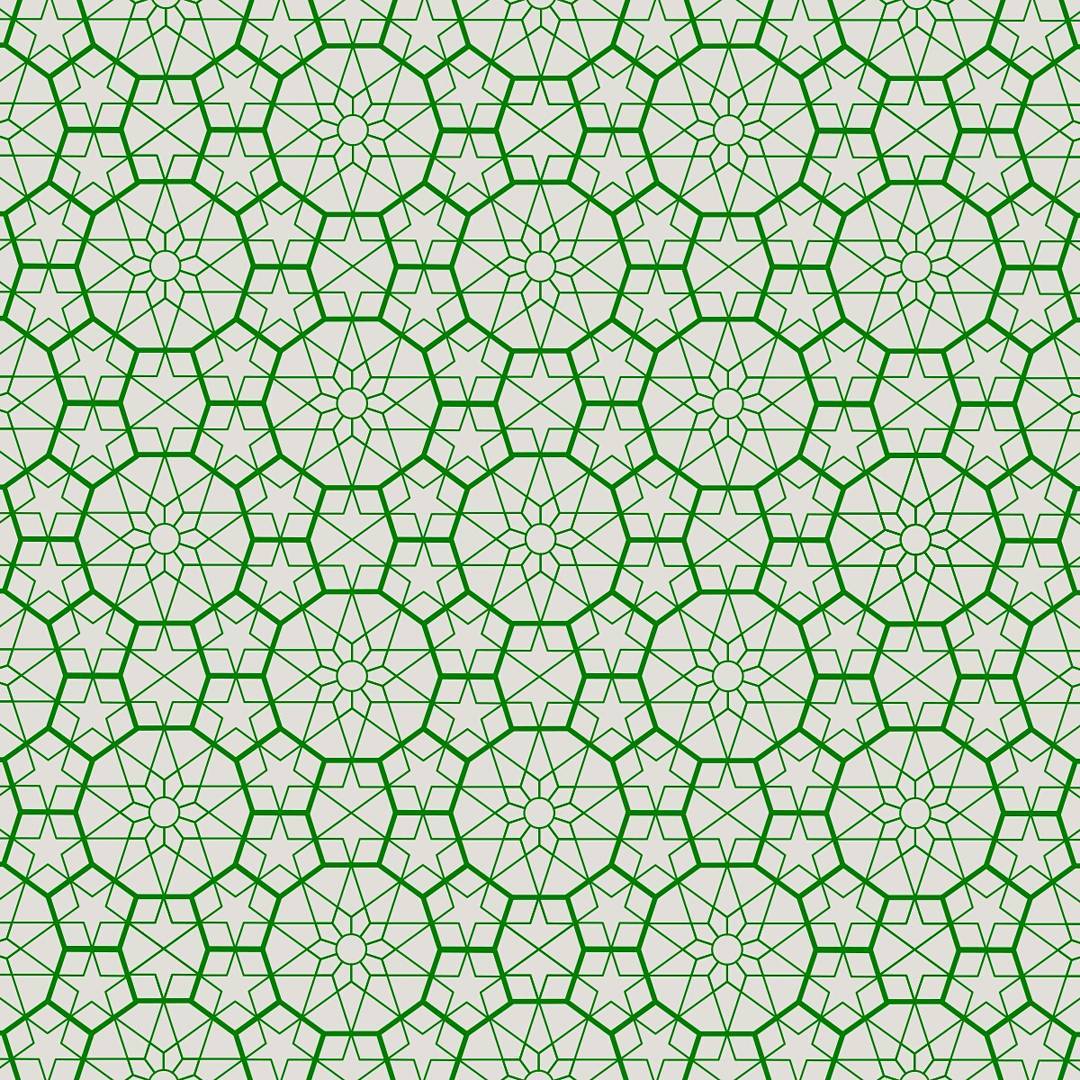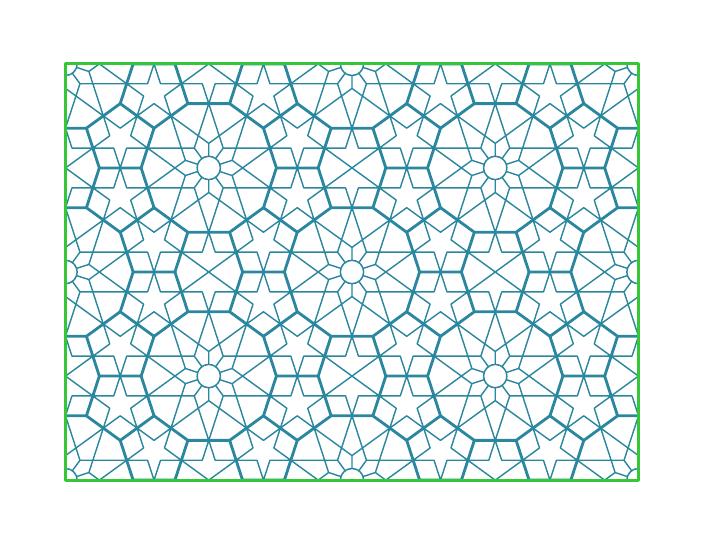
based on the main repeating pattern from a Pierced Window Screen at The Metropolitan Museum of Art — particularly this image.
based on the main repeating pattern from a Pierced Window Screen at The Metropolitan Museum of Art — particularly this image.
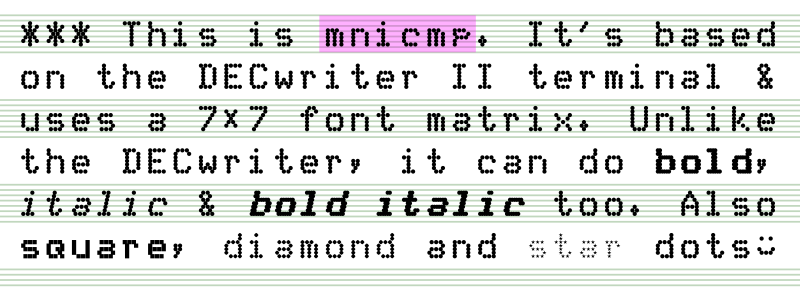 I just made and uploaded this to FontLibrary: mnicmp.
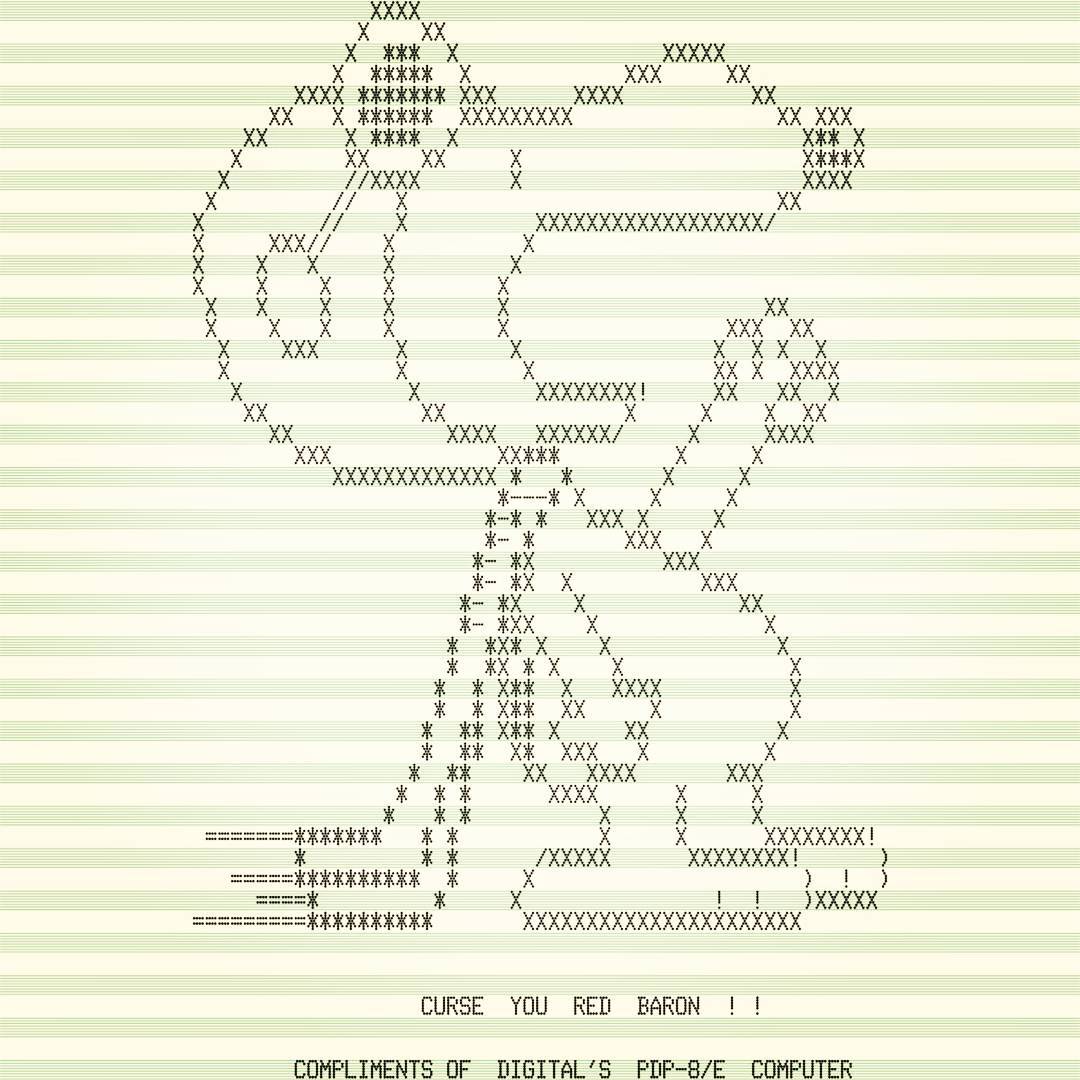
This is meant more as an exercise in learning FontForge‘s programming back-end, and definitely showed me that FontForge is incredibly powerful. After the learning comes silliness, so I ended up turning the dots into something like:
 I learned you really have to consider a dot-matrix font to be an array of points rather than a glyph, because otherwise you get the dots coming out the wrong sort of oval:

You don’t want to know what it did to the stars …
Local archive: mnicmp.zip
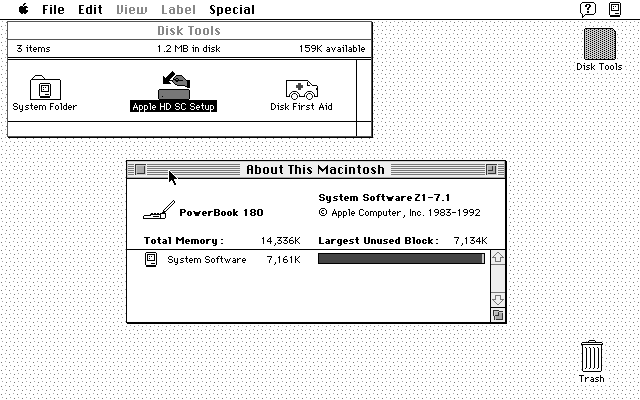 Seems I have two Macintosh PowerBook 180s: one has a dead colour screen but seems to boot fine, and the other (the one screenshotted above; yay ⌘+Shift+3 and enough room on the boot floppy …) has a lovely greyscale screen but a dead hard drive. I suspect we’re going to have to do a head transplant.
And no, I’m not having ¼-century 68030+68882 wish fulfillment one bit …
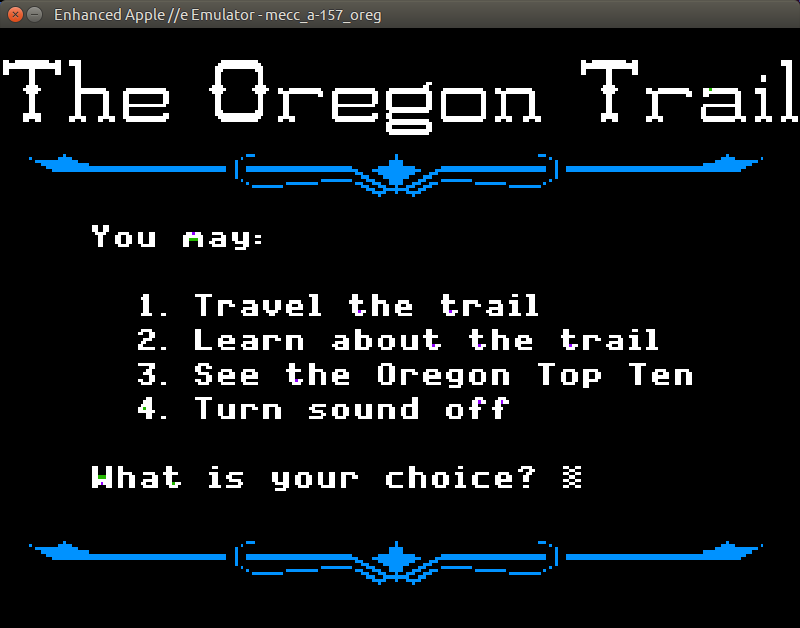
Update: You probably want to use https://github.com/linappleii/linapple instead of Linapple-Pie these days.
Building and installing the linapple-pie Apple IIe emulator is relatively easy on the Raspberry Pi:
sudo apt install libcurl4-openssl-dev libzip-dev zlib1g-dev libsdl1.2-dev libsdl-gfx1.2-dev libsdl-image1.2-dev libsdl-sound1.2-dev build-essential git
git clone https://github.com/dabonetn/linapple-pie.git
cd linapple-pie/src
make
sudo make install
This also works on an x86_64 Ubuntu machine. It does also install on a PocketCHIP (even if it takes a really long time) but I can’t get the display resolution to fit correctly.
The Raspberry Pi Zero can be set up to appear as one of several USB OTG “gadgets†if you plug it into another computer. The most popular setting seems to be the virtual network gadget that turns your Zero into a computer on the end of your USB cable. Andrew Mulholland’s guide Raspberry Pi Zero – Programming over USB! (Part 2) (along with his super-short simple guide) seems to be the definitive source on how to set these modes up.
One problem, though, is that the Zero would show up on different network addresses every time it was restarted. The changing addresses made ssh access no fun at all. A suggestion on the Raspberry Pi forum helped me come up with a solution. On the Raspberry Pi Zero, run this command once:
echo 'options g_ether host_addr='$(dmesg | awk '/: HOST MAC/{print $NF}')' dev_addr='$(dmesg | awk '/: MAC/{print $NF}') | sudo tee /etc/modprobe.d/g_ether.conf
This will set the USB port’s hardware addresses to a fixed value, and you should always get a connection on the same IP address if it’s available.
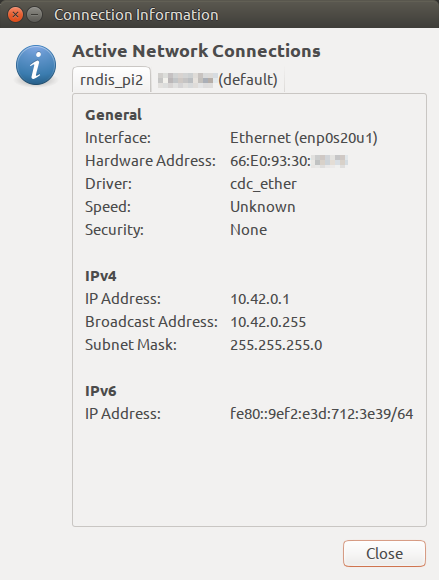
Update: For some reason, this seemed to stop working, and I was getting the old random addresses again. I was resisting putting more stuff in /boot/cmdline.txt, but it seems to me it’s more reliable than what I proposed. So if your g_ether.conf looked like:
options g_ether host_addr=66:e0:94:40:44:74 dev_addr=de:82:66:79:e2:66
right at the end of your /boot/cmdline.txt (which is all one line, btw), add
g_ether.host_addr=66:e0:94:40:44:74 g_ether.dev_addr=de:82:66:79:e2:66
You’ll probably also want to share the IPv4 connection so your Raspberry Pi Zero can use the network of the device it’s attached to: