
Instagram filter used: Lo-fi
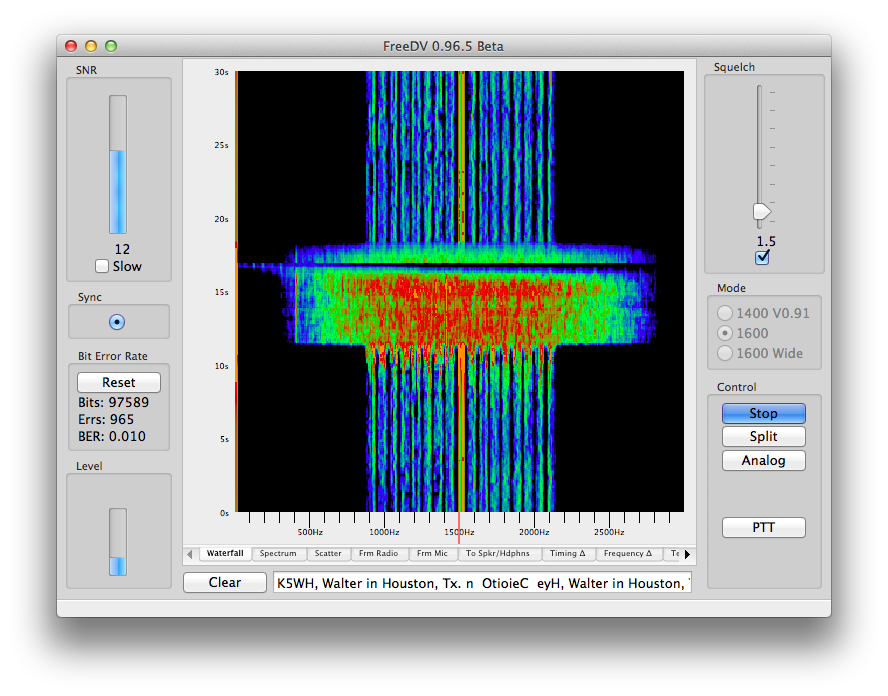 FreeDV is a fully open digital voice protocol; unlike DMR, D-STAR and the rest, there are no patents tying it down. It uses very little bandwidth for voice. I just had my first QSO (thanks K5WH in Texas!) using this mode. While it does make voices sound a little robotic, there’s no static, no hiss, nothing unwanted. That’s what always put me off HF voice: trying to work out who is saying what through all the noise. FreeDV fixes that.
It’s quite a new protocol, so you don’t hear it much on the air yet. I hope to be making some more noise with it soon.
Update 2014-10-02: I’ve forked Bryan’s Arduino code and added some instructions: scruss/Powermon433 (though use Bryan’s, srsly)
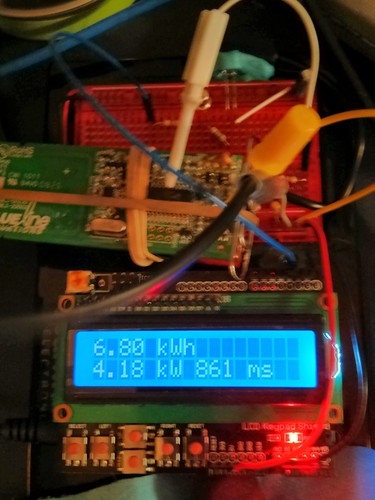
Update 2014-08-19: Bryan Mayland has decoded the data on Arduino! More details here: CapnBry/Powermon433
Given that I first started thinking about reverse-engineering the Blueline Powercost Monitor‘s data stream in September 2010, I hardly win any awards for rapid development. Here’s what I know so far about the device and its transmissions:
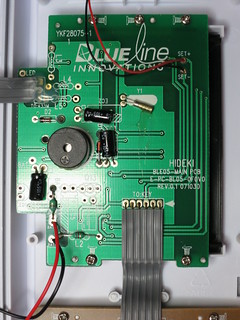
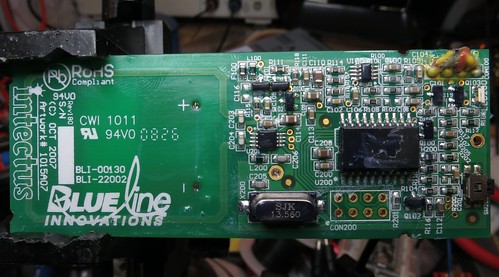

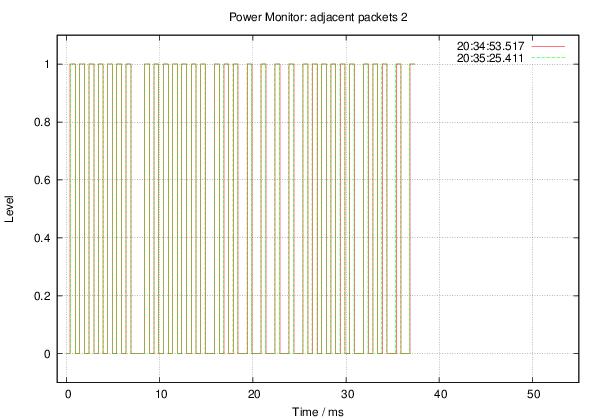
Some rough notes on mark/space timing (all times in µs):
Mark : Mean    529.4 Min    499.0 Max    590.0 StdDev:   15.03
Space: Mean    694.5 Min    385.0 Max   1474.0 StdDev:  281.57
Mark/space times, by frequency (all times in µs):
MARK
====

          µS
Rank     Value   Count
-------- ------- -----
     1         522  498
     2         544  206
     3         567   32
     4         499   32
     5         590    8

SPACE
=====

          µS
Rank     Value   Count
-------- ------- -----
     1         476  279
     2         975  223
     3         454   99
     4         952   65
     5         431   26
     6        1474   22
     7         408   21
     8         499   17
     9         998   12
    10      199000    8
    11         385    2
    12        1451    2
More later, including raw packet data.
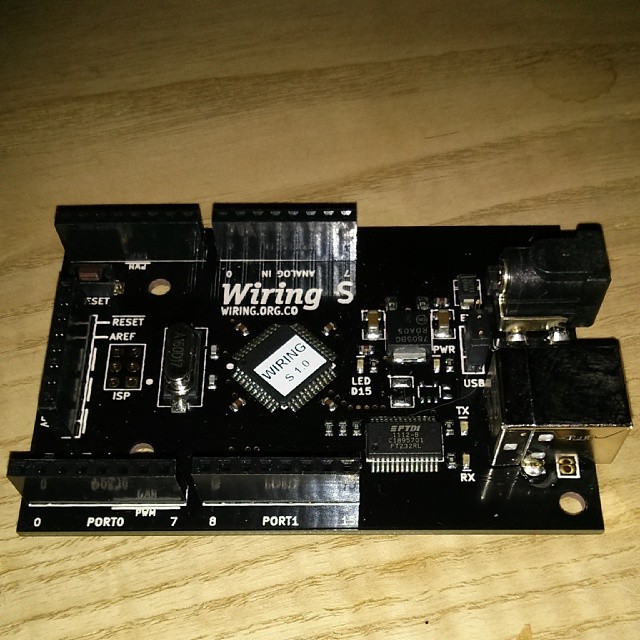
Thanks to Randy Simons and Bryan Mayland for the recent help. Thanks too to Brett “Wiring†Hagman for asking just why I was trying to do this …
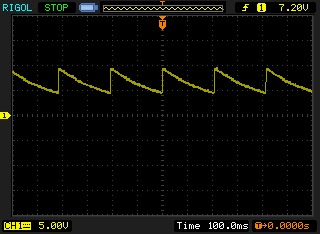
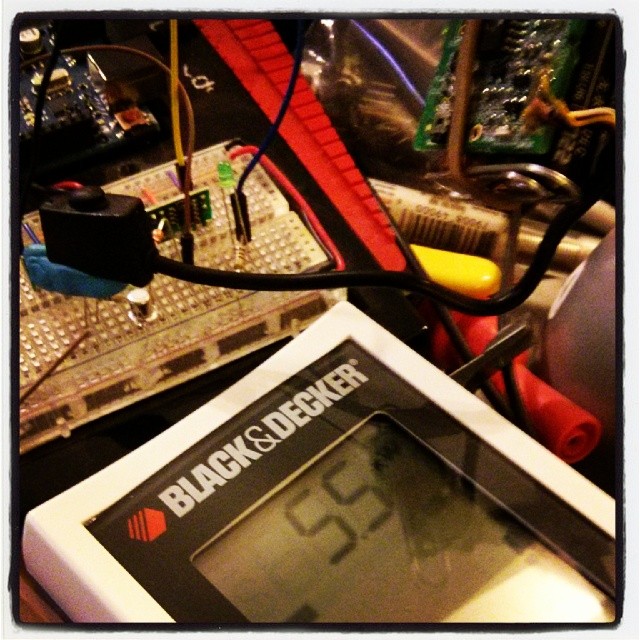
I’m pretty sure the 9V DC power supply for one of my Roku Soundbridges shouldn’t be doing that ↑↑ . This is the second unit I’ve had to replace, my other Soundbridge blowing its 5 V supply a couple of years back. This one cycles from 9.4 to 4.4 V about 5 times a second. Not very DC, but kind of lethargic for AC.
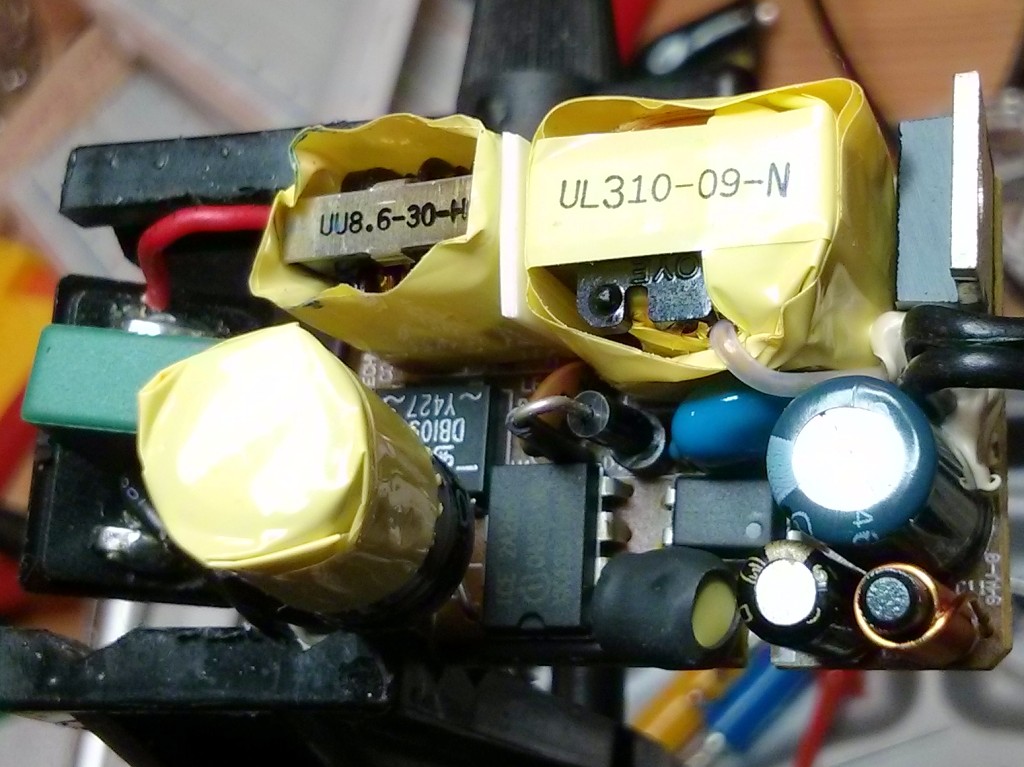
It’s hard to tell, but one of the caps inside the rather complex little Unifive wall wart may have blown. I’ve scrapped the PSU and replaced it with a beefier one. It seems that power supplies are a problem (see: 1, 2, 3, 4) on these machines, so I wonder when/if I will need to replace this one.
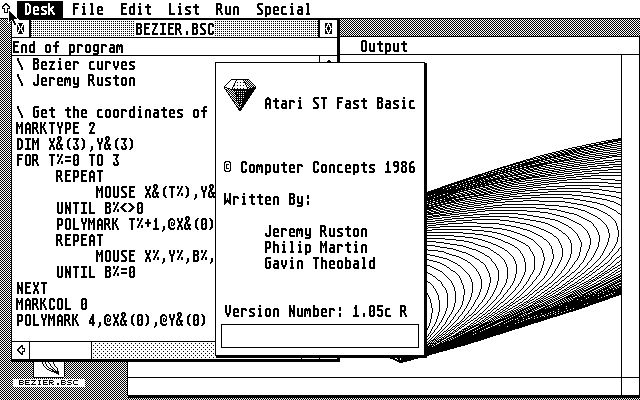
Oh man — emulating an Atari ST. It’s 1987, and I’m back in that computer lab on the first floor of the James Weir Building …
(Jeremy Ruston went on to write TiddlyWiki, amongst other things.)