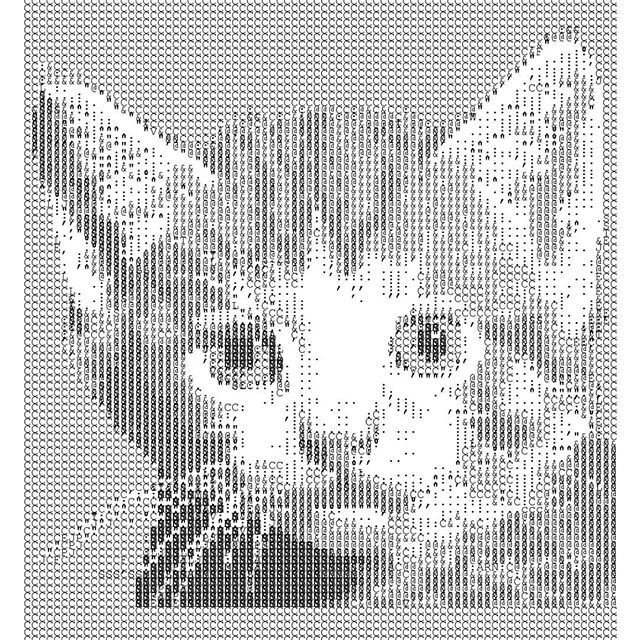
modify the program so it wrote the Epson FX printer codes to a file;
convert those codes to PostScript using epsonps;
convert it to PDF with ps2pdf.
Bob Neill’s art relies on being able to set a typewriter’s vertical advance to the same value as its horizontal one, and also being able to overprint lines to get darker results. The results are pretty good: tabby.pdf
I just got brian d. foy’s Learning Perl 6 from the library. It’s a pretty good book, though it’ll take a good few readings for some of Perl 6’s features to stick.
Since Perl 6 is built using Unicode from the ground up, it does two rather wonderful things when dealing with numbers:
regular expressions match numerals beyond 0–9: ٤ is as much four as 4
numeric constants can (pretty much) be expressed in terms of Unicode values in your Perl 6 source code. Assigning π to a variable does what you think it does. Dividing by ¼ is the same as multiplying by, well, ٤.
So herewith a table (probably incomplete, and very unlikely to render properly for you) of Unicode glyphs accepted by Perl 6 as numeric values:
Just started on a SBC6120 RBC Edition kit. It’s a DEC PDP-8-compatible single board computer that uses a CMOS chipset from the early 1980s. Yes, it will be very slow, even with the optional speedy 8 MHz oscillator installed. With a 12-bit processor and 32 kilo-words of RAM, this is definitely going to be a Slow Computing device.
Lots and lots of sockets. So many sockets. It’s quite soothing soldering them all in, one hole at a time. It looks like it’ll go more quickly than the Zeta did.
> Does anyone know what each of the pins on the 6502 CPU chip in the Apple II Plus does? They all plug into the socket on the motherboard to keep the chip from drifting away. – c.s.a2 FAQ of yore
Way back, if you wanted more than one copy of something you’d written there was no print button. If you wanted copies, each one required a bit of work. Before copiers and printers there were duplicators where you could type or draw onto special membranes that either transferred ink to a printing sheet (Banda or Ditto brand machines) or made holes in a screen to allow ink through (Gestetner or Mimeograph brands). Risograph machines are modern digital ink duplicators still in use and active development today.
One of the predecessors of duplicators was the hectograph. In the 19th century they still knew their Greek and yet were totally okay with hype, the hectograph was named after the extremely, um, aspirational idea that you could pull a hundred (εκατό= hundred, in modern Greek) copies from one master. Once you’ve made a few hectograph copies, you’ll be more wondering what the heck they were thinking: you might get a few tens of legible copies if you’re extremely careful.
Some hectographic copies, all pulled from the one jelly sheet impression
A hectograph copier is basically a sheet of jelly that soaks up certain kinds of ink from a master copy, then oozes the copies back onto paper pressed onto its surface. The ink slowly diffuses down through the thickness of the jelly, allowing different copies to be made with the same plate a day or so later.
Getting the right ink is a little tricky these days. Tattoo artists use hectograph ink to make stencils, so I got a small bottle of ink ($15) from Studio One (940 Queen St. East, Toronto). You can also use hecto/indelible pencils, but the National Tattoo brand one I got from Studio One barely transfers at all.
Making a copier in a kitchen is easy. There are several recipes online (University of Iowa Library and W0IS‘s being two: if you follow The New Standard Formulary historic ones, remember that white glue now is quite different from the hoof-and-hide renderings they used then). My recipe is a bit of a blend of all of these:
28 g Gelatin (powdered, unflavoured; in North America, it’s sold under the Knox brand in little boxes containing 4× 7 g sachets)
175 ml Glycerin (from the pharmacy, possibly sold in the skin care section; about ¾ cup)
75 g Sugar (regular white sugar, about ⅓ cup)
350 ml Water (1½ cups)
You’ll need a flat tray, larger that the paper you want to use. Dollar store baking trays are ideal. I used a slightly-too-small toaster oven tray, which seemed like a good idea at the time.
Stir gelatin and sugar into the water and leave it to soak for a few hours. It should form a translucent gel
Heat the glycerin in a double boiler until the boiler water is just simmering
Add the gelatin/sugar solution and stir gently until the boiler water resumes simmering. Keep heating for a few minutes until the solution turns clear (The liquid doesn’t have to boil, just get hot enough for the gelatin to melt. Avoiding bubbles is worthwhile, as gelatin foam is not what we’re looking for here)
Carefully pour the hot liquid into your tray, avoiding forming bubbles if at all possible (Bubbles can be shepherded off to the edge of the plate with the tip of a scrap of paper before the liquid sets)
Allow the tray to cool and set. This may take several hours at room temperature. The solid jelly hardly changes in appearance from the liquid form
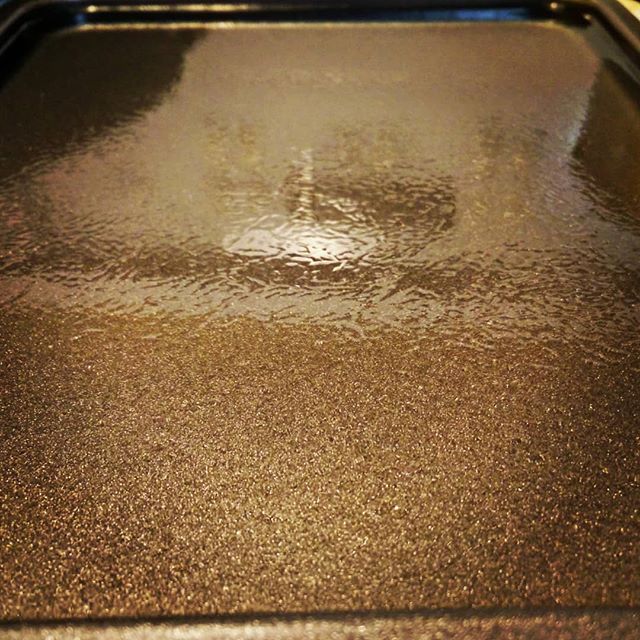
surface of a freshly-cooled jelly plate: extremely clear with a faint texture
Now draw your master. Hectographic ink is loaded with dye, so a little goes a long way. It’s also not a modern non-blotting ink, so you need to be more sparing with it than I was.
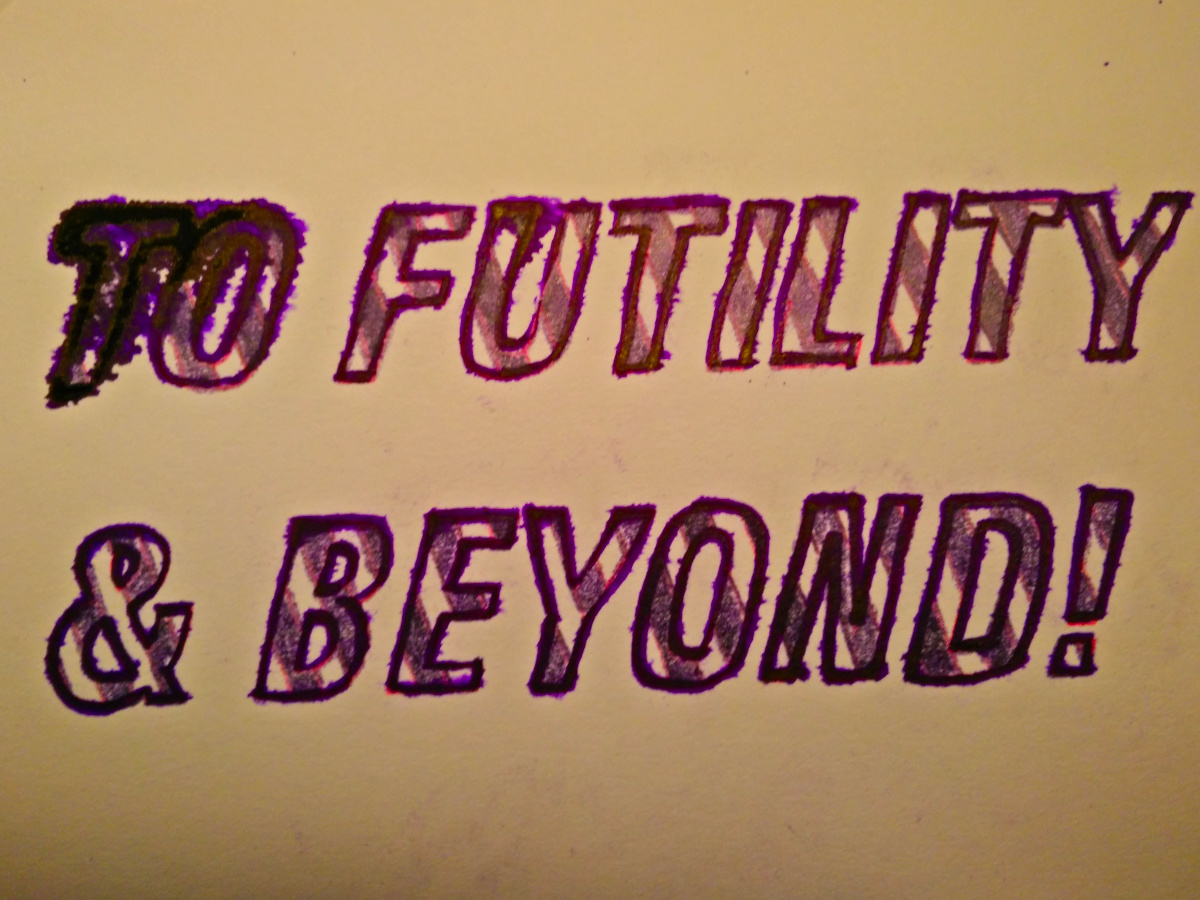
The unused master sheet, drawn in hecto ink (purplish black), copying pencil (grey) with guidelines from a plotter pen (red)
Stick the master face down onto the jelly sheet and leave it there for about a minute. I used a brayer to press the ink onto the surface. When you lift the master off the surface, you’ll end up with a slightly ruined master —
The used master sheet: probably too blurred to be usable again. Next time I’ll be more careful not to blot. (Colour balance made it yellow, btw; it’s the same sheet as before)
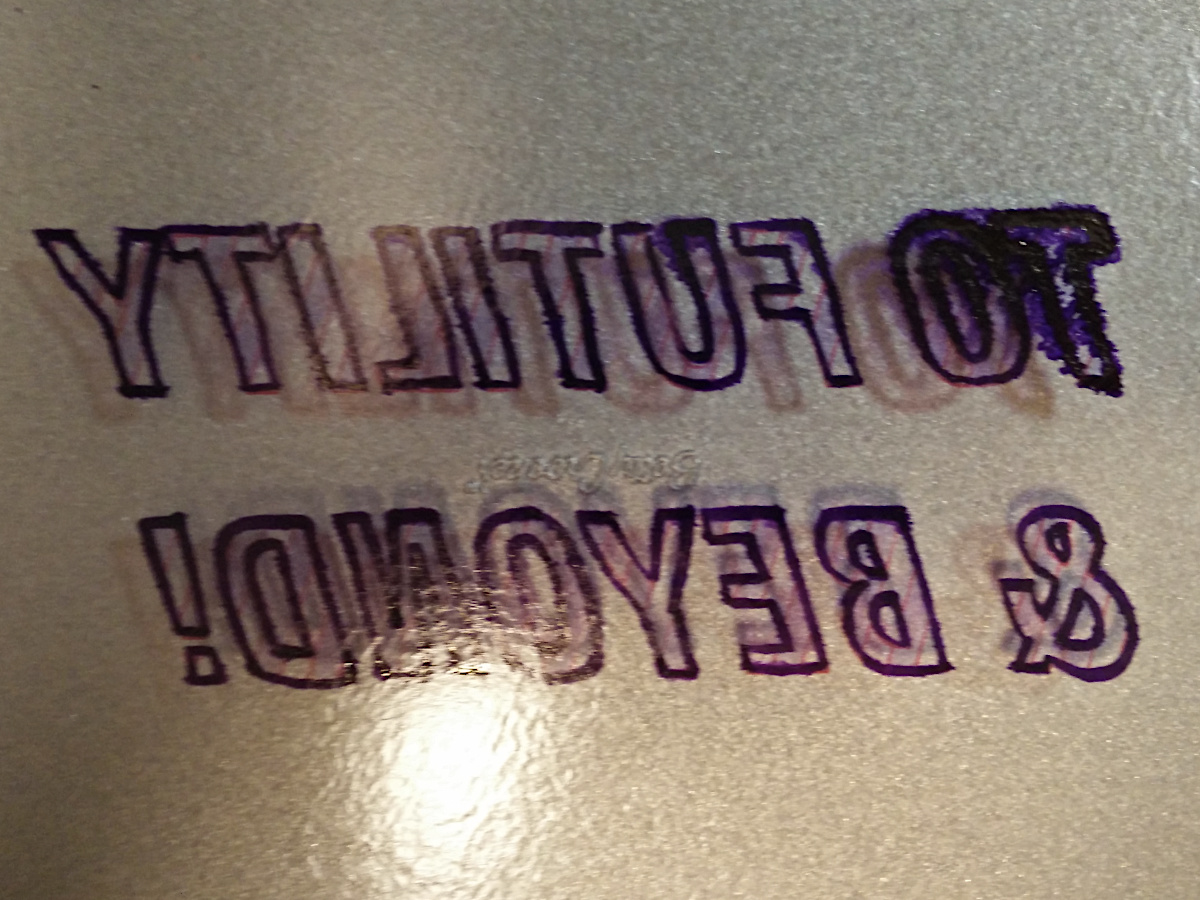
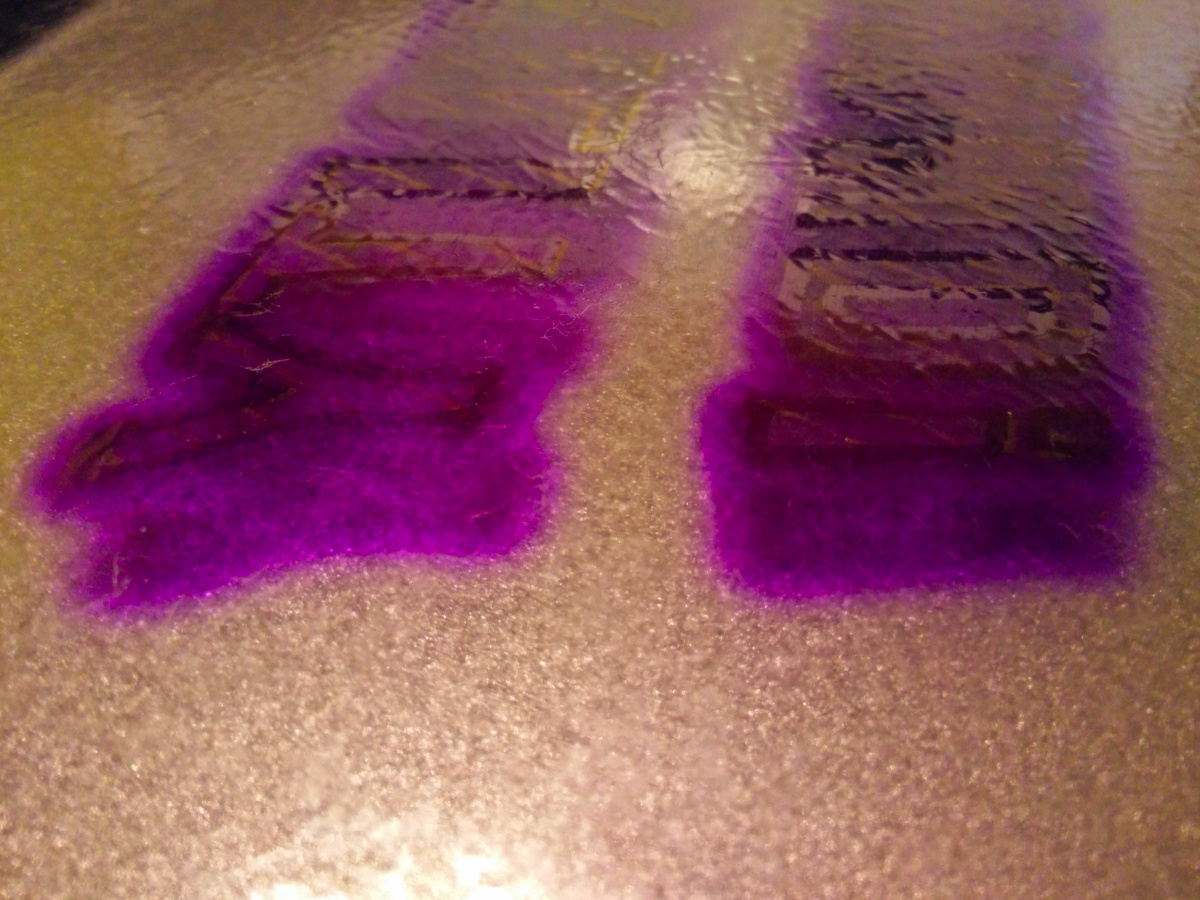
— and a crisp, reversed image in the jelly plate. I hope yours will be less blot-ridden than mine:
Image transferred onto jelly. Note blots (dammit!) and complete lack of visibility from hecto/copying pencil. Red lines from plotter pen are clear, though they didn’t end up transferring through to the paper copies
Now lay your copy paper onto the jelly sheet for a few seconds. Again, I used a brayer.
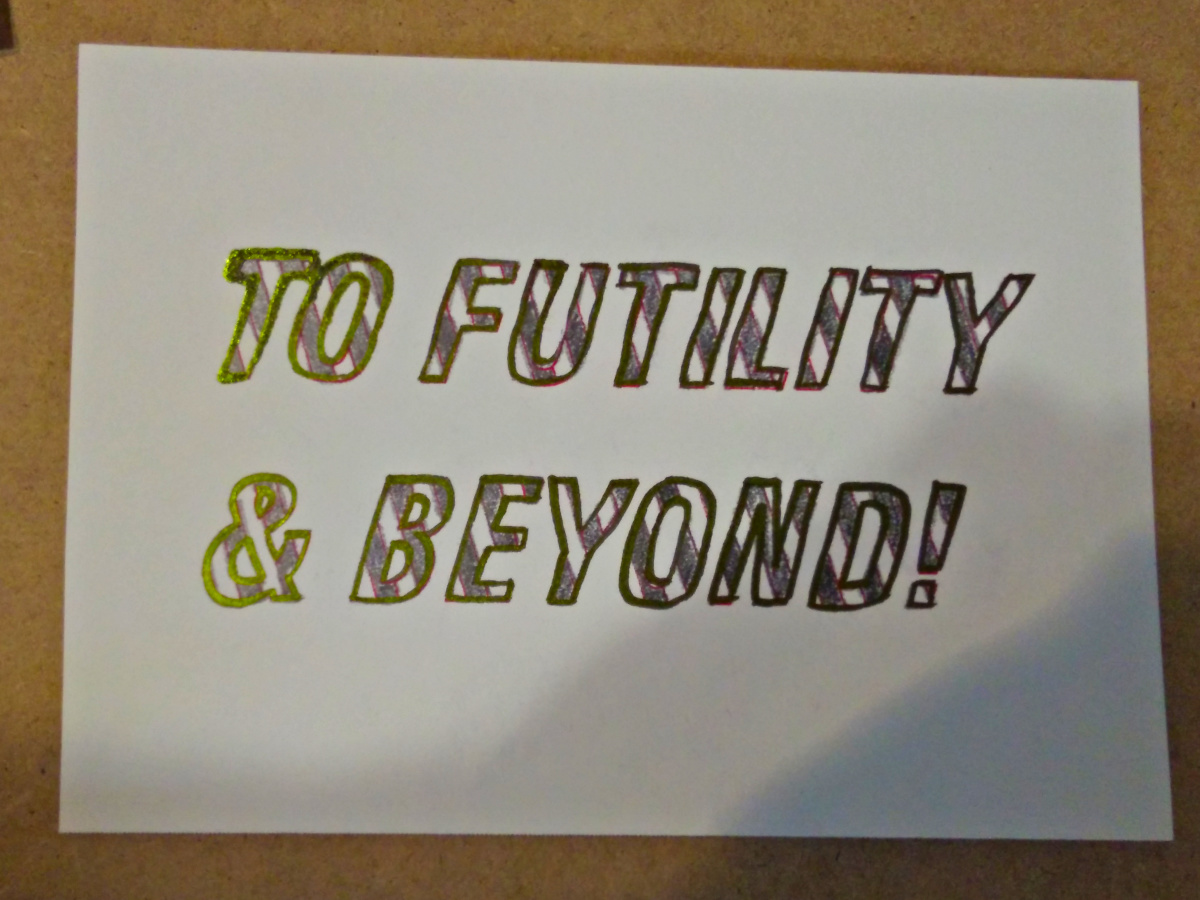
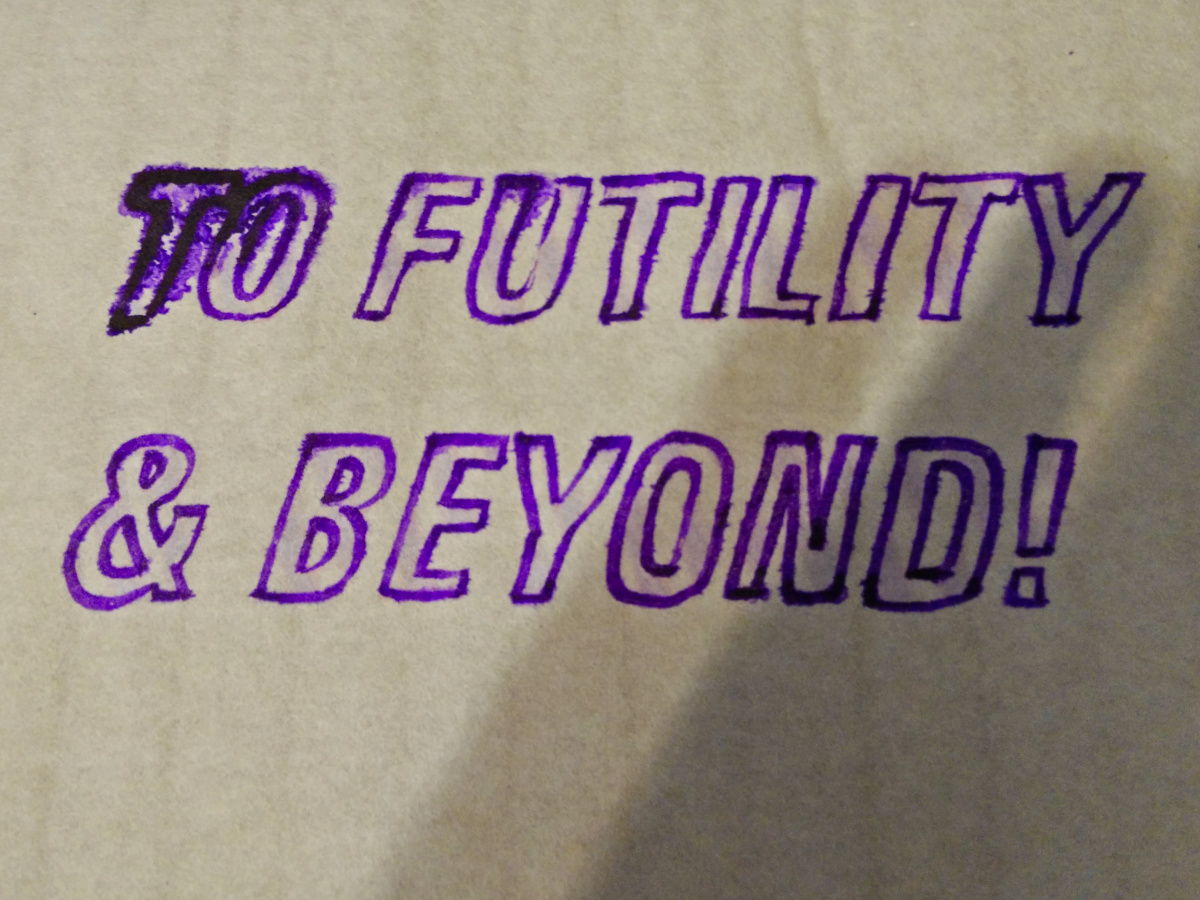
First copy, on mulberry paper
The copies come out remarkably dry, but should still be allowed to dry off for a while: this is a wet copy process, after all. The copier is reusable indefinitely, and should be very lightly dampened before use.
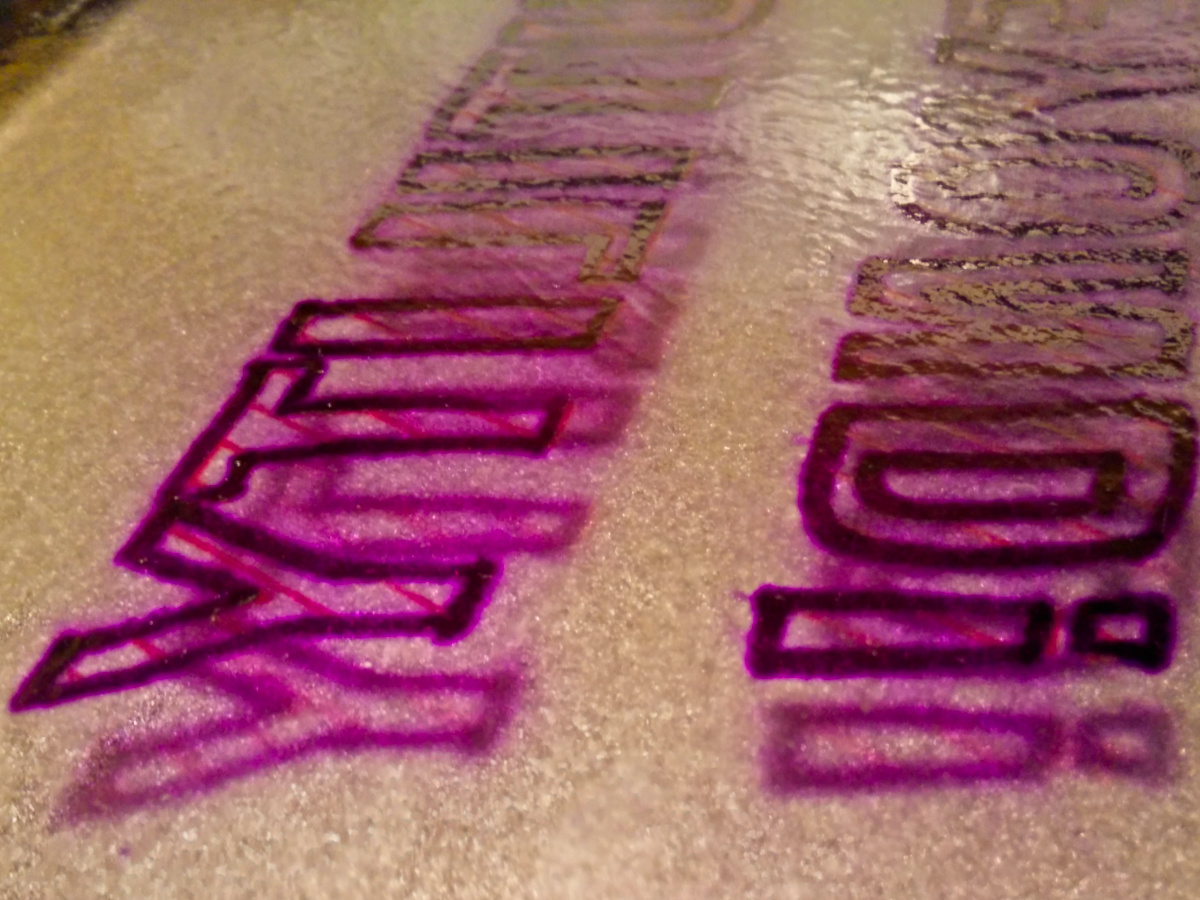
This is after use (6-7 copies), a light misting of water and a wipe down with a damp sponge.This is the same plate, roughly 12 hours after use. The ink has blurred and diffused more deeply into the surface. It was possible to pull a very faint and impossibly blurry copy from this, but it’s pretty close to being ready to reuse
This process is kind-of on the edge of practicality, but is not without its charms. It might be worth looking at:
alternative jellies, such as arrowroot, hypromellose or agar agar. Gelatin is hydrolyzed animal collagen, and this may create ethical issues for some users. Some glycerin is also from animal sources, but less so than in the past.
other ink/dye sources, including inkjet ink, certain water-soluble colouring pencils and other indelible/copying pencils. I have some vintage — possibly old enough to be quite toxic — copying pencils on the way to me via ebay which may work better.
making 3d printed stamps to transfer to the jelly plate. Since the plate doesn’t need to accept a perfectly flat impression, a relief design might work better than a 3d printed direct stamp.
(aside: I’d previously tried to make a copying pad from several layers of damp kitchen towel to transfer a drawing made with Stabilo All water-soluble pencils. As you can imagine, the ink quickly diffused along the cellulose fibres, making this process at best a very qualified success —
A copy attempt made with damp paper towels. The less said about this, the better
BeebEm? Lawks, that’s a bit old (2006). All the cool (*cough*) kids are running b-em – https://github.com/stardot/b-em – these days. It’s lovingly maintain by Stardot forum members. It’s a little crashy on some Linux platforms, but seems stable on the Raspberry Pi and Raspbian. You may need to install the liballegro5-dev and zlib1g-dev packages to get it to compile.
If you want a native version of BBC BASIC, Richard Russell’s version is pretty neat: http://www.bbcbasic.co.uk/bbcsdl/ . You’ll most likely need to change line 280 to use some variant of the WAIT command to make it playable.
Another native interpreter is Brandy. There’s an ancient one in the repos, but I’m completely taken with the Matrix Brandy fork: https://github.com/stardot/MatrixBrandy . It may need a few packages installed to get it to build (libsdl1.2-dev might be a good first try), but it’s really fast. For cross-platform happiness, change line 280 to WAIT 10. If you stick to using a FOR loop, you might have to have it as high as 2,000,000 on a fast computer!