Year: 2011

  • not your dad’s multimeter

    I’d been surviving on a series of sub-$50 multimeters for years. They’d give an approximation of a reading,then fail miserably in a variety of stupid ways. The last one, a rip-off of an Extech, decided to show me how its wires were connected to the probes. “Barely” is a fair description.

    So I thought I’d buy a decent meter. One that had heft and gravitas, like the Avo 8 that my dad used to bring home from work. The Avo — seemingly constructed from bakelite, glass and lead — didn’t just take readings, it told you The Truth on its mirrored scale.

    So I bought an Agilent. Reliable company, all the right features, beeps politely only when required; a very, very sensible meter. Then I found these in the package:
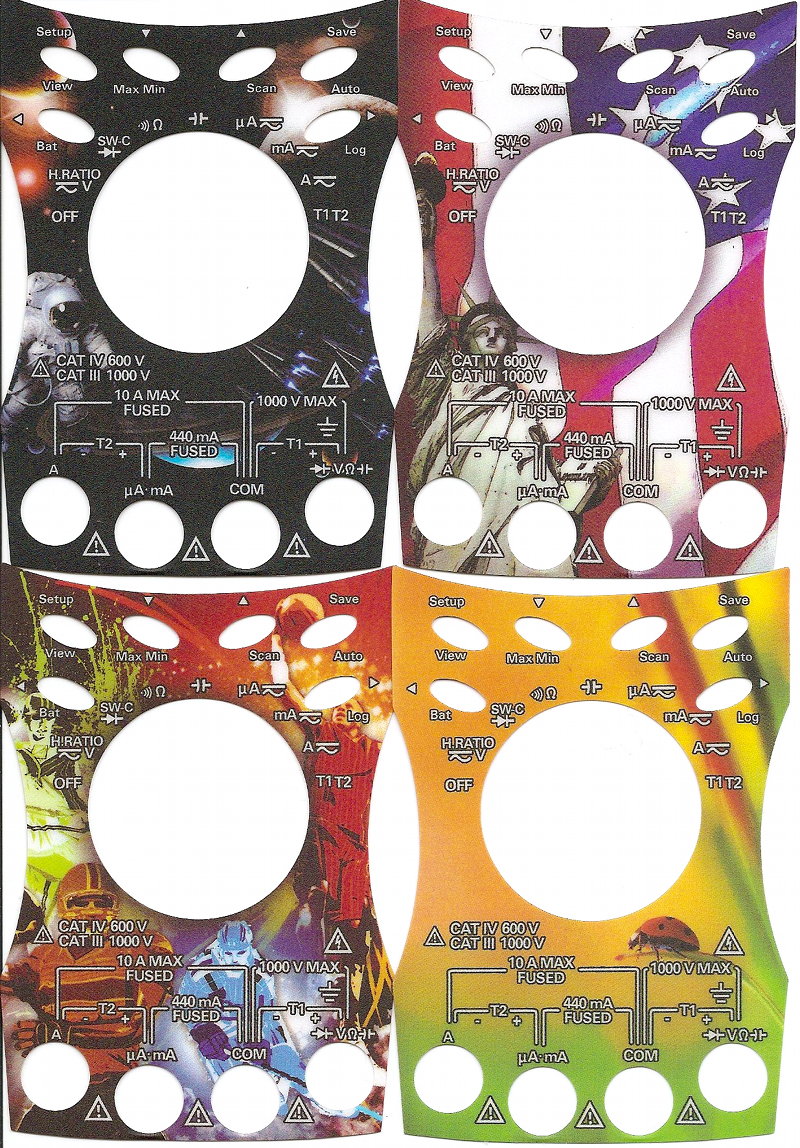
    Dude, what?! Skins on a meter? Meters aren’t toys. Meters are sensible things used by sensible people. We don’t want our work distracted by thoughts of Space!, America!, Sports!, or Some Kind of Bug Thing Eww Squish It Squish It! If you were able to get “skins” for the Avo 8, they would be about Wisden, sheds, and the TSR2.

    Despite the sticky nonsense, it’s a good meter. I also managed to catch a Handheld Digital Multimeter Cash Back Offer, so it’s cheaper than competing Flukes and Extechs.
  • K3NG Keyer complete

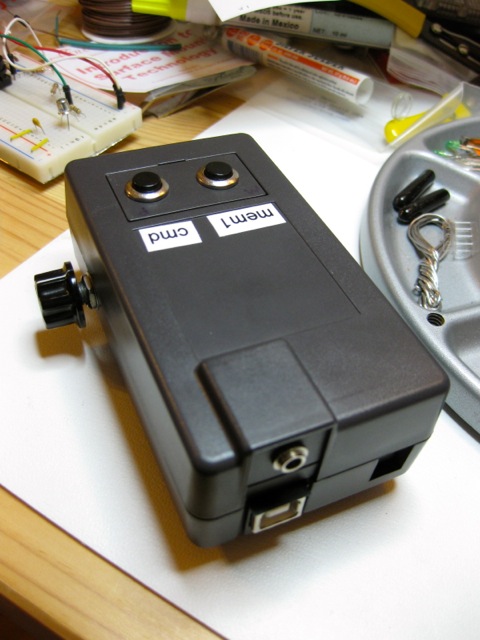
    I finally build K3NG’s Arduino CW Keyer and put it in a nice box. Here’s how it looks:

    K3NG Arduino keyer, complete

    That’s a SparkFun Arduino Project Enclosure with two buttons (one command, one macro), a CW speed control potentiometer, and a simple 3.5mm audio jack for keying the transmitter.

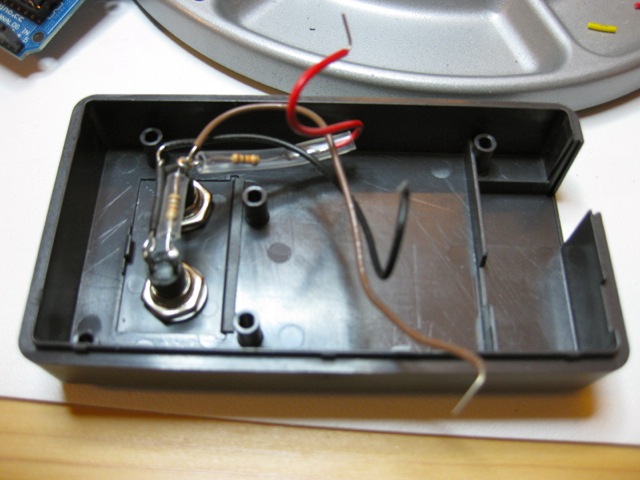
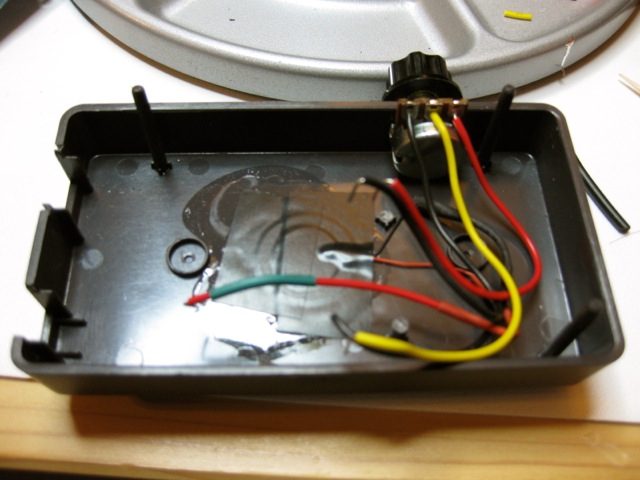
    Enclosure base, showing piezo and potentiometer

    I’ve glued a cheapo piezo (UHU All Purpose glue is my piezo glue of choice; cyanoacrylate is too brittle) onto the base, and cut a hole in the side for the speed pot. The piezo gives a clear enough side tone that I can copy CW (or Hellschreiber, as before) with audio output into Fldigi. The beeper’s got a fierce third harmonic, but that’s part of its charm. K3NG has a more complex speaker circuit, but this is simple and self-contained.

    Enclosure lid, with buttons and resistors

    Two momentary switches ($2 from Active Surplus) make up the control interface.

    Arduino+Protoboard, and the magic of a 2N2222 switch

    The clever bit is an Arduino Duemilanove Uno (my oldest board; it deserves a proper useful home which doesn’t seem to have the serial startup problems my Duemilanove had) with an Adafruit Proto Shield on top. The only “clever” componentry on that is a solitary 2N2222 switching transistor.

    It works pretty well. The only thing that doesn’t seem to be stable is the memory button; it seems to choose randomly from any of the first four memories, so I might accidentally send an SK when I meant a CQ. For now, until I work out what’s wrong, I’ll stick to keyboard input of the macros.

  • oh i wish that citrix would stop changing its product names

    Hey Citrix, just quite changing your product names, willya? How are we supposed to find your ^(*(&&*^(&$# plugin if it’s called something different this week from last. At the one place I’ve worked, it was initially called “ICA Client”, then the mysterious “Xen”, and now it’s called bloody “Receiver“. Good word choice there. Not like “receiver” has ever been used for anything else before. Gah!

    Anyway, now I’m a bit calm, if you are trying to connect to a Citrix server from OS X Lion, this worked for me: Citrix Receiver for Mac 11.4. Yes, you’ll need to register to download it, which is a royal pain in the bum. And for all of Citrix’s “o we are TEH SEKYOOR and care deeply about ur securitee“, they send your password in plain text, by e-mail. Gits. They should be forced to watch the eye-painting guy video (tnx regretsy) five times for this crime.

    I guess my ancient post  When you really haven’t chosen not to trust: Citrix, Mac OS X, and Entrust certificates can get retired now, though it still gets a ton of hits. The vast number of semi-irrelevant links in this post is in no way an attempt to make up for that. Oh no.

  • Futile Devices

    I was struck last week by the realization that I hadn’t done long division in decades. When the Casio FX (can’t remember which; it was small and solar) hit my life, the need to do long division vanished. So it’s probably around 30 years since I last had to do it.

    My first attempts to remember how were dismal. Then I remembered the whole bit about “bringing down the units”, and it all clicked. I made the following animation to show how I did it:

    This might be a slightly odd way of doing it, but it’s the way we were taught.
  • nice bike facilities

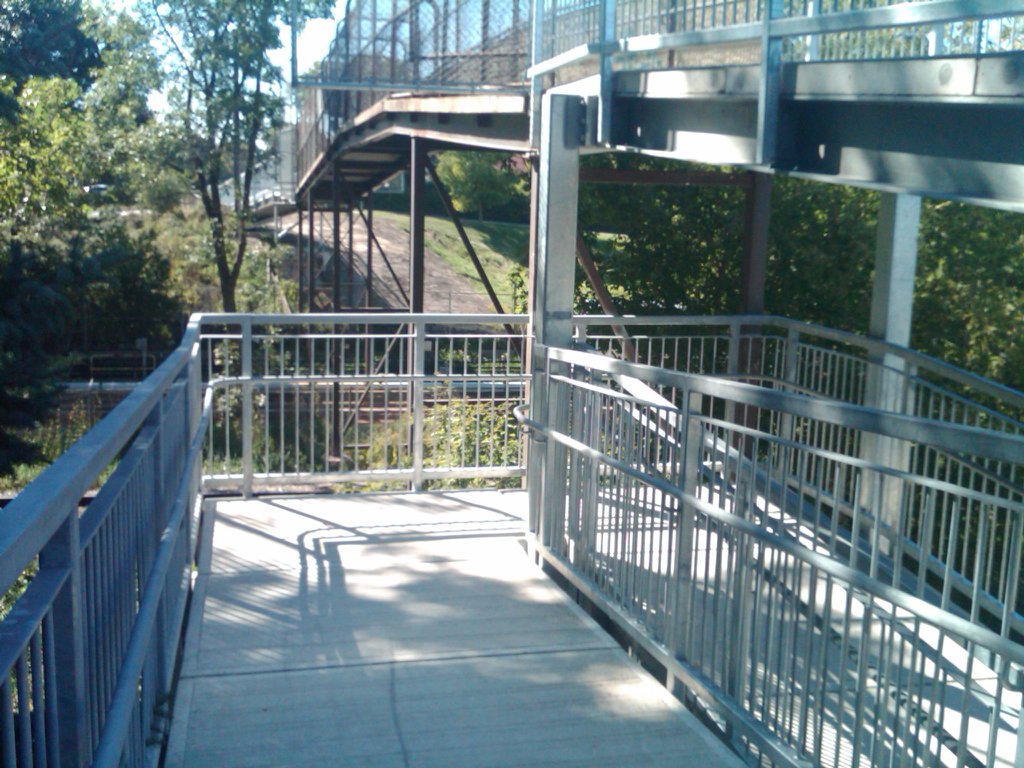
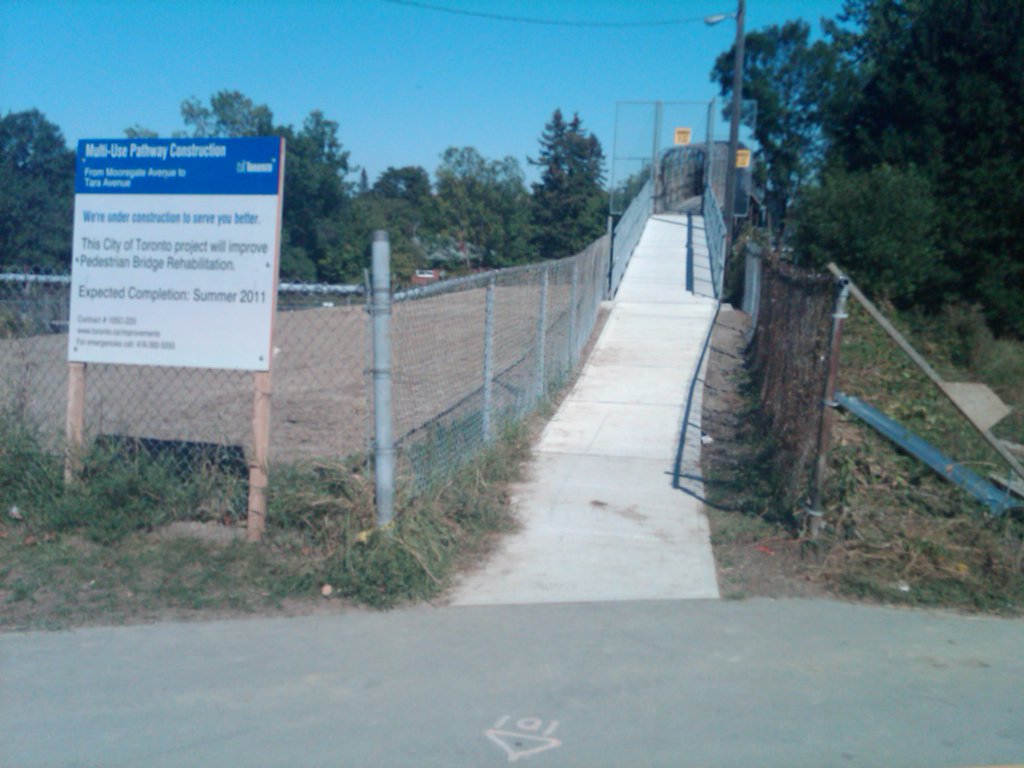
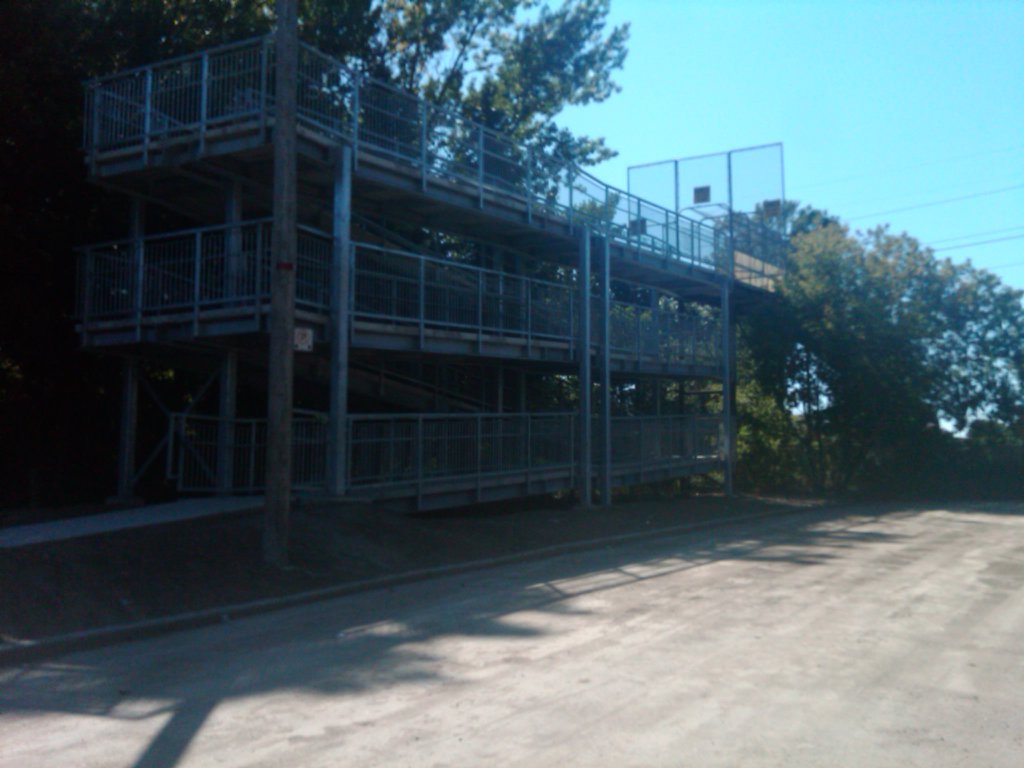
    I’d seen that the city had been working on the path over the train tracks at Lord Roberts Wood, but hadn’t seen the completed project. What was formerly a real slog to lift a bike (and especially a sensible bike) up these steps now can be ridden without dismounting. Yay Toronto!

    (apologies for picture quality. My Blackberry is in perma soft-focus)

    If you want to see how they looked last year, there are some automatic photos from my Canada Day post: sd790-20100701-161516, sd790-20100701-161535, and sd790-20100701-161614. A great improvement has been made.

    If I must kvetch (and I must: cyclo, ergo kvetch), the turns in the ramp are just a little too narrow to navigate a bike round. I can make most of them if I crawl round it, but I usually have to dab a foot down.

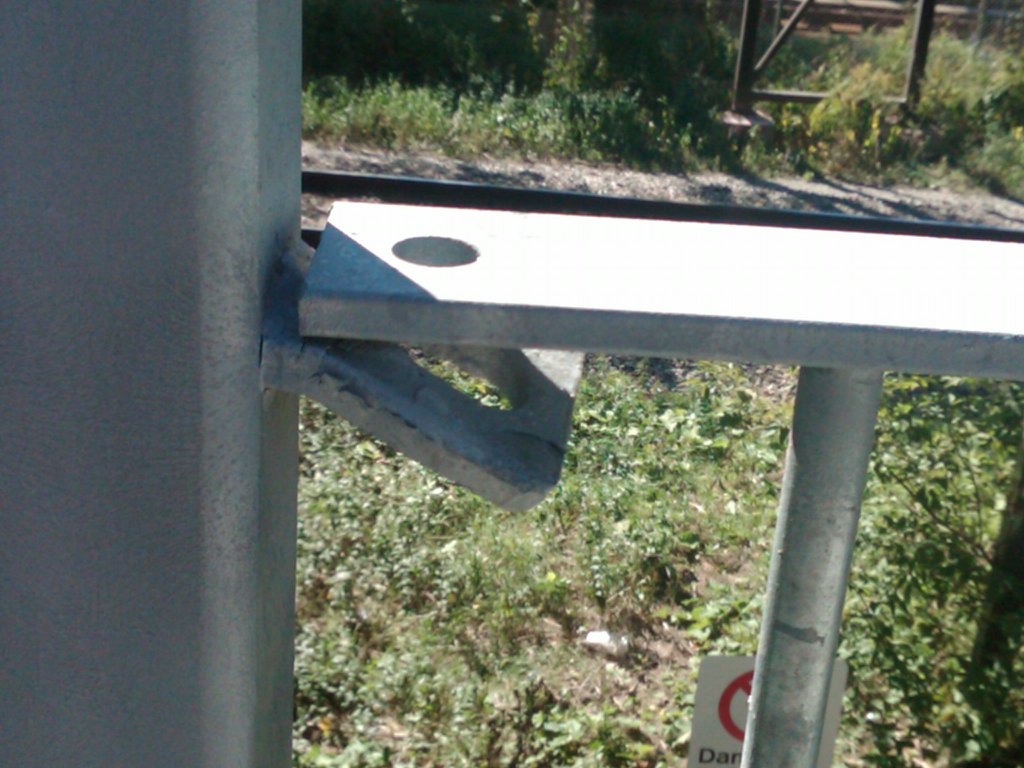
    There’s also no lighting. I’m not sure how welcoming this facility would be to use at night. Also, some of the handrails look as if they should either be welded or bolted in place, but are neither. Some have half-hearted tack welds, but they look as if they were done straight onto the zinc galvanizing so were destined to end badly.

    Still, much better than it was.

  • K3NG Arduino Keyer

    I’m pretty amazed that the above image is even vaguely readable. It’s Hellschreiber, generated by Anthony K3NG Good’s Arduino CW Keyer. What you’re seeing, though, is Hellschreiber from the keyer’s sidetone generator being fed through a piezo glued to a paper cup (and not just any paper cup) being picked up by Fldigi on my laptop’s microphone. This isn’t what you’d call a quality signal path, and it’s a tribute to the mode’s robustness that it can be made out at all.

    Anthony has packed an absurd amount into this keyer. There isn’t enough memory on a stock 32K Arduino for all the features to be enabled. I’m planning to use it as a CW keyer alongside Fldigi as the decoder. Despite all the features that can be built in, I’d just be using it as a serial to Morse converter, with perhaps a couple of memory keys for calling CQ and the like.

    I do have a slight problem with it while it’s breadboarded, though. The wiring’s so sensitive that the control circuit triggers if I put my hand near it, let alone touch the command button. I’ll have to do something about that. I can’t breadboard for toffee.

  • a shortt detour

    MetaFilter‘s Ownâ„¢ TimTypeZed — aka Tim Shortt — is incredibly modest about his talents in person, but his artwork speaks for itself:

    "Rob Ford – Lingerie Football", by Tim Shortt

    Tim’s my nearest neighbour on MetaFilter, and I’ve met him at a couple of meetups.

  • it lives!

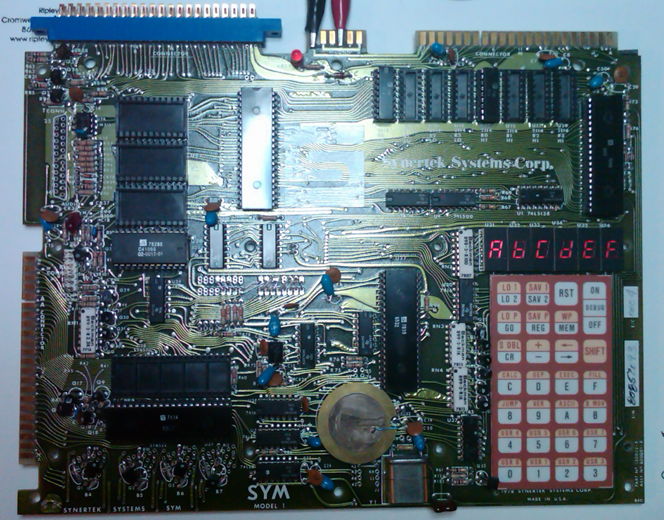
    After being used as a wall-hanging for approximately 20 years, then surviving an intercontinental trip in my luggage, the Synertek SYM-1 is running. I think a few segments of the display are iffy, but it responds to the keyboard and beeps. Next step is to hook up the serial port.

    These single boards sure do produce a lot of RFI. Waving the almost exactly ten year old radio near it produces howls and churrs.

  • Scottish Animation Genius

    Swatrick Payze sure is the greatest thing since the last.

    http://www.youtube.com/watch?v=vCZyl30qrSw

    (via)

  • randomly remembered from the UK trip

    • The M8 through Livingston is now tree-lined, with no sign of the buildings behind. I remember when all of it was scrubby shrubs and boxy buildings.
    • The A174 between Saltburn and Whitby is perhaps the world’s most gratuitously wiggly road in the Z-axis.
    • You can actually get an amateur radio magazine in most newsagents: Practical Wireless.
    • Driving to Fala to join the A68 from North Berwick has extreme XY wiggliness.
    • S. Luca of Musselburgh make very good ice cream, and their purple Mini-based truck is quaint.
    • Either the routing database from the UK is weird, or the Garmin nüvi 760 can’t route for toffee.
    • Eyemouth is much more fun than I expected. Oblò is a great wee restaurant.
    • With a £20 O2 SIM and an unlocked GSM phone, I had calling ability for the trip.
    • Kirkintilloch has a marina! Southbank Marina is quite spiffy.
    • The Quayside in Whitby has fab fish and chips.
    • I actually heard someone use the expression “fandabidozi” in a non-ironic setting in Glasgow
    • Yum yums aren’t as good as I remember them being.
    • Walking barefoot on a Scottish lawn is an exquisite pleasure.

    Pictures later.

  • I miss British advertising copy …

    This charming bit of rubbish on a bottle of Innocent orange juice scored in Eyemouth:

  • for mac-owning light sleepers

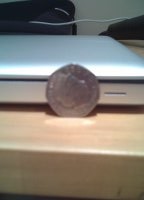
    A UK 50p coin is just perfect for blocking the snooze light on a MacBook:

    Those seven sides stop it rolling away.

  • UncleWiki

    For the last few weeks, I’ve been working on UncleWiki, a wiki about the Uncle books, by J. P. Martin. It’s a very rough framework right now, but I’m adding content as I go. Please join in!

  • Cheapo CW key

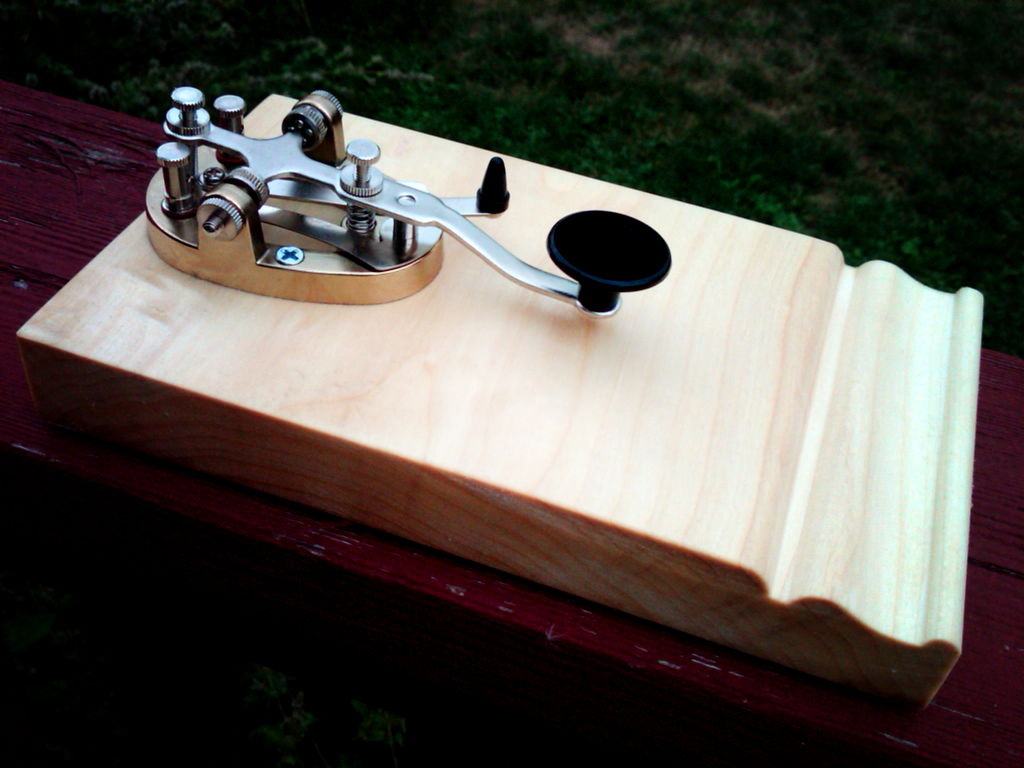
    Cheapo morse key (an Ameco K-4, $20 from Ham Radio Outlet) mounted on a $4 piece of wooden moulding.